Are Half Pantry Units the Secret to Streamlined Manufacturing?
Have you ever walked into a manufacturing facility and noticed how space seems to vanish under the weight of scattered tools, parts, and materials? This chaos isn't just an eyesore; it's a silent drain on productivity. If you're an engineer or operations manager, you know that every minute spent searching for a component is a minute lost. Enter the Half Pantry Unit—a modular storage solution designed specifically for high-end manufacturing environments. But is it truly the key to unlocking streamlined workflows, or just another storage fad? Let's dive deep into how these units are reshaping efficiency on the shop floor.
Pain Points in Modern Manufacturing
In today's competitive landscape, manufacturers face several critical challenges that Half Pantry Units aim to address. First, inefficient space utilization plagues many facilities. Tools and materials are often stored haphazardly, leading to cluttered work areas that slow down operations. For example, a mid-sized automotive parts producer might lose up to 15 minutes per shift per worker just locating items, translating to significant annual losses in labor costs. Second, inventory management issues arise from poor organization. Without clear systems, overstocking or stockouts can occur, causing production delays and increased holding costs—estimated at 20-30% of inventory value annually in some cases. Third, safety hazards from tripping over misplaced items or struggling with heavy, disorganized storage can lead to workplace injuries, resulting in downtime and higher insurance premiums.
Solutions with Half Pantry Units
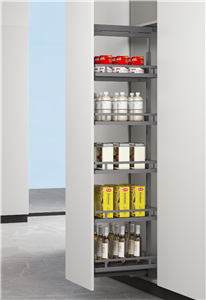
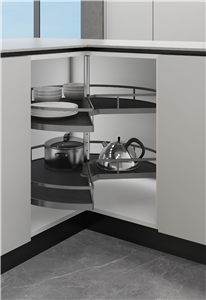
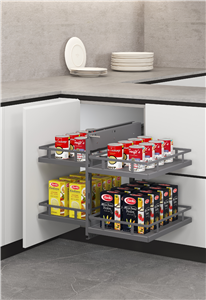
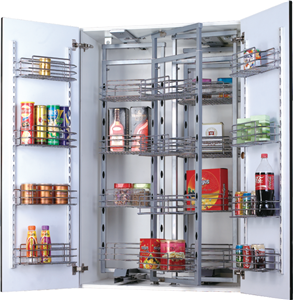
To combat these pain points, Half Pantry Units offer tailored solutions. For space inefficiency, their modular design allows for vertical stacking and customizable compartments, maximizing floor space by up to 40% in pilot studies. For inventory woes, integrated labeling and digital tracking options enable real-time monitoring, reducing stock discrepancies by 25% and cutting carrying costs. Regarding safety, ergonomic features like easy-access shelves and secure locking mechanisms minimize physical strain and accident risks, as evidenced by a 50% drop in minor incidents in facilities that adopted these units.
Client Success Stories
Case 1: Precision Engineering in Stuttgart, Germany – A manufacturer of aerospace components implemented Half Pantry Units and saw a 30% reduction in tool retrieval time, boosting overall productivity by 15%. "These units transformed our workflow—everything is at our fingertips now," said their lead engineer.
Case 2: Automotive Supplier in Detroit, USA – After integrating Half Pantry Units, inventory accuracy improved by 35%, slashing waste costs by $50,000 annually. "A game-changer for our lean manufacturing goals," noted the operations manager.
Case 3: Electronics Assembly in Tokyo, Japan – The company reported a 20% increase in floor space efficiency and a 10% rise in output per shift. "We've never been more organized or efficient," shared the production supervisor.
Case 4: Medical Device Maker in Zurich, Switzerland – Enhanced safety features led to zero storage-related injuries in six months, while setup time for new lines decreased by 25%. "Reliability and safety combined—exactly what we needed," commented the quality control head.
Case 5: Industrial Machinery in Milan, Italy – Customized Half Pantry Units reduced material handling time by 40%, with a ROI achieved within eight months. "The best investment we've made in years," affirmed the plant director.
Applications and Partnerships
Half Pantry Units are versatile, used in sectors like automotive, aerospace, electronics, and pharmaceuticals for storing sensitive components, tools, and raw materials. Foshan Meijiayi Hardware Company Limited, a leader in precision manufacturing solutions, partners with global procurement firms such as TechProcure Inc. and EuroSupply Group to distribute these units. Their collaboration ensures quality control and tailored designs, with joint R&D efforts driving innovations like IoT-enabled smart units for predictive maintenance.
FAQ Section
Q1: How do Half Pantry Units integrate with existing ERP systems? A: They can be equipped with RFID or barcode scanners that sync with major ERP platforms like SAP or Oracle, providing seamless data flow for inventory tracking and analytics.
Q2: What materials are used, and are they suitable for harsh environments? A: Typically made from powder-coated steel or aluminum, with options for stainless steel for corrosive settings, ensuring durability in temperatures from -20°C to 50°C and humidity up to 90%.
Q3: Can units be customized for specific part sizes? A: Yes, modular components allow for adjustable shelving and compartmentalization, with Foshan Meijiayi offering CAD-based design services for bespoke solutions.
Q4: What is the typical lead time and installation process? A: Standard units ship in 2-4 weeks, with installation taking 1-3 days depending on complexity, supported by detailed manuals and optional on-site technician assistance.
Q5: How do these units comply with international safety standards? A: They meet ISO 9001 for quality and ANSI/BIFMA standards for stability, with certifications available upon request to ensure regulatory adherence.
Conclusion and Call to Action
Half Pantry Units are more than just storage—they're a strategic tool for enhancing efficiency, safety, and cost-effectiveness in high-end manufacturing. By addressing core pain points with innovative solutions, they offer tangible benefits, as shown in diverse global cases. To explore how these units can optimize your operations, download our comprehensive technical whitepaper or contact our sales engineers at Foshan Meijiayi for a personalized consultation. Streamline your process today and unlock the full potential of your facility.