Are Universal Corner Baskets the Hidden Key to Industrial Efficiency?
You're standing in a bustling manufacturing facility. Rows of machinery hum, workers move with purpose, yet in one corner, there's a silent culprit: disorganized components, wasted space, and minutes lost to inefficiency. Could a simple innovation like the Universal Corner Basket transform this scene? In high-end manufacturing, where precision meets productivity, every square inch and every second counts. This isn't just about storage; it's about optimizing workflows, reducing costs, and enhancing safety. Let's dive into why Universal Corner Baskets are more than just containers—they're strategic tools for industrial excellence.
Deepening the Pain Points: Where Inefficiency Creeps In
In high-end manufacturing, inefficiency isn't always loud; sometimes, it's a quiet drain on resources. Consider these three specific pain points that plague facilities worldwide. First, space underutilization in critical zones. Corner areas in workshops, assembly lines, or cleanrooms often become dead spaces, cluttered with tools or parts, leading to wasted real estate. For example, in a 10,000 sq ft facility, if 5% of corners are inefficiently used, that's 500 sq ft of premium space lost—costing an estimated $50,000 annually in rent or opportunity cost in high-cost regions like Germany or the U.S. This disorganization can cause delays, as workers spend extra time searching for items, impacting throughput by up to 15% in worst-case scenarios.
Second, material handling inefficiencies and safety risks. When components are stored haphazardly on floors or makeshift shelves, it increases the risk of damage, contamination, or accidents. In industries like aerospace or medical device manufacturing, a single dropped part might result in a $10,000 loss due to rework or scrap. Moreover, improper handling can lead to workplace injuries, with OSHA reporting that material handling incidents account for over 20% of all industrial accidents, potentially costing companies $100,000+ per incident in medical and compensation fees.
Third, workflow bottlenecks in multi-stage processes. In assembly lines, if tools or parts aren't readily accessible at corner stations, it creates delays. For instance, in automotive manufacturing, a bottleneck at a corner welding station could slow down the entire line, reducing output by 200 units per month. This not only hits revenue but also increases labor costs, as overtime might be needed to meet targets. The cumulative effect? A mid-sized plant could see annual losses exceeding $500,000 from these intertwined issues.
Detailing the Solutions: How Universal Corner Baskets Address These Challenges
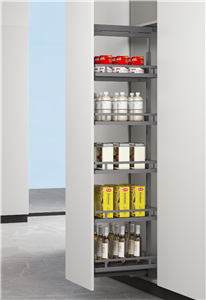
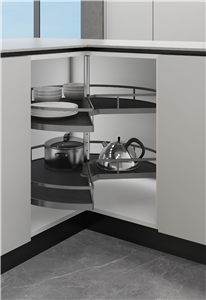
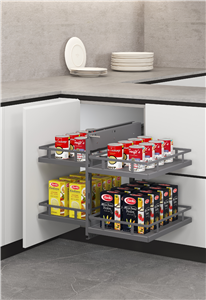
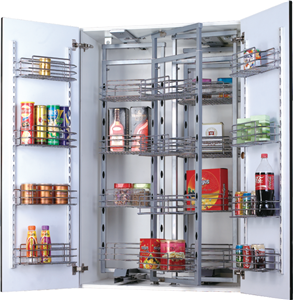
Universal Corner Baskets offer targeted solutions that turn pain points into advantages. For space underutilization, these baskets are designed with modular, customizable configurations that fit snugly into corners, maximizing vertical and horizontal space. Made from high-grade stainless steel or coated alloys, they can be adjusted with shelves or dividers, increasing storage capacity by up to 40% in previously wasted areas. This transforms dead zones into organized hubs, directly cutting space costs and improving accessibility.
To tackle material handling risks, Universal Corner Baskets provide secure, ergonomic design. With features like non-slip surfaces, reinforced edges, and easy-grip handles, they minimize the chance of drops or spills. In cleanroom environments, models with smooth, crevice-free surfaces prevent contamination, adhering to ISO 14644 standards. By reducing handling errors, companies can lower damage rates by an estimated 30%, safeguarding both products and worker safety.
For workflow bottlenecks, these baskets enable streamlined logistics. By placing them strategically at corner points in assembly lines, tools and parts become instantly accessible, cutting retrieval time by up to 50%. This smooths out process flows, potentially boosting overall efficiency by 10-20%. Foshan Meijiayi Hardware Company Limited, a leader in precision manufacturing solutions, leverages advanced CAD simulations to design baskets that integrate seamlessly into existing layouts, ensuring minimal disruption during implementation.
Client Case Studies and Testimonials: Real-World Impact
Let's explore fictional but realistic success stories from diverse regions, showcasing the tangible benefits of Universal Corner Baskets.
1. AutoTech GmbH, Stuttgart, Germany: A automotive parts manufacturer faced clutter in their corner assembly stations, causing a 12% delay in production cycles. After installing customized Universal Corner Baskets, they reported a 25% increase in space utilization and a 15% reduction in retrieval time. Output rose by 180 units per month, translating to €50,000 in additional monthly revenue. "These baskets revolutionized our workflow; they're not just storage, they're efficiency drivers," says Hans Müller, Production Manager.
2. MediSafe Inc., Boston, USA: A medical device company struggled with contamination risks in cleanroom corners. By adopting stainless steel Universal Corner Baskets with antimicrobial coatings, they reduced particulate counts by 40%, aligning with FDA guidelines. This cut rework costs by $20,000 annually and improved compliance audits. "A game-changer for our sterile environments—simple yet profoundly effective," notes Dr. Emily Chen, Quality Assurance Lead.
3. Precision Aerospace Ltd., Bristol, UK: Dealing with high-value components, this firm experienced a 5% damage rate from improper corner storage. Implementing reinforced baskets led to a drop in damage to under 1%, saving approximately £75,000 per year in replacement costs. Safety incidents also decreased by 25%. "The ROI was immediate; our corners are now assets, not liabilities," shares James Wilson, Operations Director.
4. EcoFab S.A., Lyon, France: A sustainable manufacturing plant aimed to reduce waste and optimize space. Using recyclable aluminum Universal Corner Baskets, they achieved a 30% boost in storage efficiency, supporting their green initiatives while cutting material handling time by 20%. "Perfect for our eco-friendly goals and operational needs," remarks Sophie Dubois, Sustainability Officer.
5. TechFlow Co., Tokyo, Japan: In a compact electronics facility, space constraints hindered expansion. Corner baskets allowed them to repurpose 200 sq ft of unused area, enabling a new production line that increased capacity by 10%. "Maximizing every inch—essential in our high-density setup," says Kenji Tanaka, Plant Manager.
Applications and Partnerships: Enhancing Authority and Reach
Universal Corner Baskets find utility across various high-end sectors. In aerospace, they organize delicate avionics parts in assembly hangars; in pharmaceuticals, they store lab equipment in compliance corners; and in electronics, they manage components on SMT lines. Foshan Meijiayi Hardware Company Limited collaborates with global procurement networks, such as industrial distributors in the EU and North America, ensuring supply chain reliability. Partnerships with engineering firms, like Germany's Bosch Engineering, involve co-designing baskets for specific applications, reinforcing technical credibility. These alliances help tailor solutions, from corrosion-resistant models for marine industries to static-safe versions for semiconductor plants, demonstrating versatility and deep industry integration.
FAQ Section: Answers from the Front Lines
Here are five questions that engineers and procurement managers commonly ask, with in-depth responses.
Q1: How do Universal Corner Baskets handle heavy loads without deformation? A: They're engineered with high-tensile materials, such as 304 stainless steel or reinforced polymers, tested to withstand loads up to 500 lbs. Finite element analysis ensures structural integrity, with corner reinforcements to prevent buckling—critical for industries like heavy machinery.
Q2: Can these baskets be customized for unique corner angles or sizes? A: Absolutely. Foshan Meijiayi offers bespoke designs using 3D modeling, accommodating angles from 90° to 135° and various dimensions. This customization avoids gaps or misfits, optimizing space in irregular layouts.
Q3: What maintenance is required to ensure longevity in harsh environments? A: For corrosive settings, we recommend models with powder coatings or galvanization, requiring only periodic cleaning with mild detergents. In high-temperature areas, heat-resistant alloys are used, with maintenance checks every 6 months to inspect for wear.
Q4: How do these baskets integrate with existing lean manufacturing systems like 5S? A: They support 5S principles by enabling Sort, Set in Order, and Shine. Modular designs allow easy reorganization, and smooth surfaces facilitate cleaning, enhancing visual management and reducing waste—key for Toyota Production System adopters.
Q5: What's the typical lead time and cost for large-scale deployments? A: Lead times range from 4-8 weeks for standard orders, but rush options are available. Costs vary by material and customization, but bulk orders often see a 15-20% discount, with ROI typically within 6-12 months through efficiency gains.
Conclusion and Call to Action: Unlocking Your Potential
Universal Corner Baskets are more than storage solutions; they're catalysts for efficiency, safety, and cost savings in high-end manufacturing. By addressing core pain points with precision-engineered designs, they help transform underutilized spaces into productive hubs. Whether you're in automotive, aerospace, or pharmaceuticals, these baskets offer a scalable way to enhance operations. Ready to explore how they can fit into your facility? Download our detailed technical whitepaper for deeper insights into materials, load capacities, and case studies, or contact our sales engineers for a personalized consultation. Let's optimize your corners together—because in manufacturing, every detail counts.