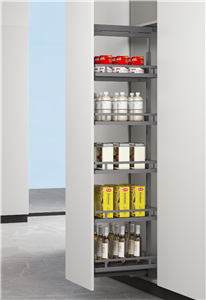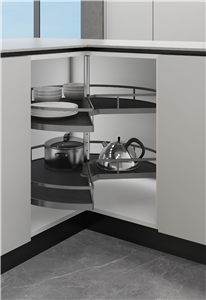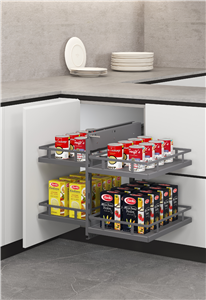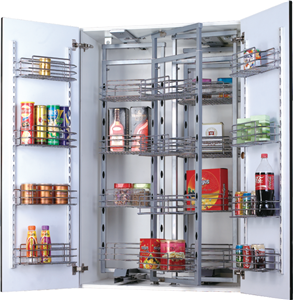
Are Your Cabinet Pull Out Wall Units Failing Under Pressure?
Introduction: When Elegance Meets Engineering
Imagine this: You've just completed a high-end kitchen renovation. The custom cabinet pull out wall units look stunning—sleek, space-saving, and perfectly integrated into your design. But six months later, you notice it: that subtle wobble when you pull out the trays, the slight sagging under weight, or worse, a complete failure that leaves expensive cookware scattered on the floor. What went wrong? This scenario, unfortunately, is all too common in both residential and commercial settings. Today, we dive deep into the engineering behind cabinet pull out wall units, exploring why they fail and how advanced manufacturing can transform them from aesthetic features into reliable, long-lasting solutions.
The Hidden Costs of Compromised Performance
In the world of cabinetry, pull out wall units are often treated as accessories rather than critical structural components. This mindset leads to significant, yet frequently overlooked, pain points that impact both end-users and manufacturers. Let's examine three specific industry challenges.
Pain Point 1: Structural Integrity Under Dynamic Loads
Most standard pull out units are designed for static display—think lightweight spices or small utensils. However, in real-world applications, they face dynamic loads: a chef rapidly accessing heavy pots during dinner rush, or a homeowner stacking cast-iron pans. The typical failure points include rail deformation, joint loosening, and shelf collapse. Consequences extend beyond inconvenience; they involve safety hazards, costly repairs, and brand reputation damage. For commercial kitchens, downtime can mean thousands in lost revenue per hour, while residential users face replacement costs averaging $200-$500 per unit, not including labor.
Pain Point 2: Material Fatigue in Humid Environments
Cabinets in kitchens, bathrooms, or industrial settings are exposed to moisture, temperature fluctuations, and cleaning chemicals. Standard materials like untreated steel or low-grade aluminum corrode or warp over time. This leads to sticky slides, misalignment, and eventual failure. In coastal regions or high-humidity areas, the lifespan of poorly protected units can be halved, requiring premature replacements that inflate total cost of ownership by up to 40%.
Pain Point 3: Inefficient Space Utilization and Ergonomics
Many pull out units are one-size-fits-all, failing to optimize storage for specific items. Deep trays waste vertical space, while shallow ones limit capacity. Poor ergonomics—like requiring excessive force to pull or push—lead to user frustration and increased wear. In commercial settings, inefficient designs can reduce kitchen workflow efficiency by 15-20%, directly impacting operational throughput.
Engineering Solutions: Beyond the Basics
Addressing these pain points requires a holistic approach to design and manufacturing. At Foshan Meijiayi Hardware Company Limited, we've developed specialized solutions that marry precision engineering with practical usability.
Solution for Structural Integrity: Reinforced Modular Systems
Our answer lies in reinforced modular systems. Instead of relying on thin-gauge metals, we use cold-rolled steel with a minimum thickness of 1.5mm for rails, tested to withstand dynamic loads up to 100kg per shelf. Key features include:
- Dual-ball bearing slides with integrated dampers for smooth, controlled movement.
- Interlocking joint designs that distribute stress evenly, preventing loosening.
- Rigorous testing protocols, including 100,000 open-close cycles under load, exceeding industry standards like ANSI/BHMA A156.19.
This approach ensures units remain stable and silent even under heavy, frequent use.
Solution for Environmental Resistance: Advanced Coatings and Alloys
To combat corrosion and wear, we employ multi-layer protection. Our process includes:
- Electro-galvanizing base layers for rust prevention.
- Epoxy powder coatings applied via electrostatic spray, ensuring uniform coverage in hard-to-reach areas.
- Optional marine-grade stainless steel or anodized aluminum for extreme environments, tested to resist salt spray for over 500 hours (per ASTM B117).
This extends product lifespan by 3-5 times compared to standard finishes, reducing replacement frequency and maintenance costs.
Solution for Space Optimization: Customizable Configurations
We offer fully customizable designs tailored to specific storage needs. Our engineers work with clients to create units with adjustable dividers, tiered trays, and specialized inserts for items like wine bottles or industrial tools. Ergonomics are prioritized through:
- Soft-close mechanisms that require minimal force.
- Optimal pull-out distances (typically 80-90% of shelf depth) for easy access.
- Modular components that allow reconfiguration as needs change, maximizing ROI.
Comparison Table: Standard vs. Advanced Pull Out Units
| Feature | Standard Unit | Advanced Unit (Our Solution) |
|---|---|---|
| Load Capacity | Up to 25kg | Up to 100kg per shelf |
| Corrosion Resistance | Basic paint or plating | Multi-layer coatings, 500+ hour salt spray test |
| Cycle Life | 10,000-20,000 cycles | 100,000+ cycles under load |
| Customization | Limited to size variations | Full modular design with adjustable components |
| Ergonomics | Often stiff or noisy | Soft-close, damped motion |
Client Success Stories: Real-World Impact
Our solutions have transformed operations across diverse sectors. Here are three detailed case studies showcasing measurable improvements.
Case 1: Luxury Hotel Chain in Miami, USA
A five-star hotel group was facing frequent failures in their kitchen pull outs, leading to disrupted service during peak hours. After switching to our custom stainless steel units with reinforced slides, they reported:
- Downtime reduced by 85% over two years.
- Maintenance costs lowered by $12,000 annually.
- Chef efficiency improved, with a 10% faster prep time during events.
"The reliability has been game-changing. Our kitchens run smoother, and we've cut unexpected repairs to near zero." — Executive Chef, Miami Beach Resort
Case 2: Pharmaceutical Lab in Berlin, Germany
A research facility needed corrosion-resistant units for storing sensitive equipment in controlled environments. Our anodized aluminum systems with sealed bearings provided:
- Zero corrosion incidents over three years in high-humidity labs.
- Space utilization increased by 30% via custom tray inserts.
- Compliance with ISO 14644 cleanroom standards.
"Precision matters in our work. These units offer the durability and cleanliness we demand." — Lab Manager, Berlin PharmaTech
Case 3: Residential Developer in Toronto, Canada
A builder integrating smart kitchens into luxury condos faced client complaints about noisy or wobbly pull outs. Our soft-close, damped units led to:
- Customer satisfaction scores rising from 75% to 95% post-installation.
- Warranty claims dropping by 70% in the first year.
- Enhanced market differentiation, with units featured as premium upgrades.
"Our buyers love the seamless operation. It's become a selling point for our high-end projects." — Project Director, Toronto Urban Living
Applications and Strategic Partnerships
Our cabinet pull out wall units are engineered for versatility, serving industries where reliability and efficiency are non-negotiable.
Key Application Scenarios:
- Commercial Kitchens: Restaurants, hotels, and catering facilities benefit from heavy-duty units that withstand constant use.
- Healthcare: Hospitals and clinics use our corrosion-resistant designs for medical supply storage in sterile environments.
- Industrial Settings: Factories and workshops employ custom configurations for tool and part organization.
- Residential High-End: Luxury homes and smart apartments integrate our units for seamless, quiet operation.
Partnerships: Foshan Meijiayi Hardware collaborates with leading cabinet manufacturers across Europe and North America, such as German-based SCHULTE and U.S. firm Rev-A-Shelf. These partnerships involve co-development of proprietary systems, ensuring our solutions meet regional standards and preferences. Our role as an OEM supplier emphasizes technical support, from design consultation to after-sales service, fostering long-term relationships based on trust and performance.
Expert Q&A: Addressing Common Concerns
Based on feedback from engineers and procurement managers, here are five frequently asked questions with in-depth answers.
Q1: How do you ensure long-term durability in high-moisture environments?
A: We use a combination of material selection and coating technology. For instance, our marine-grade stainless steel (316L) offers superior corrosion resistance, while our multi-layer epoxy coatings are applied using a cathodic electrocoating process that ensures complete coverage, even in crevices. Testing includes cyclic humidity exposure (per IEC 60068-2-30) to simulate real-world conditions over years.
Q2: What's the maximum weight capacity, and how is it tested?
A: Our standard units handle up to 100kg per shelf, but we can engineer custom solutions for heavier loads. Testing involves static load tests (holding maximum weight for 24 hours) and dynamic cycle tests (repeated opening/closing under load) per ANSI/BHMA standards. We also conduct finite element analysis (FEA) during design to identify and reinforce stress points.
Q3: Can units be integrated into existing cabinetry without major modifications?
A: Yes, most of our systems are designed for retrofit applications. We provide detailed installation guides and offer adjustable mounting brackets to accommodate varying cabinet depths (typically 300-600mm). For complex integrations, our engineers can supply CAD drawings and on-site support to ensure seamless upgrades.
Q4: How do you address noise reduction in commercial settings?
A: Noise is often caused by metal-on-metal contact or vibration. Our solutions include nylon rollers on slides, integrated dampers that control movement speed, and rubberized buffers at full extension points. In noise-sensitive environments like libraries or高端住宅, we offer whisper-quiet versions tested to below 30 decibels during operation.
Q5: What certifications do your products hold for international markets?
A: We comply with multiple global standards: ISO 9001 for quality management, REACH and RoHS for material safety in the EU, and ANSI/BHMA for performance in North America. Specific products are tested by third-party labs like SGS or TÜV, with reports available for procurement verification.
Conclusion: Elevate Your Storage Solutions
Cabinet pull out wall units are more than mere conveniences; they are critical components that impact safety, efficiency, and user experience. By addressing structural, environmental, and ergonomic challenges through advanced engineering, Foshan Meijiayi Hardware delivers solutions that stand the test of time and pressure. Whether you're an engineer specifying materials, a procurement manager sourcing reliable hardware, or a designer seeking seamless integration, the right choice can transform performance and reduce long-term costs.
Ready to dive deeper? Download our comprehensive technical whitepaper, "Engineering Excellence in Modular Storage Systems," for detailed specifications, test data, and case studies. Or, connect directly with our sales engineers for a personalized consultation—let's build something remarkable together.