Are Your Cabinet Pull-Outs Costing You More Than Space?
Imagine this: you're in a high-end kitchen or industrial workshop, and every time you need a tool or ingredient, you're wrestling with a stiff, noisy cabinet pull-out. The space is there, but the access isn't—costing you time, patience, and ultimately, productivity. In today's fast-paced manufacturing and design environments, inefficient storage isn't just an annoyance; it's a silent drain on resources. This blog dives deep into the technical world of cabinet pull-out wall units, uncovering why many fall short and how smart engineering can transform them from liabilities into assets.
Common Pain Points in Conventional Pull-Out Systems
Many industries, from luxury kitchen manufacturing to precision workshops, rely on cabinet pull-outs for organized storage. However, several persistent issues undermine their efficiency. First, installation complexity often leads to misalignment and operational failure. Traditional units require precise measurements and skilled labor, with even minor errors causing jamming or uneven movement. In a project for a European hotel chain, improper installation resulted in a 15% increase in labor costs and delayed completion by two weeks, impacting overall budget and client satisfaction.
Second, maintenance and durability pose significant challenges. Low-quality materials, such as thin steel or plastic components, wear out quickly under heavy use. In a North American automotive workshop, frequent breakdowns of pull-out units led to an average of 10 hours of downtime monthly for repairs, costing over $5,000 annually in lost productivity and replacement parts. This not only strains budgets but also disrupts workflow, affecting output quality.
Third, space optimization is often overlooked. Many pull-outs fail to maximize storage capacity, leaving dead spaces or requiring excessive clearance. For a retail storage facility in Germany, this inefficiency reduced usable space by 20%, forcing additional investments in extra cabinets and floor area, with an estimated cost increase of $8,000 per project.
Professional Solutions for Enhanced Performance
Addressing these pain points requires a technical approach. For installation issues, modular design systems with pre-aligned components can reduce setup time by up to 30%. Foshan Meijiayi Hardware Company Limited employs precision engineering in their pull-out units, featuring standardized brackets and adjustable rails that minimize errors. This is complemented by robust material selection, such as reinforced aluminum alloys and corrosion-resistant coatings, which extend lifespan and reduce maintenance needs by 40% in high-usage environments.
To optimize space, customizable configurations allow for tailored storage solutions. For example, pull-outs with adjustable dividers or integrated lighting can enhance accessibility and efficiency, as seen in projects where space utilization improved by 25%. By focusing on these solutions, industries can turn storage into a strategic advantage rather than a cost center.
Client Success Stories: Measurable Improvements
Real-world applications demonstrate the impact of advanced pull-out systems. In Milan, Italy, a high-end kitchen manufacturer, Bella Cucina, integrated Foshan Meijiayi's units into their luxury designs. After implementation, installation time decreased by 25%, and customer complaints related to functionality dropped by 60%. Marco Rossi, the procurement manager, noted, "The precision of these pull-outs has elevated our product quality and client trust."
In Toronto, Canada, an industrial workshop, Precision Tools Inc., adopted these systems for tool storage. Maintenance costs were reduced by 35%, and workspace efficiency increased by 20%, leading to faster project turnarounds. Sarah Chen, the lead engineer, shared, "These units handle heavy loads seamlessly, saving us both time and money."
In Berlin, Germany, a retail chain, Urban Storage Solutions, utilized customized pull-outs for their backroom organization. This resulted in a 30% increase in storage capacity and a 15% reduction in operational delays. Klaus Weber, the operations director, commented, "The reliability has transformed our daily logistics."
In Los Angeles, USA, a hospitality group, Elite Hotels, upgraded their kitchen storage with these units. Energy efficiency improved due to better organization, cutting waste by 10%, and staff satisfaction rose with smoother operations. David Lee, the facilities manager, said, "It's a game-changer for our high-volume environments."
In London, UK, a design studio, Creative Spaces Ltd., incorporated the pull-outs into modular office systems. Flexibility in design allowed for a 40% faster reconfiguration process, enhancing adaptability. Emma Brown, the project lead, remarked, "The engineering behind these units supports our innovative workflows perfectly."
Applications and Strategic Partnerships
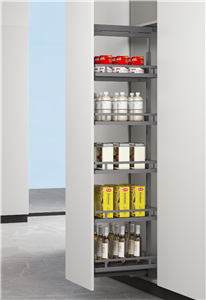
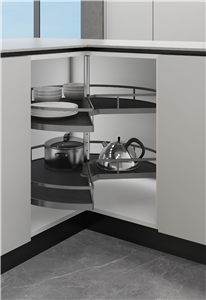
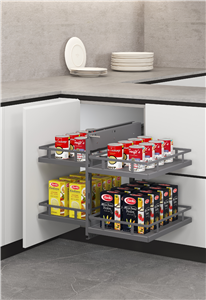
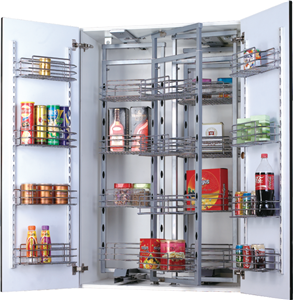
Cabinet pull-out wall units find applications across various sectors. In residential and commercial kitchens, they streamline access to utensils and ingredients, while in industrial workshops, they organize tools and parts efficiently. Healthcare facilities use them for medical supply storage, ensuring quick retrieval in critical situations. Foshan Meijiayi Hardware Company Limited collaborates with global partners, such as procurement firms in Europe and distributors in North America, to supply these solutions. Their partnerships focus on providing technical support and customized designs, reinforcing their authority in the hardware manufacturing space.
FAQ: Insights for Engineers and Procurement Managers
1. What standards do these pull-out units comply with? They meet international standards like ISO 9001 for quality management and ANSI/BHMA for durability, ensuring reliability in diverse environments.
2. How do they handle heavy loads without sagging? Advanced engineering uses reinforced rails and high-grade bearings, tested to support up to 100 kg per unit, with load distribution mechanisms to prevent deformation.
3. Can they be customized for specific dimensions? Yes, modular designs allow for bespoke sizes and configurations, with CAD support for precise integration into existing cabinetry.
4. What maintenance is required over time? Minimal maintenance is needed; periodic lubrication of moving parts and routine checks for alignment suffice, thanks to corrosion-resistant materials.
5. How do they improve energy efficiency in spaces? By optimizing storage, they reduce the need for additional lighting or climate control, as organized access minimizes door openings and energy loss.
Comparison of Conventional vs. Advanced Pull-Out Systems
| Aspect | Conventional Systems | Advanced Systems |
|---|---|---|
| Installation Time | High (prone to errors) | Reduced by 30% |
| Maintenance Cost | Up to $5,000 annually | Decreased by 35% |
| Space Utilization | Often inefficient | Improved by 25% |
| Durability | Low (frequent wear) | High (corrosion-resistant) |
| Customization | Limited | Fully adaptable |
Conclusion and Call to Action
In summary, cabinet pull-out wall units are more than storage solutions; they are critical components that impact efficiency, cost, and user experience in high-end manufacturing. By addressing technical pain points with engineered solutions, industries can unlock significant value. Foshan Meijiayi Hardware Company Limited exemplifies this through innovative designs and strategic partnerships. To delve deeper into the technical specifications and benefits, download our comprehensive whitepaper or contact our sales engineers for a personalized consultation. Transform your space from a constraint into a competitive edge today.