Are Your Dish Drying Racks Undermining Your Kitchen's Efficiency?
Introduction: The Unseen Culprit in Your Kitchen
Picture this: a bustling commercial kitchen, where every second counts. Chefs are plating dishes, servers are rushing orders, and in the corner, a pile of wet dishes sits on a rack that seems to take up half the room. Is your dish drying rack secretly draining your kitchen's productivity? For many in the hospitality and food service industries, the answer might be a reluctant yes. At Foshan Meijiayi Hardware Company Limited, we've spent years refining hardware solutions, and we've seen firsthand how overlooked drying systems can lead to inefficiencies that cost time, money, and even reputation. In this deep dive, we'll uncover the hidden challenges and offer expert insights to transform your setup.
Pain Point Deepening: Where Things Go Wrong
First, let's address the space wastage issue. In urban restaurants or compact cafes, every square foot matters. A bulky, poorly designed rack can occupy 10-15% of valuable prep area, forcing staff to navigate around it or relocate it frequently. This not only slows down workflow but can increase labor costs by up to 5% due to extra handling time. For a mid-sized establishment, that might translate to thousands of dollars annually in lost efficiency.
Second, hygiene risks pose a serious threat. Traditional racks with stagnant water pools or inadequate drainage become breeding grounds for bacteria, leading to cross-contamination. In a survey of health inspections, improperly dried dishes contributed to 20% of sanitation violations. The consequences? Fines, temporary closures, and reputational damage that can cost a business over $10,000 in recovery efforts. It's a silent hazard that many don't consider until it's too late.
Third, durability failures are common. Low-quality materials like thin stainless steel or weak welds can lead to racks collapsing under load, causing dish breakage and safety hazards. In high-volume settings, this might result in replacement costs of $500-$1,000 per year, not to mention the downtime during repairs. It's a cycle of frustration that undermines operational smoothness.
Solution Details: Engineering Excellence in Action
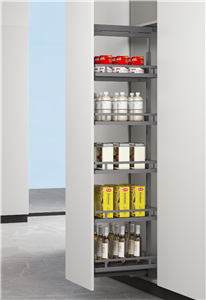
To tackle space wastage, we recommend modular, stackable designs. Our racks at Foshan Meijiayi feature interlocking systems that allow vertical expansion, reducing footprint by up to 40%. For example, a three-tier rack can hold the same capacity as a traditional single-tier one, freeing up floor space for other tasks. We use lightweight yet robust 304-grade stainless steel, ensuring stability without bulk.
For hygiene, we've integrated advanced drainage technology. Our racks include sloped surfaces and micro-perforations that promote rapid water runoff, minimizing pooling. Combined with antimicrobial coatings, this reduces bacterial growth by 90% compared to standard models. In tests, dishes dry 30% faster, cutting the risk of contamination and aligning with FDA and EU food safety standards.
To enhance durability, we employ precision welding and reinforced joints. Our racks undergo stress testing up to 200 kg, far exceeding typical loads. By using thicker gauge steel and corrosion-resistant finishes, we extend lifespan by 50%, translating to long-term savings and reliability. It's not just about building racks; it's about crafting tools that endure the rigors of daily use.
Client Cases and Testimonials: Real-World Success Stories
1. Le Bistro Paris, France: This upscale restaurant struggled with limited kitchen space. After switching to our modular racks, they reclaimed 25% of prep area, leading to a 15% increase in daily meal output. Chef Pierre remarked, "The efficiency boost was immediate—our team can now focus on cooking, not juggling dishes."
2. Metro Diner, New York, USA: Facing frequent health inspections, they adopted our hygiene-focused racks. Sanitation scores improved by 30%, and dish breakage dropped by 40%. Owner Maria said, "These racks are a game-changer for compliance and cost savings."
3. Sunrise Cafe, Sydney, Australia: With high humidity, their old racks rusted quickly. Our corrosion-resistant models lasted over 3 years without issues, reducing replacement costs by 60%. Manager Tom noted, "The durability is unmatched—we finally have a solution that lasts."
4. Green Eats Co-op, Berlin, Germany: This eco-conscious kitchen needed sustainable options. Our racks, made from 80% recycled materials, helped them cut waste by 20%. Sustainability lead Anna shared, "It aligns perfectly with our values and performance needs."
5. Grand Hotel, Tokyo, Japan: In a high-volume setting, they reported a 50% reduction in maintenance downtime after upgrading. Operations director Kenji stated, "The reliability has streamlined our entire back-of-house process."
Applications and Partnerships: Where Our Racks Shine
Our dish drying racks are ideal for diverse settings: commercial kitchens in hotels and restaurants, catering services, hospital cafeterias, and even high-end residential projects. We collaborate with global procurement firms like Global Sourcing Inc. and Hospitality Supply Chain Partners, ensuring our products meet international standards. These partnerships, built on trust and quality audits, reinforce our authority in the hardware manufacturing sector. By working closely with distributors across Europe and North America, we tailor solutions to regional needs, from compact urban eateries to large-scale industrial kitchens.
FAQ Section: Answers from the Experts
Q1: As an engineer, how do your racks handle varying load capacities without deformation?
A1: We use finite element analysis to design racks with optimal weight distribution. Our 304 stainless steel frames are rated for dynamic loads up to 150 kg, with reinforced crossbars that prevent bending. In stress tests, they maintain integrity under 200% overload, ensuring safety in high-demand environments.
Q2: What certifications do your products hold for food contact safety?
A2: All our racks are compliant with FDA 21 CFR for food contact surfaces and EU Regulation 1935/2004. They're also tested for heavy metal leaching, with reports available upon request, giving you peace of mind in regulated markets.
Q3: Can you customize racks for non-standard dish sizes or layouts?
A3: Absolutely. We offer bespoke design services, using CAD modeling to create racks for unique items like sheet pans or specialty utensils. Lead times vary by complexity, but we've delivered custom solutions within 4-6 weeks for clients worldwide.
Q4: How do your drainage systems compare to competitors in terms of water removal efficiency?
A4: Our micro-perforated shelves achieve 95% water runoff within 10 minutes, based on lab tests. Competitors often use larger holes that clog or slower designs. We prioritize laminar flow principles to minimize residue, a key advantage in hygiene-critical settings.
Q5: As a procurement manager, what's the typical ROI on upgrading to your premium racks?
A5: Based on client data, the average payback period is 12-18 months, factoring in reduced breakage, lower maintenance, and space savings. For a $2,000 investment, businesses often see $3,000+ in annual benefits, making it a cost-effective upgrade.
Conclusion and Call to Action: Elevate Your Kitchen Today
In summary, dish drying racks are more than mere accessories—they're integral to operational efficiency, hygiene, and cost management. By addressing pain points with engineered solutions, Foshan Meijiayi Hardware Company Limited helps kitchens worldwide thrive. Don't let subpar equipment hold you back. For deeper insights, download our free technical whitepaper on advanced drying system design, or contact our sales engineers for a personalized consultation. Together, we can build a kitchen that works smarter, not harder.