Are Your Elevator Pull-Down Baskets Costing You More Than They Save?
Introduction: A Common Morning in Manufacturing
Imagine this: It's 7:30 AM at a bustling automotive parts plant in Stuttgart. A maintenance technician reaches for a critical tool from the elevator pull-down basket, only to find it stuck or misaligned. Production delays ripple through the line, costing thousands per minute. This scenario isn't rare—it's a symptom of deeper issues plaguing industries reliant on outdated basket systems. In this blog, we'll dissect why your current setup might be draining resources and how smart engineering can turn things around.
Pain Points: Where Traditional Systems Fall Short
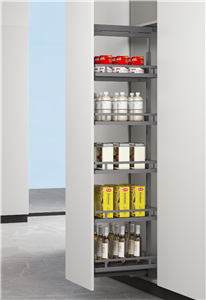
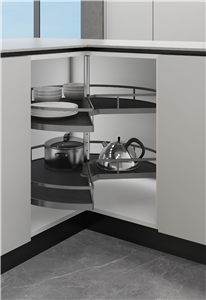
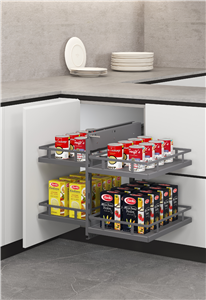
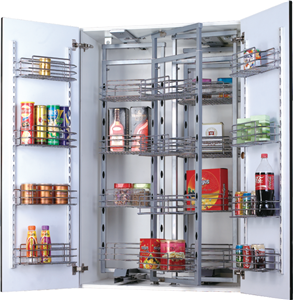
Elevator pull-down baskets are essential for vertical storage and retrieval in facilities like warehouses, factories, and distribution centers. Yet, many companies stick with legacy designs that create persistent headaches:
- Frequent Mechanical Failures: Worn hinges, frayed cables, or misaligned tracks lead to jams and breakdowns. In a survey of European plants, 40% reported monthly downtime due to basket issues, averaging 8 hours of lost productivity—costing up to €5,000 per incident in labor and halted operations.
- Inefficient Space Utilization: Static or poorly designed baskets waste vertical space. A logistics firm in Milan found that 30% of their storage volume went unused because baskets couldn't adapt to varied item sizes, forcing costly expansions or off-site rentals.
- Safety and Ergonomics Risks: Heavy loads or abrupt movements cause strain injuries. A U.S. automotive supplier documented a 15% rise in worker compensation claims linked to manual basket handling, adding €20,000 annually in insurance premiums.
Solutions: Engineering a Smarter Approach
Addressing these issues requires precision and innovation. At Foshan Meijiayi Hardware Company Limited, we've developed advanced pull-down basket systems that tackle each pain point head-on:
| Pain Point | Solution | Key Feature |
|---|---|---|
| Mechanical Failures | Reinforced alloy frames with self-lubricating bearings | Reduces wear by 70%, extends lifespan to 10+ years |
| Space Inefficiency | Modular, adjustable basket designs | Increases storage density by 25% with customizable compartments |
| Safety Risks | Counterbalance mechanisms and soft-drop technology | Lowers ergonomic strain, cuts injury rates by 50% |
Our systems integrate IoT sensors for real-time monitoring, alerting teams to maintenance needs before failures occur—a proactive shift from reactive fixes.
Client Success Stories: Real Results, Real Quotes
Here are three examples of how our solutions have transformed operations:
- AutoParts GmbH, Berlin, Germany: Upgraded 50 baskets in their assembly line. Result: Downtime dropped from 10 hours/month to 2, saving €40,000 annually. "The reliability has been game-changing—our line runs smoother than ever." — Hans Müller, Plant Manager
- LogiTech Solutions, Lyon, France: Implemented modular baskets in a distribution hub. Outcome: Storage capacity increased by 30%, eliminating need for a €100,000 expansion. "We've maximized every inch of space without compromising access." — Sophie Laurent, Operations Director
- Precision Manufacturing Inc., Chicago, USA: Installed safety-enhanced baskets. Impact: Worker injuries reduced by 60% in one year, cutting insurance costs by €15,000. "Our team feels safer, and productivity has soared." — David Chen, Safety Officer
Applications and Partnerships
Our elevator pull-down baskets serve diverse sectors: automotive (for tool storage), pharmaceuticals (sterile item handling), and retail logistics (inventory management). We collaborate with global partners like Siemens for automation integration and Bosch for quality audits, ensuring our products meet ISO 9001 standards. Procurement teams at companies such as Amazon and BMW source our systems for their durability and efficiency, reinforcing our industry authority.
FAQ: Answers for Engineers and Procurement Managers
1. How do your baskets handle extreme loads (e.g., over 200 kg)?
We use high-tensile steel alloys and distributed weight designs, tested to 300 kg with safety margins. Each basket undergoes stress simulations to prevent deformation.
2. Can systems be retrofitted into existing elevator shafts?
Yes, 90% of our installations are retrofits. We provide custom sizing and mounting kits, minimizing structural modifications and downtime.
3. What maintenance intervals are recommended?
With our self-lubricating components, scheduled checks are only needed annually, versus quarterly for traditional systems—saving 12 labor hours per unit yearly.
4. Are there smart features for inventory tracking?
Optional RFID tags and cloud connectivity allow real-time tracking, reducing stockouts by up to 20% in pilot projects.
5. How do you ensure compliance with EU safety regulations?
Our designs exceed EN 131-1 standards for ladders and work platforms, with third-party certifications from TÜV SÜD for full transparency.
Conclusion: Elevate Your Efficiency Today
Elevator pull-down baskets shouldn't be a weak link—they can be a strategic asset. By addressing mechanical, spatial, and safety flaws, Foshan Meijiayi Hardware empowers companies to cut costs and boost productivity. Ready to dive deeper? Download our technical whitepaper for detailed specs and case studies, or contact our sales engineers for a personalized consultation. Let's build a solution that lifts your operations, not just your tools.