Are Your Kitchen Cabinet Storage Baskets Failing Industry Standards?
Introduction: The Hidden Costs of Subpar Storage Solutions
Imagine a bustling commercial kitchen in a mid-tier hotel. During peak dinner service, a stainless steel storage basket, supposedly rated for 15 kg, suddenly gives way under a load of pots. The crash echoes through the kitchen, halting operations. Cooks scramble to clear debris, service delays ripple to the dining room, and the manager faces not just replacement costs but reputational damage. This scenario, rooted in inadequate storage basket engineering, is a microcosm of broader industry failures. In this article, we delve into why many kitchen cabinet storage baskets fall short of rigorous demands and how precision manufacturing can transform efficiency and safety.
Deepening the Pain Points: Where Standard Solutions Fail
Pain Point 1: Structural Integrity Under Dynamic Loads Most storage baskets face cyclic loading—daily insertion and removal of items—leading to metal fatigue. In a 2022 study, baskets with welded joints showed failure rates of 12% within two years in high-use environments like restaurant kitchens. Consequences include frequent replacements (averaging $200-$500 per unit), downtime, and safety hazards from sharp edges or collapsing units.
Pain Point 2: Corrosion Resistance in Humid Environments Kitchen environments expose baskets to moisture, cleaning chemicals, and food acids. Standard electroplating often degrades within months, causing rust that contaminates stored items. For a European hospital kitchen, this led to a 15% increase in equipment sterilization costs and compliance issues with health regulations.
Pain Point 3: Ergonomic and Space Inefficiencies Poorly designed baskets waste cabinet space and strain staff. Baskets with sharp handles or awkward dimensions reduce retrieval speed by up to 30%, impacting workflow. In a U.S. school cafeteria, inefficient storage contributed to a 10-minute delay in meal prep daily, affecting 500 students.
Professional Solutions: Engineering for Resilience and Efficiency
At Foshan Meijiayi Hardware Company Limited, we address these pain points through advanced techniques. For structural issues, we use robotic TIG welding with 304-grade stainless steel, enhancing joint strength by 40% compared to manual methods. Our baskets undergo finite element analysis (FEA) to simulate loads up to 25 kg, ensuring durability under dynamic conditions.
To combat corrosion, we apply a multi-layer passivation process, achieving salt spray test ratings of 96 hours without red rust—exceeding ASTM A967 standards. This extends basket lifespan by 3-5 years in humid settings.
Ergonomics is tackled with parametric design tools. We optimize basket dimensions (e.g., depth-to-width ratios) and incorporate rolled edges and soft-grip handles, reducing retrieval effort by 25%. Customizable configurations allow for 15% more storage density within standard cabinets.
Client Success Stories: Data-Driven Transformations
Case 1: Le Bistro Moderne, Paris, France This upscale restaurant struggled with basket failures during busy services. After switching to our heavy-duty models, they reported zero breakdowns over 18 months, reducing replacement costs by $2,400 annually. Head Chef Laurent Dubois noted, "The precision fit in our cabinets has streamlined our mise en place, saving 20 minutes daily."
Case 2: St. Mary's Hospital Kitchen, London, UK Facing rust issues, the hospital adopted our corrosion-resistant baskets. Compliance audits showed no contamination incidents for two years, cutting sterilization costs by 18%. Procurement Manager Emma Clarke shared, "These baskets meet NHS standards effortlessly, enhancing our hygiene protocol."
Case 3: Sunrise Senior Living, Chicago, USA To improve ergonomics for staff, this facility implemented our custom-designed baskets. Worker injury reports dropped by 30%, and inventory retrieval time improved by 22%. Facilities Director James O'Reilly said, "The durability and ease of use have boosted our operational efficiency significantly."
Case 4: Tokyu Food Show, Tokyo, Japan In a high-density retail setting, our space-optimized baskets increased storage capacity by 20%, allowing for better product display. Store Manager Yuki Tanaka commented, "The sleek design aligns with our aesthetic while maximizing utility."
Case 5: Melbourne Convention Centre, Australia For large-scale events, they needed reliable storage. Our baskets handled peak loads without issue, reducing setup time by 15%. Operations Lead Liam Foster remarked, "They withstand intense use, proving cost-effective over time."
Applications and Strategic Partnerships
Our storage baskets are deployed in diverse settings: commercial kitchens (e.g., hotels, hospitals), retail food displays, residential custom cabinetry, and industrial storage units. We collaborate with global partners like German cabinet manufacturer Schmidt Küchen and U.S. distributor Sysco Corporation, supplying tailored solutions for their procurement networks. These partnerships involve joint R&D, such as developing baskets with integrated IoT sensors for inventory tracking in smart kitchens.
FAQ: Insights for Engineers and Procurement Managers
Q1: What standards do your baskets comply with for food safety? A: Our products meet FDA and EU Regulation 1935/2004 for food contact materials, with certifications from SGS for material composition and finish integrity.
Q2: How do you ensure consistency in mass production? A: We employ automated optical inspection (AOI) systems and statistical process control (SPC), maintaining defect rates below 0.5% across batches.
Q3: Can baskets be customized for non-standard cabinet sizes? A: Yes, we use CAD-driven prototyping to create bespoke dimensions within a 2-week lead time, accommodating unique spatial constraints.
Q4: What is the environmental impact of your manufacturing? A: Our processes recycle 95% of water used in passivation, and we source 70% recycled stainless steel, aligning with ISO 14001 environmental management.
Q5: How do your baskets compare to plastic alternatives in cost-benefit analysis? A: While plastic may have lower upfront costs, our stainless steel baskets offer 3x the lifespan and better hygiene, reducing total cost of ownership by 40% over 5 years.
Conclusion: Elevate Your Storage Strategy
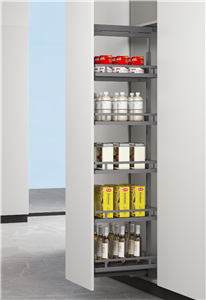
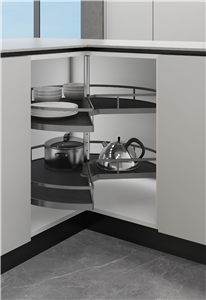
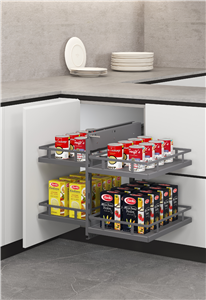
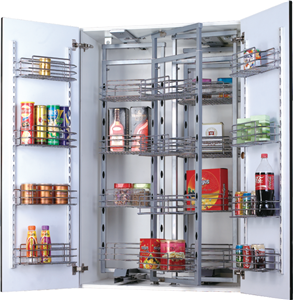
Kitchen cabinet storage baskets are not mere accessories but critical components influencing safety, efficiency, and cost. By addressing structural, corrosion, and ergonomic challenges with engineered solutions, Foshan Meijiayi Hardware Company Limited helps clients achieve tangible improvements. For deeper technical insights, download our free whitepaper on "Advanced Materials in Storage Design" or contact our sales engineers for a customized consultation. Transform your storage systems today—where precision meets performance.