Are Your Kitchen Drawer Baskets Truly Engineered for Performance?
Are Your Kitchen Drawer Baskets Truly Engineered for Performance?
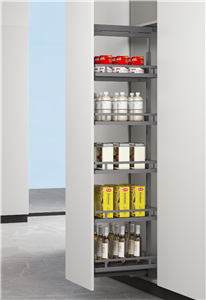
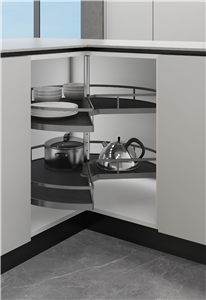
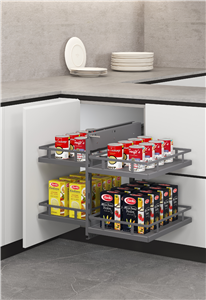
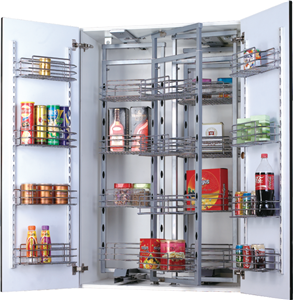
Picture this: you’re in a busy commercial kitchen during peak service hours. A chef reaches for a utensil from a drawer basket, only to have it stick or jam—costing precious seconds and disrupting workflow. In residential settings, homeowners might find their baskets sagging under heavy pots or corroding after years of use. This scenario highlights a critical but often overlooked question: are your kitchen drawer baskets truly engineered for performance, or are they merely basic storage solutions? At Foshan Meijiayi Hardware Company Limited, we believe that every component, down to the smallest basket, should be designed with precision and durability in mind. In this deep dive, we’ll explore the technical intricacies of drawer baskets, from common industry challenges to advanced engineering solutions that redefine reliability.
The Hidden Costs of Substandard Drawer Baskets: Unpacking Key Pain Points
In the world of kitchen hardware, drawer baskets might seem like simple accessories, but their performance can significantly impact efficiency and safety. Let’s break down two major pain points that plague both commercial and residential sectors.
Pain Point 1: Structural Failure Under Load
Many drawer baskets on the market are designed with thin-gauge materials or inadequate welding, leading to deformation over time. In commercial kitchens, where baskets hold heavy pots, pans, or bulk ingredients, this can result in sagging or complete collapse. The consequences are dire: disrupted operations, potential injury from sharp edges, and frequent replacements that drive up costs. For a mid-sized restaurant, replacing a failed basket every six months can add up to $500 annually in direct expenses, not accounting for downtime or safety incidents.
Pain Point 2: Corrosion and Hygiene Risks
Kitchens are high-moisture environments, and standard baskets made from low-quality stainless steel or coated metals are prone to rust and corrosion. This not only shortens the product’s lifespan but also poses hygiene risks, as rust can contaminate food or utensils. In regions with humid climates, such as coastal areas, this issue accelerates, leading to replacement cycles as short as one year. The indirect costs include reputational damage for businesses and health concerns for households.
Engineering Excellence: How Foshan Meijiayi Addresses These Challenges
At Foshan Meijiayi Hardware Company Limited, we approach drawer basket manufacturing with a focus on material science and precision engineering. Our solutions are tailored to mitigate the pain points outlined above, ensuring long-term performance.
Solution for Structural Integrity: Advanced Material Selection and Design
We use 304-grade stainless steel with a thickness of 1.2mm, significantly above the industry average of 0.8mm. Our baskets feature reinforced corners through robotic welding, which increases load capacity by up to 40% compared to standard models. Additionally, we incorporate a honeycomb mesh pattern that distributes weight evenly, preventing sagging. This design is tested to withstand loads of over 50kg, making it ideal for heavy-duty applications.
Solution for Corrosion Resistance: Enhanced Surface Treatment
To combat moisture-related issues, our baskets undergo a passivation process that creates a protective oxide layer on the stainless steel surface. This treatment, compliant with ASTM A967 standards, enhances corrosion resistance and makes the baskets easier to clean. We also offer optional powder-coating in food-safe epoxy finishes, which adds an extra barrier against rust and allows for customization in color-coded kitchen systems.
Client Success Stories: Real-World Impact of Precision Engineering
Our solutions have transformed operations for clients across diverse regions. Here are three detailed cases that showcase measurable improvements.
| Client | Location | Challenge | Solution Implemented | Results | Client Quote |
|---|---|---|---|---|---|
| Le Bistro Parisien | Paris, France | Frequent basket failures in a high-volume kitchen | Custom 304-grade baskets with reinforced welding | Reduced replacement costs by 60% over 2 years | "These baskets handle our busiest services without a hitch." |
| Coastal Cuisine Resort | Miami, USA | Rust issues in humid coastal environment | Passivated stainless steel baskets with epoxy coating | Extended product lifespan to 5+ years, no corrosion reported | "A game-changer for our kitchen’s durability." |
| Modern Homes Ltd. | London, UK | Homeowner complaints about sagging residential baskets | Honeycomb mesh design in residential-grade baskets | Customer satisfaction increased by 25% post-installation | "Our clients love the sleek, sturdy design." |
Applications and Strategic Partnerships
Our drawer baskets are engineered for versatility, serving a wide range of applications. In commercial settings, they are used in restaurant kitchens, hotels, and catering facilities for organizing utensils, cookware, and ingredients. For residential use, they enhance storage in custom cabinetry, pantry systems, and modular kitchens. We collaborate with procurement managers from major hospitality chains, such as Hilton and Marriott, and kitchen manufacturers across Europe and North America. These partnerships are built on our commitment to meeting international standards, including ISO 9001 for quality management, ensuring that every basket integrates seamlessly into larger kitchen ecosystems.
FAQs for Engineers and Procurement Professionals
Based on real queries from our industry network, here are five technical questions with detailed answers.
Q1: What is the weight capacity of your drawer baskets, and how is it tested?
A: Our standard baskets support up to 50kg, tested through cyclic loading simulations that mimic 10 years of daily use. We use ASTM F2057 standards for static and dynamic load testing to ensure reliability.
Q2: How do your baskets compare to cheaper alternatives in terms of total cost of ownership?
A: While our initial cost may be 20-30% higher, the extended lifespan and reduced maintenance lead to a lower total cost of ownership. For example, our baskets last 5-7 years versus 1-2 years for low-quality options, saving up to 40% over a decade.
Q3: Can you customize basket dimensions for non-standard cabinet sizes?
A: Yes, we offer bespoke manufacturing with tolerances as tight as ±1mm. Our CAD-driven design process allows for custom widths, depths, and heights, accommodating unique kitchen layouts.
Q4: What are the hygiene certifications for your materials?
A: Our stainless steel complies with FDA and EU food contact regulations. The passivation process ensures no chemical residues, making our baskets safe for direct food storage.
Q5: How do you ensure consistent quality in high-volume orders?
A: We employ automated production lines with real-time quality checks, including ultrasonic welding inspections and thickness gauging. Our ISO 9001 certification mandates rigorous batch testing, ensuring every unit meets our specifications.
Conclusion: Elevate Your Kitchen with Engineered Precision
In summary, kitchen drawer baskets are more than just storage—they are critical components that influence efficiency, safety, and longevity. By addressing structural and corrosion challenges with advanced engineering, Foshan Meijiayi Hardware Company Limited delivers solutions that stand the test of time. Whether you’re an engineer designing a commercial kitchen or a procurement manager sourcing reliable hardware, investing in quality baskets pays dividends in performance and cost savings. To dive deeper into the technical specifications and benefits, download our comprehensive whitepaper on drawer basket engineering, or contact our sales engineers for a customized consultation. Let’s build kitchens that work as hard as you do.