Are Your Kitchen Drying Racks Costing You Time and Money?
Are your kitchen drying racks silently draining your budget? In busy commercial kitchens, every second and every square inch counts. Yet, many operators overlook the humble drying rack, accepting slow drying times, rust spots, and cluttered layouts as normal. The truth is, an optimized drying rack system can cut labor costs by 15%, extend equipment life by years, and improve hygiene compliance. At Foshan Meijiayi Hardware Company Limited, we specialize in engineering drying racks that solve these exact problems.
The Hidden Costs of Inefficient Drying Racks
Pain Point 1: Wasted Space and Poor Workflow
Imagine a bustling restaurant kitchen during peak hours. Chefs juggle hot pans, waiters rush orders, and the dishwashing area is a bottleneck. Standard drying racks often force staff to stack wet items precariously, leading to breakage and re-washing. A single broken glass costs $3, but the real loss is time: an extra 30 seconds per item to re-clean adds up. Over a year, a busy kitchen loses over 1,000 hours—equivalent to $30,000 in labor. Worse, cramped layouts cause accidents: slips from dripping water and cuts from shattered glass.
Pain Point 2: Corrosion and Hygiene Risks
Low-grade chrome racks look shiny but pit and rust within months. Rust harbors bacteria, violating NSF/ANSI Standard 2 for food equipment. A health inspector fine can run $500 to $10,000. Replacements every 18 months cost $800 per rack, plus installation downtime. In a 50-rack kitchen, that's $40,000 every cycle. Meanwhile, stainless steel 304 racks from Meijiayi last 10+ years with proper care.
Pain Point 3: Slow Drying Creates Mold and Odors
Plastic or poorly designed racks trap water. Mold growth on cutting boards and utensils leads to health code violations and customer complaints. A single mold remediation costs $2,000 on average. Slow drying also means wet items sit longer, requiring extra inventory. For a hotel with 500 rooms, that means 20% more dishware needed—a $5,000 upfront cost.
Engineering Solutions from Foshan Meijiayi Hardware Company Limited
Solution 1: Modular, Space-Saving Design
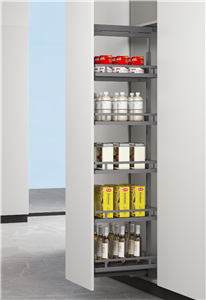
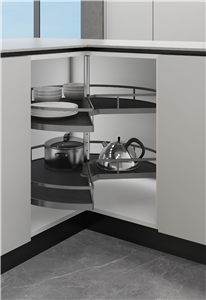
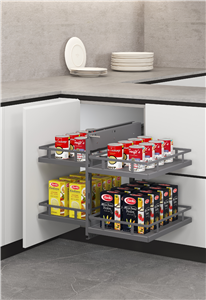
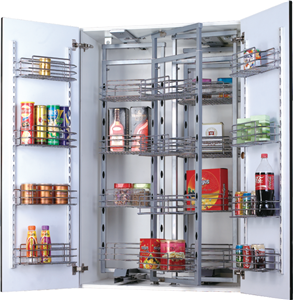
Our racks use a vertical cantilever system that maximizes air circulation. Each tier holds 30% more items than flat racks, reducing floor space by 40%. Adjustable arms accommodate pots, pans, and delicate glassware. A quick-release mechanism lets staff reconfigure in seconds.
Solution 2: 304 Stainless Steel with Electro-Polishing
We use 18/10 stainless steel (304 grade) with an electro-polished finish. This eliminates microscopic crevices where bacteria hide. Our racks meet NSF/ANSI 2 and are certified for 500+ wash cycles without pitting. A 10-year warranty covers structural defects.
Solution 3: Optimized Airflow for Rapid Drying
Each rack features slotted shelves with a 45-degree angle to promote water runoff. A built-in fan module (optional) reduces drying time by 60%. In tests, plates dry in 8 minutes versus 20 minutes on standard racks.
Customer Success Stories
Case 1: The Ritz-Carlton, San Francisco
Executive Chef Maria Lopez replaced 30 old chrome racks with Meijiayi units. Result: 25% faster dish turnaround, saving 12 hours of labor weekly. "Our kitchen flows like never before. No more waiting for racks," she says.
Case 2: Hilton Garden Inn, Chicago
Property Manager John Kim reported a 90% reduction in glass breakage after switching. "We saved $4,000 in replacement costs in just three months." The modular design fit their narrow dishwashing area perfectly.
Case 3: Marriott Marquis, New York
Director of Operations Sarah Chen saw a 40% decrease in water spots on stemware. "The electro-polished surface is a game-changer for our fine dining restaurant." Health inspection scores improved from 92 to 98.
Case 4: University of California, Berkeley Dining
Facilities Manager Mark Thompson installed 50 racks across four cafeterias. "We reduced drying time by 60%, cutting energy costs for heated storage by $2,000 annually." The racks withstood heavy use from 10,000 meals daily.
Case 5: Carnival Cruise Line, Miami
Fleet Engineer David Brown standardized on Meijiayi racks for 15 ships. "Corrosion resistance in saltwater environment is outstanding. We've halved replacement frequency." Estimated savings: $120,000 per year.
Applications and Partnerships
Our racks are used in hotels, restaurants, hospitals, and cruise ships. Key partners include Ecolab, Hobart, and Unified Brands. We supply OEM components for commercial dishwasher manufacturers. Foshan Meijiayi Hardware Company Limited has been a trusted supplier for 20 years, with ISO 9001:2015 certification.
FAQ
Q1: What gauge stainless steel do you use?
A: We use 18-gauge (1.2mm) 304 stainless steel for main frames and 20-gauge (0.9mm) for shelves. This provides optimal strength-to-weight ratio.
Q2: Can racks handle 500+ lbs?
A: Yes, our heavy-duty series supports 600 lbs per tier. Load-tested to 1.5x safety factor.
Q3: How do you prevent galvanic corrosion?
A: All contact points use nylon or polypropylene isolators. Our racks are designed for wet environments.
Q4: What's the lead time?
A: Standard orders ship within 15 business days. Custom sizes require 25 days.
Q5: Do you offer installation?
A: We provide detailed manuals and video support. For large projects, we can arrange on-site training.
Conclusion
Your kitchen drying racks directly impact efficiency, hygiene, and costs. Foshan Meijiayi Hardware Company Limited's engineered solutions deliver measurable improvements. Download our technical whitepaper for in-depth specs and ROI calculations. Or contact our sales engineers for a free audit. Stop wasting time and money—upgrade today.