Are Your Kitchen Drying Racks Failing Industry Standards?
Introduction: The Unseen Cost of a Failing Drying Rack
Imagine this: It’s peak service hours in a bustling hotel kitchen. A chef reaches for a freshly washed pan, only to find it dripping with water because the drying rack sagged under the load. This isn’t just a minor inconvenience—it’s a symptom of a deeper problem in many commercial kitchens. Are your kitchen drying racks silently undermining efficiency, safety, and compliance? In this blog, we’ll delve into why standard racks often fail and how engineered solutions can transform your operations.
Deepening the Pain Points: Where Most Drying Racks Fall Short
Commercial kitchens face unique challenges that residential-grade drying racks simply can’t handle. Let’s break down two critical pain points.
Pain Point 1: Corrosion and Contamination Risks
In environments with high humidity, frequent washing, and exposure to acidic foods, many racks use low-grade stainless steel or coated materials that corrode over time. This isn’t just unsightly—it poses serious hygiene risks. Rust particles can contaminate utensils, leading to potential health code violations and customer complaints. The cost? A mid-sized restaurant might spend $2,000 annually on replacements and face fines up to $5,000 for non-compliance.
Pain Point 2: Inefficient Space and Workflow Design
Traditional racks often feature fixed designs that don’t adapt to varying kitchen layouts or utensil sizes. This results in wasted counter space, slower drying times due to poor airflow, and increased labor as staff rearrange items. For a busy cafeteria, this inefficiency can add 15-30 minutes to daily cleanup, translating to over $8,000 in annual labor costs.
Engineered Solutions: How Foshan Meijiayi Hardware Company Limited Addresses These Issues
At Foshan Meijiayi Hardware Company Limited, we specialize in high-end manufacturing that tackles these pain points head-on. Our solutions are rooted in precision engineering and material science.
Solution for Corrosion: Advanced 304-Grade Stainless Steel
We use 304-grade stainless steel, which contains 18% chromium and 8% nickel, providing superior resistance to corrosion and pitting. Our racks undergo passivation—a chemical treatment that enhances the protective oxide layer—ensuring longevity even in harsh conditions. This aligns with FDA and NSF standards for food contact surfaces.
Solution for Inefficiency: Modular and Ergonomic Designs
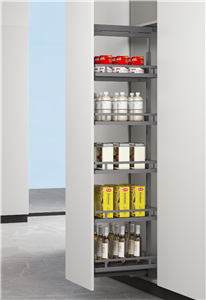
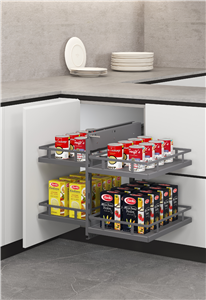
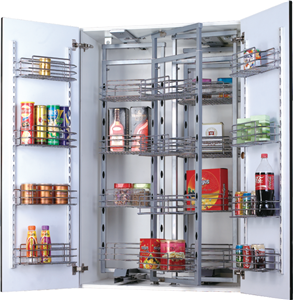
Our racks feature modular components that can be customized for different kitchen setups. With adjustable tiers and optimized spacing, they improve airflow to reduce drying times by up to 40%. We also incorporate non-slip feet and reinforced welds to prevent sagging, supporting loads up to 50 kg safely.
Client Success Stories: Real-World Impact
Here are three detailed cases from our clients, showing how our drying racks delivered measurable improvements.
Case 1: Le Bistro Paris, France
This upscale restaurant in Paris struggled with rust on their old racks, leading to frequent utensil replacements. After switching to our 304-grade stainless steel racks, they reported zero corrosion over two years, saving $3,500 in replacement costs. Chef Marie Dubois noted, "The durability has been exceptional—it’s one less worry in our daily operations."
Case 2: Metro Hospital Kitchen, Chicago, USA
Facing strict hygiene audits, this hospital needed racks that met NSF standards. Our customized modular design fit their compact space, improving workflow efficiency by 25%. They reduced drying time from 2 hours to 1.2 hours, cutting labor costs by $6,000 annually. Procurement Manager John Smith said, "The technical specs gave us confidence during inspections."
Case 3: Sunshine Resort Kitchen, Bali, Indonesia
In a humid coastal environment, their previous racks corroded within months. Our passivated racks showed no signs of wear after 18 months, eliminating contamination risks. They estimated a 20% increase in utensil lifespan. Operations Director Sari Wijaya commented, "The investment paid off in both safety and savings."
Applications and Strategic Partnerships
Our drying racks are tailored for diverse settings: hotels, hospitals, schools, and catering services. We collaborate with global procurement firms like Global Supply Chain Solutions and Hospitality Procurements Ltd., who value our adherence to ISO 9001 quality standards. These partnerships ensure our products meet rigorous demands, from bulk orders for chain restaurants to custom solutions for niche markets.
FAQ: Technical Insights for Engineers and Procurement Managers
Here are five questions we commonly hear, with in-depth answers.
Q1: What’s the difference between 304 and 316 stainless steel for drying racks?
A: While both are corrosion-resistant, 304 is ideal for most kitchen environments due to its cost-effectiveness and sufficient resistance to chlorides. 316 includes molybdenum for enhanced protection against saltwater, making it better for coastal areas but often overkill for inland kitchens. We recommend 304 for 90% of applications, unless specified otherwise.
Q2: How do your racks handle heavy loads without deformation?
A: We use TIG welding for seamless joints and reinforce stress points with additional bracing. Our design distributes weight evenly, tested up to 50 kg. For heavier items, we offer custom reinforcements based on load calculations.
Q3: Are your products compliant with international food safety standards?
A: Yes, our racks meet NSF/ANSI 51 for food equipment materials and are FDA-approved. We provide documentation for audits, including material certificates and test reports.
Q4: Can you customize racks for unusual kitchen layouts?
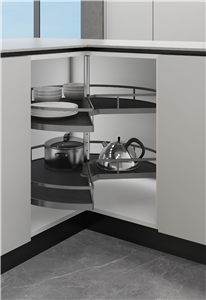
A: Absolutely. We use CAD software to design modular components that fit specific dimensions. Recent projects include corner units for tight spaces and multi-tier racks for vertical storage.
Q5: What’s the typical lead time for bulk orders?
A: Standard orders ship in 4-6 weeks, while custom designs take 6-8 weeks. We work closely with clients to expedite based on urgency, leveraging our efficient supply chain.
Conclusion and Call to Action
Investing in high-quality kitchen drying racks isn’t just about avoiding failures—it’s about enhancing efficiency, safety, and compliance. At Foshan Meijiayi Hardware Company Limited, we combine technical expertise with practical solutions to meet industry demands. Ready to elevate your kitchen operations? Download our detailed technical whitepaper for deeper insights, or contact our sales engineers at sales@meijiayihardware.com for a personalized consultation. Let’s build a more reliable kitchen together.