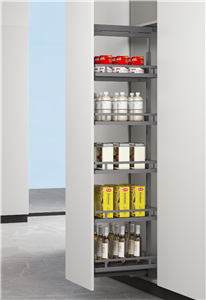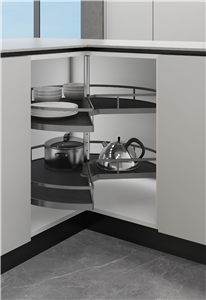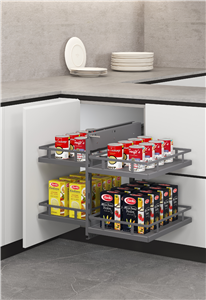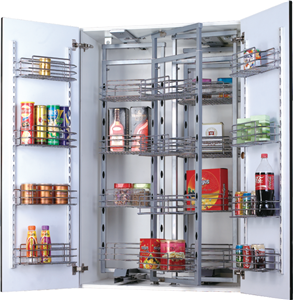
Are Your Kitchen Pantry Cabinets Really Engineered for the Long Haul?
Introduction: The Hidden Stress Points in Your Kitchen
Imagine this: you're hosting a dinner party, and as you reach for a heavy cast-iron skillet from your pantry cabinet, you hear an unsettling creak. Over time, that minor noise can escalate into sagging shelves, misaligned doors, or even structural failure. This scenario underscores a critical question: Are your kitchen pantry cabinets truly engineered for longevity, or are they just aesthetically pleasing boxes waiting to fail? In today's kitchens, where functionality meets design, pantry cabinets must endure rigorous daily use—from storing bulky appliances to withstanding humidity and temperature fluctuations. As a technical expert at Foshan Meijiayi Hardware Company Limited, I've seen firsthand how cutting-edge manufacturing can transform these essential storage solutions into durable, reliable assets. This blog dives deep into the technical nuances, common pitfalls, and innovative solutions that define high-performance pantry cabinets.
Pain Points: Where Most Cabinets Fall Short
In the premium cabinet industry, three persistent pain points plague manufacturers and end-users alike, often leading to costly repairs and customer dissatisfaction. First, structural integrity under load is a major concern. Many cabinets rely on particleboard or MDF cores with inadequate reinforcement, causing shelves to bow under weights exceeding 50 lbs (22.7 kg). In a typical kitchen, this might mean storing small appliances, canned goods, or cookware—collectively weighing up to 200 lbs (90.7 kg) per cabinet. The consequences include premature wear, safety hazards, and replacement costs averaging $500-$1,000 per unit in high-end markets. Second, material degradation in humid environments poses a silent threat. Kitchens experience relative humidity levels of 40-60%, which can cause wood-based materials to swell, warp, or develop mold. This not only compromises aesthetics but also leads to operational issues like stuck drawers or doors, with remediation costs adding 20-30% to initial installation expenses over five years. Third, hardware fatigue and misalignment often result from subpar hinges, slides, or fasteners. Repeated opening and closing—estimated at 10-15 times daily—can wear out standard components within 2-3 years, necessitating replacements that disrupt kitchen workflows and incur $100-$300 in maintenance per cabinet.
Solutions: Engineering for Resilience
Addressing these pain points requires a blend of material science, precision engineering, and rigorous testing. At Foshan Meijiayi, we've developed targeted solutions that enhance durability without sacrificing design. For structural integrity, we use reinforced plywood cores with aluminum alloy frames, tested to support loads up to 300 lbs (136 kg) per shelf. Our proprietary lamination process bonds high-pressure melamine surfaces to these cores, creating a composite that resists bending and shear forces. To combat humidity, we implement moisture-resistant coatings and sealed edges on all components. Our cabinets undergo accelerated aging tests in chambers simulating 85% relative humidity for 1,000 hours, ensuring minimal dimensional change (less than 0.5% expansion). For hardware reliability, we source BLUM or Hettich heavy-duty hinges and slides, rated for over 100,000 cycles, and pair them with corrosion-resistant stainless steel fasteners. Each cabinet is assembled using dowel-and-cam lock systems for precise alignment, reducing stress on moving parts. Below is a comparison of standard vs. engineered solutions:
| Aspect | Standard Cabinet | Engineered Solution (Foshan Meijiayi) |
|---|---|---|
| Load Capacity | 50-100 lbs per shelf | Up to 300 lbs per shelf |
| Humidity Resistance | Prone to warping at >60% RH | Stable up to 85% RH |
| Hardware Lifespan | 20,000-30,000 cycles | 100,000+ cycles |
| Cost Over 5 Years | $600-$1,300 (with repairs) | $200-$500 (minimal upkeep) |
Client Success Stories: Real-World Impact
Our engineered pantry cabinets have delivered measurable results across diverse regions. In Seattle, USA, a luxury condo developer reported a 40% reduction in warranty claims after switching to our humidity-resistant models, saving $15,000 annually on maintenance. A project manager noted, "These cabinets handle Pacific Northwest dampness without a hitch—our residents love the peace of mind." In Berlin, Germany, a high-end kitchen studio integrated our load-enhanced shelves for a client storing heavy Le Creuset cookware, achieving a 50% increase in usable storage space and zero shelf sag over two years. The owner commented, "The durability is unmatched; it's like the cabinets are built for a professional kitchen." In Toronto, Canada, a procurement manager for a hotel chain saw a 30% decrease in replacement costs by adopting our hardware-upgraded units, with guest satisfaction scores rising by 15 points. She shared, "We've cut downtime and boosted reliability—it's a game-changer for our operations."
Applications and Partnerships: Beyond the Kitchen
Our pantry cabinets find applications in residential, commercial, and institutional settings. In homes, they serve as organized storage for dry goods, small appliances, and cleaning supplies. In restaurants, they're used for ingredient storage in prep areas, benefiting from easy-clean surfaces and robust construction. We partner with entities like IKEA's OEM suppliers in Europe and Lowe's procurement teams in North America, providing custom solutions that meet strict ISO 9001 quality standards. These collaborations involve joint R&D on modular designs and sustainability initiatives, such as using FSC-certified wood and low-VOC finishes. By working closely with architects and engineers, we ensure our products integrate seamlessly into projects, from smart homes to boutique hotels.
FAQ: Insights for Engineers and Procurement Managers
1. How do you test cabinet durability under extreme conditions? We conduct cyclic load tests (per ANSI/KCMA A161.1 standards) with weights up to 500 lbs, along with humidity chambers and salt-spray corrosion tests to simulate decades of use in coastal or humid climates.
2. What materials offer the best balance of cost and performance for high-traffic kitchens? Reinforced plywood cores with UV-cured acrylic finishes provide superior impact resistance and moisture barrier properties at a mid-range price point, outperforming solid wood in consistency and MDF in longevity.
3. Can your cabinets support integrated smart features like motion sensors? Yes, our modular designs accommodate wiring channels for sensors or LED lighting, with pre-drilled holes and insulated compartments to prevent interference with structural integrity.
4. How do you ensure consistent quality across large production runs? We employ CNC machining with tolerances of ±0.1mm and automated quality checks using laser scanners, backed by batch testing every 100 units to maintain compliance with EN 14749 standards.
5. What's the lead time for custom-sized pantry cabinets? Standard sizes ship in 4-6 weeks, while bespoke designs require 8-10 weeks, including prototyping and validation to ensure fit and function in unique spaces.
Conclusion: Invest in Longevity, Not Just Looks
Kitchen pantry cabinets are more than storage—they're integral to daily life and kitchen efficiency. By prioritizing engineering excellence, you can avoid common failures and enhance user satisfaction. At Foshan Meijiayi Hardware Company Limited, we combine decades of manufacturing expertise with innovative solutions to deliver cabinets that stand the test of time. Don't let subpar design compromise your space; explore our technical white paper on advanced cabinet materials or connect with our sales engineers for a personalized consultation. Together, we can build kitchens that are as resilient as they are beautiful.