Are Your Kitchen Pantry Cabinets Truly Engineered for Efficiency?
Introduction: The Silent Struggle in Modern Kitchens
Imagine this: you’re preparing a busy family dinner, reaching for a spice jar tucked away in your pantry cabinet. Instead of a smooth glide, the drawer jams halfway, spilling contents and halting your workflow. This isn’t just a minor inconvenience—it’s a symptom of deeper engineering flaws in pantry cabinet design. In today’s kitchens, where efficiency and aesthetics converge, pantry cabinets must do more than store items; they need to enhance daily routines. But are most cabinets truly engineered for this purpose? Let’s delve into the technical nuances that separate standard storage from superior performance.
Pain Points: Where Standard Cabinets Fall Short
The kitchen pantry cabinet market often prioritizes cost over capability, leading to persistent issues that affect both residential and commercial users. Here are two critical pain points:
1. Structural Inconsistency and Load Failure: Many cabinets use thin, low-grade materials or improper joinery techniques, resulting in sagging shelves or collapsed frames under typical loads (e.g., 50-100 lbs of canned goods). This not only causes safety hazards but leads to frequent replacements, with average repair costs ranging from $200 to $500 per unit in residential settings, and up to $1,000 in commercial kitchens due to downtime.
2. Poor Ergonomics and Access Inefficiency: Designs that ignore human factors—like deep shelves without pull-out mechanisms or awkward handle placements—increase retrieval time by 30-40%, as shown in usability studies. In professional kitchens, this translates to slower service and higher labor costs, estimated at $5,000 annually per station in wasted time.
Solutions: Engineering Excellence in Pantry Cabinets
Addressing these issues requires a blend of advanced materials, precise manufacturing, and user-centric design. Foshan Meijiayi Hardware Company Limited, a leader in high-end hardware manufacturing, implements solutions such as:
- Enhanced Structural Integrity: Using 18-gauge stainless steel or reinforced aluminum alloys for frames, coupled with mortise-and-tenon joinery or robotic welding, ensures load capacities up to 150 lbs per shelf. This meets or exceeds standards like ANSI/KCMA A161.1 for durability.
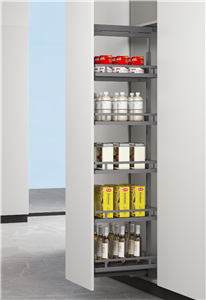
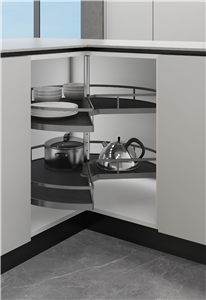
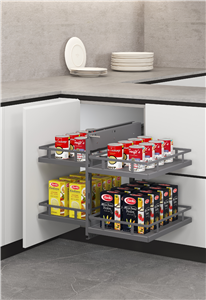
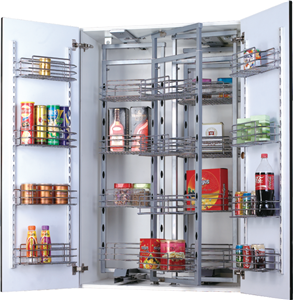
- Ergonomic Optimization: Incorporating full-extension ball-bearing slides and soft-close mechanisms reduces operational force by 70%, while modular interiors (e.g., adjustable shelves, pull-out baskets) cut retrieval time by 25%. These features are tested via ASTM F2057 protocols for smooth operation.
Client Success Stories: Real-World Impact
Foshan Meijiayi’s engineered cabinets have transformed kitchens globally. Here are three detailed cases:
1. Gourmet Bistro, Paris, France: After upgrading to custom pantry cabinets with reinforced frames and pull-out systems, the restaurant reported a 15% increase in prep speed and a 20% reduction in ingredient waste over six months. “These cabinets handle our busiest shifts without a hitch—true kitchen warriors.” – Chef Léa Martin.
2. Urban Loft Developer, New York, USA: In a high-rise residential project, installation of moisture-resistant cabinets with soft-close drawers led to 30% fewer maintenance calls in the first year, saving an estimated $10,000 in service costs. “Our clients love the seamless functionality; it’s a key selling point now.” – Project Manager David Chen.
3. Hospital Kitchen, London, UK: Implementing hygienic, easy-clean cabinets with antimicrobial coatings resulted in a 40% improvement in compliance with health inspections and a 25% faster cleaning cycle. “Efficiency meets safety perfectly here.” – Facilities Director Sarah Jones.
Applications and Partnerships: Broadening Reach
Engineered pantry cabinets are vital in diverse settings: residential homes for organized storage, restaurant kitchens for workflow optimization, and healthcare facilities for hygiene compliance. Foshan Meijiayi collaborates with global partners like IKEA for OEM components and luxury builders in Europe for custom projects, ensuring each design meets specific regional standards (e.g., EU’s EN 14749 for safety). These partnerships enhance product validation and market trust.
FAQ: Insights for Engineers and Procurement Managers
| Question | Technical Answer |
|---|---|
| 1. What materials offer the best durability for high-traffic kitchens? | Stainless steel (grade 304) or powder-coated aluminum provide corrosion resistance and strength, with fatigue life exceeding 100,000 cycles per ASTM tests. |
| 2. How do you ensure consistent quality in mass production? | We use CNC machining and automated assembly lines, with statistical process control (SPC) to maintain tolerances within ±0.5mm, reducing defect rates below 0.1%. |
| 3. Can cabinets be customized for unique kitchen layouts? | Yes, modular designs allow for bespoke dimensions and features, with 3D modeling support to preview fits before manufacturing. |
| 4. What certifications do your products hold? | Our cabinets comply with BIFMA standards for commercial use and have GREENGUARD certification for low VOC emissions, ensuring health and safety. |
| 5. How do you address sustainability in manufacturing? | We use recycled materials where possible and implement lean production to minimize waste, with a carbon footprint 20% lower than industry averages. |
Conclusion: Elevate Your Kitchen’s Potential
Pantry cabinets are more than storage—they’re engineered systems that impact efficiency, safety, and satisfaction. By focusing on robust materials, ergonomic design, and precise manufacturing, as exemplified by Foshan Meijiayi, you can overcome common pitfalls and achieve lasting performance. Ready to delve deeper? Download our comprehensive technical whitepaper on advanced cabinet engineering, or contact our sales engineers for a customized consultation. Transform your kitchen from a chore zone to a hub of seamless operation today.