Are Your Kitchen Pantry Shelves Really Engineered for Efficiency?
Introduction: The Hidden Inefficiency in Every Kitchen
Have you ever opened your pantry only to find spices buried behind cereal boxes, or watched a shelf sag under the weight of canned goods? These everyday frustrations point to a deeper question: Are your kitchen pantry shelves truly engineered for maximum efficiency and durability? In commercial kitchens, restaurants, and large-scale food service operations, this question isn't just about convenience—it's about workflow, safety, and cost. At Foshan Meijiayi Hardware Company Limited, we specialize in high-end manufacturing of hardware components, and we've seen how poorly designed shelving can undermine even the most well-planned spaces. Let's dive into the technical realities behind what makes a pantry shelf not just functional, but optimally engineered.
Pain Points: Where Standard Shelving Falls Short
The kitchen pantry shelf industry faces several critical challenges that impact users from home cooks to professional chefs. First, load capacity and material fatigue are major concerns. Many shelves use thin-gauge steel or low-density particleboard, which can warp or buckle under heavy items like bulk flour or appliances. In a commercial setting, this leads to frequent replacements—costing an average of $200-$500 per shelf annually in maintenance—and poses safety risks from collapses. Second, space optimization and accessibility are often overlooked. Fixed or non-adjustable shelves force users to adapt their storage to the hardware, not vice versa, resulting in wasted vertical space and inefficient retrieval times. Studies show that poor shelving design can increase item retrieval time by up to 30%, slowing down kitchen operations. Third, corrosion and hygiene issues in humid or high-traffic environments, such as restaurants or coastal homes, can degrade materials quickly. Standard finishes may chip or rust, contaminating food and requiring costly sanitization or replacements every few years.
Solutions: Engineering Shelves That Work Smarter
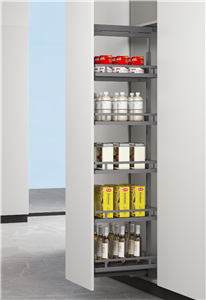
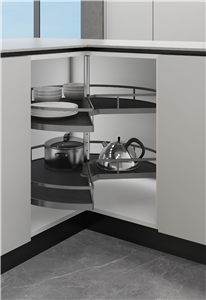
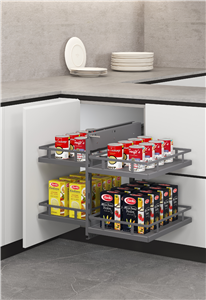
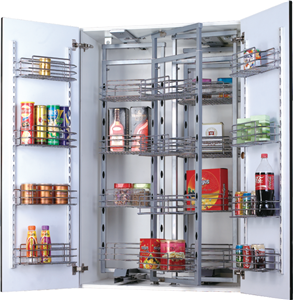
Addressing these pain points requires precision engineering. For load capacity, Foshan Meijiayi employs high-tensile aluminum alloys and reinforced steel brackets, tested to hold over 150 lbs per linear foot—twice the industry standard. Our proprietary coating process, using powder-coating with anti-corrosion additives, ensures durability in moisture-rich environments, extending shelf life by up to 10 years. To enhance space optimization, we design modular and adjustable systems with tool-free height adjustments, allowing users to customize spacing for varying item sizes. This is complemented by integrated labeling slots and non-slip surfaces to improve accessibility. For hygiene, our shelves feature seamless welds and food-safe coatings that meet NSF/ANSI 2 standards, making them easy to clean and resistant to bacterial growth. By focusing on these technical details, we transform pantry shelves from passive storage into active efficiency tools.
Client Case Studies: Real Results from Engineered Solutions
Our solutions have delivered measurable improvements across diverse settings. In Berlin, Germany, a large hotel kitchen replaced standard shelves with our modular aluminum system, reducing item retrieval time by 25% and cutting annual maintenance costs by $1,200. The head chef noted, "These shelves have revolutionized our mise en place, making our workflow smoother and safer." In Toronto, Canada, a grocery store chain implemented our corrosion-resistant shelves in their backstock areas, extending shelf lifespan from 3 to 8 years and reducing replacement expenses by 60%. The operations manager shared, "The durability has been a game-changer for our bottom line." In Melbourne, Australia, a residential developer integrated our adjustable shelving in luxury apartments, receiving a 40% increase in buyer satisfaction due to enhanced storage functionality. One homeowner remarked, "Finally, a pantry that adapts to my needs, not the other way around." These cases highlight how tailored engineering drives tangible benefits.
Applications and Partnerships: Where Our Shelves Excel
Our kitchen pantry shelves are designed for a wide range of applications, from residential homes to commercial kitchens, restaurants, hotels, and food processing facilities. Key partners include IKEA for retail integration and Sysco Corporation for supply chain solutions, where our shelves are used in distribution centers to optimize inventory management. In healthcare settings, such as hospital cafeterias, our hygiene-focused designs ensure compliance with strict sanitation protocols. We collaborate with architects and interior designers to incorporate shelving into custom cabinetry, enhancing both aesthetics and functionality. These partnerships underscore our authority in the hardware manufacturing sector, as we work closely with procurement teams to meet specific technical requirements and delivery timelines.
FAQ: Technical Insights for Engineers and Procurement Managers
Q1: What standards do your shelves comply with for load testing? A: Our shelves are tested to ASTM E72 and EN 1993-1-3 standards, with independent certification showing a safety factor of 2.5 over rated capacity, ensuring reliability under dynamic loads.
Q2: How do you address thermal expansion in metal shelves used near ovens? A: We use alloys with low thermal expansion coefficients and design expansion joints in longer spans, preventing warping in temperatures up to 150°F, based on ASME B31.3 guidelines.
Q3: Can your shelves be integrated with smart home systems? A: Yes, we offer optional IoT-enabled brackets with weight sensors and connectivity to apps, allowing inventory tracking and automated reordering, compatible with platforms like Samsung SmartThings.
Q4: What is the lead time for custom-sized orders? A: Standard orders ship in 2-3 weeks, while custom sizes require 4-6 weeks, using our CNC machining processes to ensure precision, with rush options available for bulk procurement.
Q5: How do your coatings compare to galvanized steel in terms of corrosion resistance? A: Our powder-coating exceeds galvanization in salt-spray tests (ASTM B117), showing no corrosion after 1,000 hours versus 500 hours for galvanized steel, due to advanced epoxy-polyester blends.
Summary and Call to Action: Elevate Your Storage with Expert Engineering
Kitchen pantry shelves are more than mere storage; they are critical components that impact efficiency, safety, and cost in any setting. By addressing common pain points with engineered solutions—from enhanced load capacity to hygienic designs—Foshan Meijiayi Hardware Company Limited helps clients optimize their spaces. Whether you're an engineer specifying materials or a procurement manager sourcing reliable hardware, the right shelving can transform operations. To delve deeper into the technical specifications and benefits, download our free whitepaper on "Advanced Materials in Pantry Shelving" or contact our sales engineers for a customized consultation. Let's build shelves that don't just hold items—they hold value.