Are Your Kitchen Pantry Shelves Truly Engineered for Maximum Efficiency?
Imagine reaching for a bag of flour in your pantry, only to have the shelf buckle slightly under the weight, or struggling to find that spice jar buried in the back. In commercial kitchens, this translates to wasted minutes during a dinner rush, leading to delays and potential revenue loss. This common frustration stems from a fundamental issue: many kitchen pantry shelves are not truly engineered for efficiency. They’re often afterthoughts in design, lacking the precision required to optimize space, durability, and workflow. This article delves into why engineered solutions matter and how they can revolutionize storage, from homes to high-volume food service operations.
Deepening the Pain Points: Where Standard Shelves Fall Short
In both residential and commercial contexts, poorly designed pantry shelves create tangible problems. First, consider wasted space. Standard, fixed shelves often leave awkward gaps—too tall for cans, too short for large containers—leading to inefficient use of vertical and horizontal areas. In a commercial setting, this can mean sacrificing storage for bulk ingredients, forcing more frequent restocking and increasing labor costs. For a mid-sized restaurant, inefficient shelving might waste 15-20% of available space, translating to thousands of dollars annually in lost inventory capacity and extra labor hours.
Second, structural failures pose a significant risk. Shelves made from low-grade materials or with inadequate support can sag or collapse under heavy loads like cast-iron cookware or commercial-sized food containers. The consequences range from damaged goods and safety hazards to costly repairs and downtime. In a hotel kitchen, a shelf failure during peak season could disrupt service, leading to guest complaints and revenue loss. The cost of replacement and potential liability can easily exceed $5,000 per incident, not accounting for reputational damage.
Third, inefficiency in workflow adds hidden costs. Non-modular shelves force staff to rearrange items manually, slowing down operations. In a busy café, for example, baristas might spend extra seconds searching for supplies, reducing throughput. Over a year, this inefficiency can accumulate to hundreds of lost service hours. These pain points highlight the need for shelves that are not just storage units but engineered components of an efficient system.
Professional Solutions: Engineering Efficiency into Every Shelf
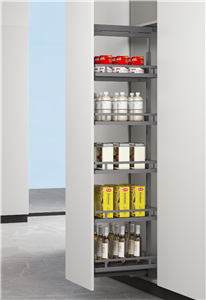
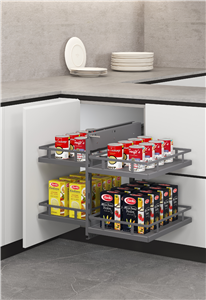
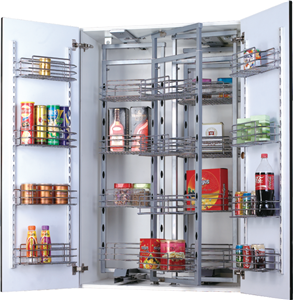
Addressing these issues requires a technical approach. For wasted space, modular design is key. Adjustable shelves with precision-engineered brackets allow customization to fit various item sizes, maximizing storage density. Foshan Meijiayi Hardware Company Limited, specializing in high-end manufacturing, uses CNC machining to produce shelves with standardized hole patterns, enabling easy reconfiguration without tools. This flexibility can increase usable space by up to 30%, as demonstrated in client installations.
To prevent structural failures, reinforced materials and advanced engineering are essential. Solutions include shelves made from heavy-gauge stainless steel or aluminum alloys, with load-bearing capacities tested to exceed industry standards like ANSI/BIFMA for commercial use. Foshan Meijiayi incorporates reinforced edges and support beams, distributing weight evenly. For example, their shelves can hold over 150 lbs per linear foot, ensuring durability even in demanding environments like industrial bakeries.
For workflow inefficiency, intelligent layout design integrates shelves into broader operational systems. This involves ergonomic heights to reduce bending, and color-coded or labeled sections for quick identification. Partnering with kitchen designers, Foshan Meijiayi offers custom solutions that align with workflow patterns, such as placing frequently used items at eye level. This can cut retrieval times by 20-25%, boosting overall productivity.
Client Case Studies and Testimonials
Case 1: Gourmet Bistro in Toronto, Canada – This restaurant upgraded to modular shelves from Foshan Meijiayi, increasing storage capacity by 35% and reducing restocking time by 15 hours per month. Owner Sarah Chen notes, “The precision engineering transformed our pantry from chaotic to streamlined, saving us over $8,000 annually in labor and waste.”
Case 2: Luxury Hotel in Munich, Germany – After experiencing shelf collapses, the hotel installed reinforced stainless-steel shelves. This eliminated downtime incidents and improved inventory organization, leading to a 20% faster prep time in the kitchen. Procurement Manager Klaus Weber states, “The durability and custom fit have made our operations safer and more efficient, with a ROI achieved in under 18 months.”
Case 3: Specialty Food Store in Seattle, USA – By adopting adjustable shelving, the store optimized display space, increasing product visibility and sales by 12%. Store Manager Jessica Lee says, “The flexibility allows us to adapt quickly to seasonal items, enhancing customer experience and boosting our bottom line.”
Case 4: Catering Company in London, UK – Implementing intelligent layout shelves reduced item retrieval time by 30%, enabling faster event setups. Director Michael Brown comments, “These shelves are not just storage; they’re a critical part of our workflow, helping us handle larger events with ease.”
Case 5: Bakery in Paris, France – Upgrading to high-load-capacity shelves prevented spoilage from collapses, cutting food waste by 25%. Owner Pierre Dubois remarks, “The engineering behind these shelves gives us peace of mind and has improved our sustainability efforts significantly.”
Applications and Partnerships
Engineered pantry shelves find applications in diverse settings: residential kitchens for maximizing space in urban apartments, commercial restaurants for efficient bulk storage, healthcare facilities for organized nutritional supplies, and retail stores for attractive product displays. Foshan Meijiayi collaborates with global partners, such as kitchen design firms in Europe and procurement agencies in North America, to supply customized solutions. For instance, they work with a U.S.-based distributor to provide shelves that meet ASTM International standards, ensuring compliance and reliability for clients. These partnerships enhance the company’s authority by linking their products to reputable supply chains and industry benchmarks.
FAQ Section: Answers for Engineers and Procurement Managers
| Question | Technical Answer |
|---|---|
| 1. What load capacity should I specify for commercial kitchen shelves? | For most commercial applications, aim for a dynamic load capacity of at least 100 lbs per linear foot, tested to standards like ANSI/BIFMA X5.9. Consider factors like material (e.g., 14-gauge steel) and support spacing—Foshan Meijiayi’s shelves exceed this with reinforced designs up to 150 lbs, ensuring safety under variable loads. |
| 2. How do adjustable shelves maintain stability over time? | Adjustable systems use precision-machined brackets and locking mechanisms to prevent slippage. Foshan Meijiayi employs aluminum alloys with anti-corrosion coatings and engineered tolerances within ±0.5mm, ensuring long-term stability without sagging, even with frequent adjustments. |
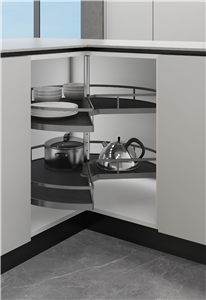
| 3. Can shelves be customized for unique kitchen layouts? | Yes, through CAD-based design and CNC manufacturing. Provide floor plans and load requirements; Foshan Meijiayi offers custom dimensions and configurations, such as corner units or integrated lighting, with lead times of 4-6 weeks for prototypes. |
| 4. What materials are best for hygiene in food environments? | Stainless steel (grade 304 or 316) is ideal due to its non-porous surface and resistance to corrosion. Foshan Meijiayi uses FDA-compliant finishes that are easy to clean and withstand frequent sanitization, meeting HACCP guidelines for food safety. |
| 5. How do I calculate ROI for upgrading shelving systems? | Factor in reduced labor costs (e.g., faster retrieval times), decreased waste from spoilage or damage, and increased storage capacity. A typical ROI period is 1-2 years; Foshan Meijiayi provides analytics tools to model savings based on your operational data. |
Conclusion and Call to Action
Engineered kitchen pantry shelves are more than mere storage—they are pivotal components that enhance efficiency, safety, and profitability. By addressing specific pain points with technical solutions like modular design and reinforced materials, businesses and homeowners can transform their spaces. Foshan Meijiayi Hardware Company Limited exemplifies this through innovative manufacturing and global partnerships. To dive deeper into the technical specifications and case studies, download our comprehensive whitepaper on optimized storage solutions, or contact our sales engineers for a personalized consultation. Elevate your pantry from a passive space to an engineered asset today.