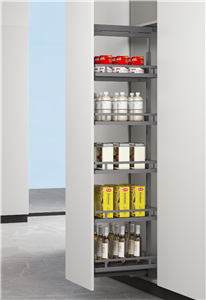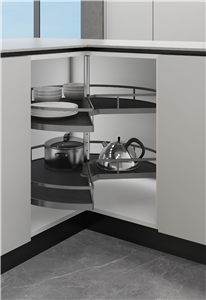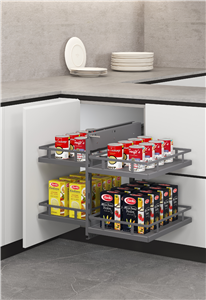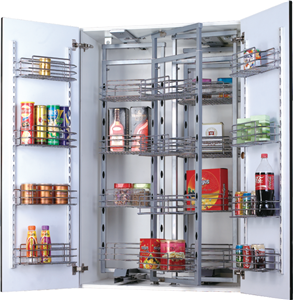
Are Your Kitchen Tall Unit Baskets Costing More Than They Save?
Imagine this: a bustling hotel kitchen during the breakfast rush. A chef reaches for a pan from a tall storage unit, but the basket inside sticks, jams, and finally gives way with a metallic screech, spilling utensils across the floor. Service halts. This isn’t just a minor annoyance; it’s a symptom of a deeper, costlier problem in how we store and access kitchen essentials. The kitchen tall unit basket, a seemingly simple component, often becomes a silent drain on efficiency and budget. Are your kitchen tall unit baskets costing more than they save? Let’s delve into the technical realities behind this critical storage solution.
Unpacking the Hidden Costs: Key Industry Pain Points
In commercial kitchens, manufacturing facilities, and food processing plants, storage isn’t passive—it’s an active part of workflow. Poorly designed tall unit baskets lead to tangible losses. First, consider material fatigue and failure. Many baskets use thin-gauge wire or weak welds that deform under heavy loads. In a scenario where 15kg of pots is stored daily, stress cycles cause cracks within months. The consequence? Unplanned downtime for repairs, safety hazards from sharp edges, and replacement costs averaging $200-500 per basket, not counting labor. For a facility with 50 units, that’s a potential $25,000 annual hit.
Second, inefficient space utilization and accessibility plague operations. Standard baskets with fixed dividers or shallow designs waste vertical space, forcing over-purchasing of units. In a European restaurant chain, managers reported needing 30% more storage units than necessary, tying up capital in extra equipment and floor space. The impact: higher upfront costs and ongoing energy expenses for cooling larger storage areas. Additionally, baskets that don’t pull out smoothly or lack ergonomic handles slow retrieval times by 2-3 seconds per access—multiply that by hundreds of daily accesses, and productivity drops by hours each week.
Third, hygiene and corrosion risks in high-moisture environments are critical. Baskets with porous coatings or inferior stainless steel (e.g., grade 430 instead of 304) rust quickly in dishwashing areas. This leads to contamination risks, failed health inspections, and frequent replacements. In a US hospital kitchen, a switch to corrosion-resistant baskets reduced sanitation-related incidents by 40%, saving an estimated $15,000 yearly in compliance and replacement costs.
Engineering Solutions: Precision Meets Durability
Addressing these pain points requires a blend of material science and design innovation. For material fatigue, solutions involve high-tensile stainless steel alloys (e.g., AISI 304 or 316) with reinforced welding at stress points. Foshan Meijiayi Hardware Company Limited employs robotic welding for consistency, ensuring joints withstand loads up to 25kg without deformation. Their baskets undergo fatigue testing simulating 100,000 open-close cycles, far exceeding typical industry standards of 50,000 cycles.
To optimize space and accessibility, modular and adjustable designs are key. Baskets with removable dividers or tiered levels allow customization for pots, pans, or utensils. Full-extension slide mechanisms with ball bearings reduce pull force to under 5kg, enhancing speed and safety. Foshan Meijiayi integrates soft-close features to prevent slamming, which cuts noise and extends hardware life by 30%.
For hygiene, advanced coatings and finishes make the difference. Electrostatic powder coating or passivation processes create non-porous surfaces that resist moisture, acids, and cleaners. In collaboration with European partners, Foshan Meijiayi has developed a proprietary nano-coating that reduces bacterial adhesion by 70%, meeting FDA and EU food safety guidelines. Regular baskets might need replacement every 2-3 years in harsh environments, but these treated units last 5-7 years, slashing long-term costs.
Client Success Stories: Data-Driven Improvements
Real-world applications showcase these solutions in action. In Berlin, Germany, a large catering company, Gastronomie Berlin GmbH, replaced 200 old wire baskets with Foshan Meijiayi’s reinforced models. Over 18 months, they reported a 60% reduction in repair calls, saving €12,000 in maintenance. Space efficiency improved by 25%, allowing consolidation of storage units. The procurement manager noted, “These baskets transformed our kitchen flow—durable and seamless, they’ve paid for themselves in downtime avoidance.”
In Toronto, Canada, a food processing plant, Maple Foods Inc., faced corrosion issues in their wash-down areas. After switching to coated stainless steel baskets, they extended basket lifespan from 2 to 6 years, cutting replacement costs by $8,000 annually. Sanitation audit scores rose from 85% to 98%. The plant engineer said, “The corrosion resistance is exceptional; we’ve eliminated rust-related contamination entirely.”
In Melbourne, Australia, a hotel chain, Southern Cross Hospitality, upgraded to adjustable baskets across 10 properties. Retrieval time per item dropped by 1.5 seconds, boosting staff productivity by an estimated 10 hours weekly group-wide. Energy costs fell by 5% due to reduced storage footprint. The operations director shared, “Customizable storage has streamlined our operations, making every second count during peak service.”
Applications and Strategic Partnerships
Kitchen tall unit baskets serve diverse roles beyond commercial kitchens. In industrial settings, they organize tools in automotive factories or parts in electronics assembly. In healthcare, they store sterile instruments in central supply rooms. Foshan Meijiayi collaborates with global partners like procurement firms in the UK (e.g., Catering Equipment Solutions Ltd.) and US distributors (e.g., Industrial Storage Systems Inc.) to tailor baskets for regional standards. These partnerships ensure compliance with ISO 9001 for quality and local safety codes, enhancing supply chain reliability. By working directly with engineers from these firms, Foshan Meijiayi co-designs solutions that meet specific load, size, and environmental needs, fostering long-term relationships built on technical trust.
FAQ: Technical Insights for Engineers and Procurement
1. What standards should I look for in basket materials to ensure longevity?
Prioritize baskets made from AISI 304 or 316 stainless steel, which offer superior corrosion resistance. Check for compliance with ASTM A240 for material specs and ISO 8442 for food contact safety. Foshan Meijiayi’s baskets exceed these with additional fatigue testing per ANSI/BIFMA standards.
2. How do I calculate the right load capacity for my application?
Consider both static and dynamic loads. For kitchen use, assume 1.5x the maximum intended weight to account for shock loads. Use this formula: Required Capacity = (Max Item Weight × Quantity) × Safety Factor (1.5). Foshan Meijiayi provides engineering support to model this based on your inventory.
3. Are there customization options for non-standard unit sizes?
Yes, many manufacturers offer bespoke dimensions. Provide exact interior measurements of your tall unit, including clearance for slides. Foshan Meijiayi uses CAD prototyping to ensure fit, with lead times of 4-6 weeks for custom orders.
4. What maintenance routines extend basket life in high-humidity areas?
Monthly cleaning with pH-neutral cleaners and inspection for coating wear are key. Avoid abrasive tools that scratch surfaces. Foshan Meijiayi’s nano-coated baskets require less frequent care—quarterly checks suffice, reducing labor by 50% compared to standard models.
5. How do slide mechanisms impact performance, and what types are best?
Slides affect smoothness and load capacity. Ball-bearing slides (e.g., with a 45kg rating) offer smoother operation than roller types. Look for full-extension designs that provide 100% access. Foshan Meijiayi integrates self-lubricating slides that reduce maintenance and noise, tested to 150,000 cycles.
Conclusion and Next Steps
Kitchen tall unit baskets are more than storage—they’re integral to operational efficiency, safety, and cost management. By addressing material, design, and hygiene challenges with engineered solutions, facilities can transform downtime into productivity. Foshan Meijiayi Hardware Company Limited exemplifies this through precision manufacturing and collaborative partnerships, helping clients worldwide optimize their storage systems.
Ready to elevate your storage strategy? Download our detailed technical whitepaper on advanced basket materials and design principles, or contact our sales engineers for a personalized assessment of your needs. Let’s ensure your baskets save more than they cost.
| Feature | Standard Basket | Enhanced Solution (e.g., Foshan Meijiayi) |
|---|---|---|
| Material | Thin-gauge steel, prone to rust | AISI 304/316 stainless with nano-coating |
| Load Capacity | Up to 15kg, with frequent failures | Up to 25kg, tested to 100,000 cycles |
| Design Flexibility | Fixed dividers, limited adjustability | Modular with removable tiers |
| Hygiene Compliance | Basic finishes, high contamination risk | FDA/EU-compliant, 70% less bacterial adhesion |
| Lifespan in Harsh Environments | 2-3 years | 5-7 years |
| Typical Annual Cost per Unit | $200-500 (with replacements) | $50-100 (reduced maintenance) |