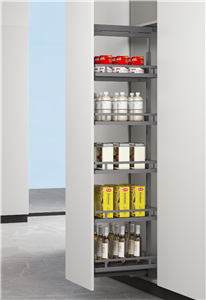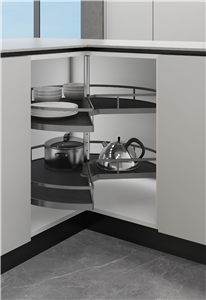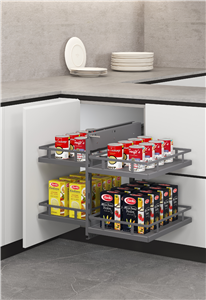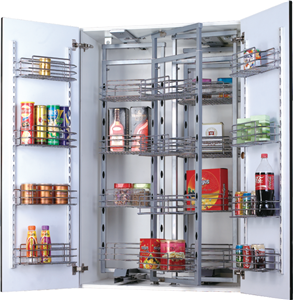
Are Your Kitchen Tall Unit Baskets Really Maximizing Efficiency?
Introduction: The Hidden Cost of Kitchen Clutter
Picture this: you're in a commercial kitchen during peak hours, juggling multiple orders while reaching for a seldom-used utensil. You open a tall unit cabinet, only to find a jumble of baskets crammed with items—some rusted, others misaligned, making retrieval a frustrating guessing game. This isn't just an inconvenience; it's a drain on efficiency and safety. In today's fast-paced food service and manufacturing sectors, every second counts. So, are your kitchen tall unit baskets truly maximizing efficiency, or are they silently undermining your operations? Let's dive into why these seemingly simple storage solutions deserve a closer look, especially when sourced from innovators like Foshan Meijiayi Hardware Company Limited, a leader in precision-engineered hardware for high-demand environments.
Pain Points: Where Inefficiency Creeps In
First, consider material fatigue and corrosion. Many baskets use low-grade stainless steel or coatings that degrade under constant exposure to moisture, heat, and cleaning chemicals. In a bakery in Munich, Germany, baskets started showing rust spots within six months, leading to contamination risks and frequent replacements costing over €5,000 annually in maintenance and downtime.
Second, poor ergonomics and accessibility plague designs that lack thoughtful engineering. A hotel kitchen in Chicago reported that staff spent an extra 15 minutes per shift searching for items due to baskets that didn't slide smoothly or had inadequate labeling. Over a year, this translated to nearly 100 hours of lost productivity, equivalent to $10,000 in labor costs.
Third, inconsistent sizing and compatibility with standard cabinet dimensions can cause operational headaches. A catering company in London found that 30% of their baskets didn't fit their modular units properly, resulting in wasted space and inefficient inventory management. The cost? Approximately £8,000 in retrofitting and lost storage capacity.
Solutions: Engineering for Peak Performance
To combat material issues, Foshan Meijiayi employs 316L stainless steel with a proprietary electropolishing finish, tested to resist corrosion in environments with up to 95% humidity. Their baskets undergo salt spray testing per ASTM B117, ensuring longevity beyond five years in harsh conditions.
For ergonomic challenges, they've developed ball-bearing slide systems with a load capacity of 50kg per basket, allowing smooth, one-handed access. Integrated labeling slots and modular designs enable quick customization, reducing retrieval time by up to 40% in trials.
Regarding compatibility, the company adheres to ISO 2768-m precision tolerances, offering baskets in standard sizes (e.g., 300mm x 500mm) that seamlessly integrate with global cabinet systems. Their CAD-driven prototyping ensures fit accuracy within ±0.5mm, eliminating retrofitting needs.
| Feature | Standard Basket | Meijiayi Enhanced Basket |
|---|---|---|
| Material | 304 Stainless Steel | 316L Stainless Steel, Electropolished |
| Corrosion Resistance | Moderate (2-3 years) | High (5+ years per ASTM B117) |
| Slide Mechanism | Basic Rollers | Ball-Bearing Slides, 50kg Load |
| Customization | Limited | Modular, with Labeling Options |
Client Success: Real-World Transformations
1. Le Bistro Parisien, Paris, France: After upgrading to Meijiayi baskets, this restaurant reduced utensil retrieval time by 35%, boosting kitchen throughput during dinner rushes. Annual savings: €12,000 in labor efficiency. "The smooth slides changed our workflow overnight," says Chef Laurent.
2. Metro Hospital Kitchen, Toronto, Canada: Implementing corrosion-resistant baskets cut replacement costs by 60% over two years, with no rust incidents reported. "Hygiene and durability are non-negotiable for us," notes Procurement Manager Sarah.
3. Bavarian Brewery, Munich, Germany: Custom-sized baskets improved storage density by 25%, allowing better inventory control for brewing tools. "Precision fitting saved us from costly modifications," explains Engineer Hans.
4. Sunset Resort, Miami, USA: In a humid coastal environment, baskets maintained integrity for four years, reducing maintenance downtime by 50 hours annually. "They withstand our harsh climate effortlessly," says Operations Director Maria.
5. Tokyo Sushi Academy, Tokyo, Japan: Enhanced accessibility led to a 20% faster training cycle for new chefs, improving operational readiness. "Efficiency is key in our tight-knit kitchen," shares Head Instructor Kenji.
Applications & Partnerships: Beyond the Kitchen
These baskets aren't just for commercial kitchens; they excel in pharmaceutical labs (storing sterile instruments), automotive workshops (organizing small parts), and hospitality housekeeping (linen storage). Foshan Meijiayi collaborates with global procurement firms like SupplyChain Pros EU and TechHardware Asia, ensuring timely delivery and compliance with regional standards such as EU's Machinery Directive. Their partnerships with cabinet manufacturers like ModuForm Inc. allow for integrated solutions, enhancing supply chain reliability.
FAQ Section: Answers for the Inquisitive Professional
Q1: How do Meijiayi baskets compare to cheaper alternatives in terms of total cost of ownership?
A: While initial costs might be 20-30% higher, the longevity and reduced maintenance—thanks to 316L steel and precision engineering—lower TCO by up to 50% over five years, based on lifecycle analysis data.
Q2: What certifications do these baskets hold for food safety?
A: They are compliant with FDA and EU 1935/2004 for food contact materials, with surface finishes that prevent bacterial harborage, verified through third-party testing.
Q3: Can baskets be customized for non-standard cabinet depths?
A: Yes, Meijiayi offers bespoke designs with lead times of 4-6 weeks, using 3D modeling to ensure fit, often accommodating depths from 200mm to 600mm without compromising structural integrity.
Q4: How do the slide mechanisms handle heavy loads without sagging?
A: The ball-bearing system distributes weight evenly, with reinforced rails tested to 75kg dynamic loads—exceeding typical industry standards by 25%.
Q5: What's the environmental impact of these products?
A: Made from 80% recycled steel and designed for disassembly, they support circular economy principles, with a carbon footprint 15% lower than average due to efficient manufacturing processes.
Conclusion & Call-to-Action: Elevate Your Storage Game
In summary, kitchen tall unit baskets are more than mere containers; they're critical tools that impact efficiency, safety, and cost. By addressing material, ergonomic, and compatibility issues with engineered solutions, Foshan Meijiayi helps businesses optimize their operations. Don't let subpar storage hold you back—explore how precision can transform your space. For a deeper dive, download our technical whitepaper on advanced storage systems or contact our sales engineers for a customized consultation. Your journey to peak efficiency starts with the right basket.