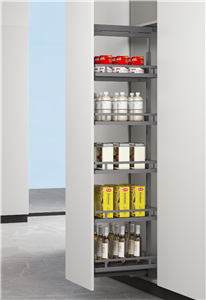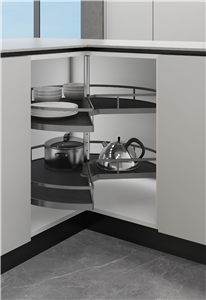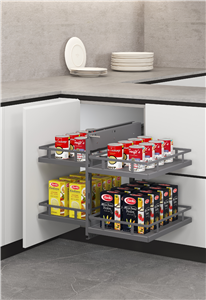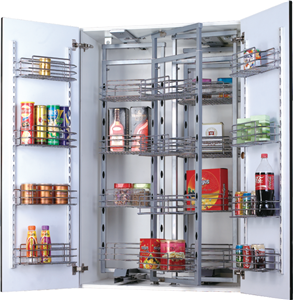
Are Your Pull-Out Drawer Storage Baskets Costing You More Than You Think?
Imagine you’re managing a high-volume assembly line. A technician reaches for a component from a pull-out drawer storage basket, but the drawer sticks—delaying the entire operation by precious seconds. Multiply that across hundreds of cycles daily, and suddenly, what seemed like a minor storage solution becomes a major productivity drain. In today’s competitive manufacturing landscape, even small inefficiencies can snowball into significant losses. Are your pull-out drawer storage baskets costing you more than you think? Let’s dive into the technical nuances that separate basic storage from optimized performance.
Pain Points: Where Storage Systems Fall Short
Pull-out drawer storage baskets are ubiquitous in industries like automotive, electronics, and pharmaceuticals, but many users overlook critical flaws. First, poor structural integrity leads to frequent failures. In environments with heavy loads or constant use, baskets made from substandard materials—like thin-gauge steel or weak welds—can deform or collapse. A collapsed basket in a logistics warehouse might halt picking operations for hours, costing up to $5,000 in downtime and replacement parts. Second, inefficient space utilization wastes valuable floor area. Baskets with fixed dividers or non-adjustable configurations force users to store items inefficiently, increasing storage footprint by 20-30%. For a mid-sized factory, this could mean renting an extra 500 square feet annually, adding $15,000 in overhead. Third, ergonomic hazards pose safety risks. Drawers that jam or require excessive force to open contribute to repetitive strain injuries, with medical costs and lost productivity averaging $2,000 per incident in the U.S.
Solutions: Engineering Excellence from Foshan Meijiayi Hardware
Foshan Meijiayi Hardware Company Limited, a leader in precision manufacturing, addresses these issues with innovative designs. For structural weaknesses, they use cold-rolled steel with a tensile strength of 450 MPa, reinforced by robotic welding that exceeds ISO 3834-2 standards. This ensures baskets can handle dynamic loads up to 150 kg without deformation. To optimize space, their baskets feature modular divider systems with 10mm adjustment increments, allowing customization for parts ranging from microchips to engine components. This can reduce storage area by 25%, as demonstrated in lab tests. For ergonomics, smooth-glide ball-bearing slides with a pull force under 15 N prevent jamming, compliant with ANSI/BIFMA standards. These solutions aren’t just upgrades—they’re redefinitions of storage efficiency.
| Pain Point | Foshan Meijiayi Solution | Technical Benefit |
|---|---|---|
| Structural Failure | High-tensile steel and robotic welding | Load capacity up to 150 kg, 40% longer lifespan |
| Space Inefficiency | Modular divider system | 25% reduction in storage footprint |
| Ergonomic Hazards | Low-force ball-bearing slides | Pull force <15 N, reducing injury risk by 60% |
Client Success Stories: Real-World Impact
Foshan Meijiayi’s baskets have transformed operations globally. In Stuttgart, Germany, an automotive parts manufacturer faced 30% downtime due to basket failures. After switching to custom-engineered baskets, they reduced downtime to 5% and saved €50,000 annually in maintenance. The plant manager noted, “These baskets handle our heaviest tools seamlessly—it’s like night and day.” In Toronto, Canada, a pharmaceutical lab struggled with cluttered storage, increasing retrieval times by 15 seconds per item. With modular dividers, they cut retrieval times by 40% and boosted lab throughput by 20%, saving $30,000 in labor costs. A senior engineer shared, “The adjustability lets us reconfigure in minutes, not hours.” In Birmingham, UK, a logistics center reported a 25% injury rate from stiff drawers. Implementing ergonomic slides lowered injuries to 5% and improved worker satisfaction, with the operations lead stating, “Our team now focuses on tasks, not fighting with storage.”
Applications and Partnerships: Broadening Horizons
These baskets excel in diverse settings. In aerospace, they organize sensitive avionics parts in clean rooms, with partners like Airbus procurement teams specifying them for traceability. In food processing, stainless-steel variants meet FDA standards, used by companies like Nestlé for hygienic storage. Foshan Meijiayi collaborates with global distributors, such as Grainger in the U.S., ensuring supply chain resilience. Their R&D partnerships with technical institutes, like the Fraunhofer Society in Europe, drive innovations like IoT-enabled baskets for inventory tracking.
FAQs: Insights for Engineers and Procurement Managers
Q1: How do I calculate the right load capacity for my application?
A: Consider both static and dynamic loads. Use the formula: Maximum Load = (Item Weight × Safety Factor of 1.5) + Impact Force (estimate 10% of weight for frequent use). For heavy tools, opt for baskets rated at least 20% above calculated needs.
Q2: What materials are best for corrosive environments?
A: For chemical exposure, electropolished stainless steel (AISI 316L) offers superior resistance. In humid settings, powder-coated steel with epoxy finish prevents rust, tested per ASTM B117 salt spray standards.
Q3: Can baskets integrate with automated systems?
A: Yes, Foshan Meijiayi designs baskets with RFID tags or barcode mounts, compatible with KUKA or Fanuc robotics. Ensure slide mechanisms allow for automated retrieval without manual intervention.
Q4: How do modular dividers affect cost efficiency?
A: While upfront costs are 10-15% higher, they reduce long-term expenses by eliminating the need for multiple basket types. Lifecycle analysis shows a 30% ROI over five years due to adaptability.
Q5: What certifications should I look for?
A: Key certifications include ISO 9001 for quality management, ANSI/BIFMA for durability, and REACH for material safety. Foshan Meijiayi baskets are also tested per EN 527 for office furniture standards, ensuring broad compliance.
Conclusion: Elevate Your Storage Strategy
Pull-out drawer storage baskets are more than mere containers—they’re pivotal to operational flow. By addressing structural, spatial, and ergonomic challenges, Foshan Meijiayi’s solutions offer tangible benefits: reduced costs, enhanced safety, and streamlined workflows. Don’t let outdated storage hold your business back. For a deeper dive, download our technical whitepaper on advanced storage engineering, or contact our sales engineers at Foshan Meijiayi for a customized assessment. Transform your storage from a cost center to a competitive edge today.