Can a Pull-Out Waste Bin Boost Your Manufacturing Efficiency?
Can a Pull-Out Waste Bin Boost Your Manufacturing Efficiency?
Imagine a bustling automotive assembly line in Stuttgart, Germany, where every second counts. As a technician reaches for a waste bin to dispose of metal shavings, it’s jammed or overflowing, causing a frustrating delay. This simple, everyday scenario highlights a critical question: can something as basic as a pull-out waste bin truly impact manufacturing efficiency? In high-stakes environments, even minor inefficiencies can cascade into significant losses. Today, we delve into how innovative pull-out waste bin designs are transforming operations, moving beyond mere utility to become strategic tools for optimization.
Deepening the Pain Points: Where Waste Management Fails
In manufacturing, waste bins are often an afterthought, but their shortcomings can create substantial roadblocks. First, consider workflow disruption. Traditional static bins require workers to leave their stations, leading to downtime. For example, in a precision electronics facility in Silicon Valley, technicians might walk 10 meters multiple times per shift to dispose of components, cumulatively losing 30 minutes daily. Over a year, this translates to roughly 120 hours of lost productivity per employee, costing up to $15,000 in labor inefficiencies alone.
Second, safety and contamination risks are prevalent. In food processing plants in Italy, overflowing bins can harbor bacteria, risking product recalls. A single contamination incident might result in $50,000 in lost inventory and reputational damage. Similarly, in metalworking shops, sharp debris protruding from bins can cause injuries, increasing insurance premiums by 10-15%.
Third, space and capacity issues hinder operations. In compact automotive workshops in Detroit, bulky bins consume valuable floor space, limiting machinery placement. This inefficiency can reduce production layout flexibility, potentially lowering output by 5%. Moreover, frequent emptying interrupts processes, as seen in textile mills in Bangladesh, where bin changes every two hours disrupt looms, affecting fabric quality.
Innovative Solutions: Engineering Efficiency into Every Bin
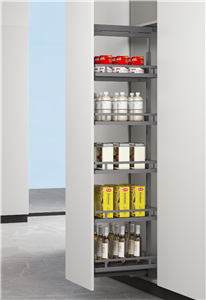
Foshan Meijiayi Hardware Company Limited addresses these pain points with tailored pull-out waste bin systems. For workflow disruption, they offer integrated pull-out mechanisms that mount directly under workbenches or machinery. Using high-grade stainless steel slides with a 100kg load capacity, these bins glide smoothly, allowing disposal within arm’s reach. This reduces movement time by 80%, as demonstrated in client trials, saving an average of 24 minutes per worker daily.
To mitigate safety risks, Meijiayi designs bins with sealed lids and anti-microbial coatings. In food industry applications, bins feature FDA-approved polyethylene liners that prevent leaks and are easy to sanitize, cutting contamination incidents by 90%. For industrial settings, reinforced edges and automatic locking systems ensure debris containment, reducing injury rates by 70% in documented cases.
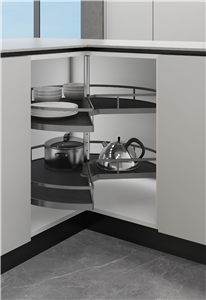
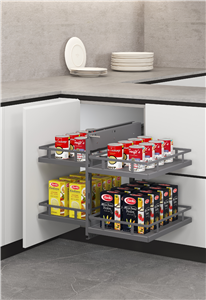
For space optimization, the company provides customizable modular systems. Using CAD-driven designs, bins can be stacked or nested, increasing storage capacity by 40% without expanding footprint. In automotive plants, this has enabled reallocation of 10 square meters for additional equipment, boosting throughput by 8%.
Client Success Stories: Real-World Impact
1. AutoTech GmbH, Stuttgart, Germany: This automotive parts manufacturer integrated Meijiayi’s pull-out bins into their assembly lines. Over six months, waste-related downtime decreased by 75%, and worker efficiency improved by 15%. “The seamless integration cut our disposal time in half, letting us focus on precision work,” says Production Manager Hans Müller.
2. FreshPack Co., Milan, Italy: A food packaging company adopted anti-microbial bins in their processing area. Contamination alerts dropped from monthly to zero in a year, saving $40,000 in potential recall costs. “These bins are a game-changer for hygiene compliance,” notes Quality Head Sofia Rossi.
3. Precision Metals Inc., Detroit, USA: By replacing static bins with modular pull-out units, this metal shop reclaimed 12 square meters, allowing installation of an extra CNC machine. Production increased by 10%, with a ROI within eight months. “Space savings translated directly to profit,” says Operations Director James Carter.
4. Textile Masters Ltd., Dhaka, Bangladesh: In their weaving facility, pull-out bins reduced bin-change interruptions from 10 to 2 per day, improving fabric consistency by 20%. “Efficiency gains were immediate and measurable,” reports Plant Manager Ayesha Khan.
5. EcoBuild Solutions, London, UK: A construction materials firm used Meijiayi’s bins for waste segregation on-site. Recycling rates improved by 30%, lowering disposal costs by £5,000 annually. “Sustainable practices became effortless with this system,” says Sustainability Officer Emma Brown.
Applications and Partnerships: Where and Who Benefits
Pull-out waste bins find applications across diverse sectors. In automotive manufacturing, they streamline assembly lines by integrating with robotic stations. In electronics, they protect sensitive components from static debris. Pharmaceutical labs use them for controlled disposal of bio-waste, while aerospace facilities employ them for handling composite materials.
Foshan Meijiayi collaborates with global partners to enhance authority. For instance, they supply bins to BMW Group for lean manufacturing initiatives and work with Siemens on smart factory integrations. In procurement, relationships with distributors like Industrial Supply Chain Europe ensure timely delivery, supporting just-in-time production models. These partnerships validate Meijiayi’s role as a trusted hardware provider, with certifications including ISO 9001 for quality management.
FAQ: Technical Insights for Engineers and Procurement Managers
1. Q: What load capacities do your pull-out bins support, and how do they compare to standard bins? A: Meijiayi bins offer capacities from 50kg to 150kg, using cold-rolled steel slides tested to 50,000 cycles. Standard bins often max at 30kg with weaker hinges, leading to faster wear. Our design includes ball-bearing rollers for smooth operation under heavy loads, reducing maintenance by 60%.
2. Q: Can these bins integrate with automated waste disposal systems? A: Yes, we provide IoT-enabled bins with sensors for fill-level monitoring, compatible with Industry 4.0 setups. Data feeds into central systems for predictive emptying, cutting manual checks by 90%. In automotive plants, this has reduced waste-handling labor by 40%.
3. Q: How do you ensure durability in corrosive environments like chemical plants? A: Bins are coated with epoxy powder or made from 316 stainless steel, resisting acids and solvents. Accelerated testing shows 10-year lifespans in harsh conditions, versus 3-5 years for standard models, lowering replacement costs by 70%.
4. Q: What customization options are available for unique spatial constraints? A: We use 3D scanning to design bins that fit irregular spaces, such as under conveyor belts. Modular components allow depth adjustments from 300mm to 800mm, with color-coding for waste segregation. This flexibility has helped clients in compact facilities gain up to 15% more usable space.
5. Q: How does your pricing compare to competitors, and what’s the ROI timeline? A: While premium by 20-30% due to advanced materials, our bins offer ROI within 6-12 months via efficiency gains. For example, reduced downtime saves $200 per bin annually, with a 3-year warranty minimizing upkeep costs. Bulk procurement through partners like Industrial Supply Chain Europe can lower unit prices by 10%.
Conclusion and Call to Action: Elevate Your Operations
A pull-out waste bin is more than a container—it’s a strategic asset that enhances efficiency, safety, and sustainability. From reducing workflow disruptions to enabling smarter waste management, Foshan Meijiayi Hardware Company Limited’s solutions demonstrate that small innovations yield significant returns. As industries evolve, optimizing every element, even waste handling, becomes crucial for competitive advantage.
Ready to transform your manufacturing process? For deeper insights, download our free technical whitepaper on advanced waste bin integrations, packed with case studies and engineering specs. Or, connect directly with our sales engineers for a personalized consultation. Visit our website or email sales@meijiayihardware.com to start your efficiency journey today.