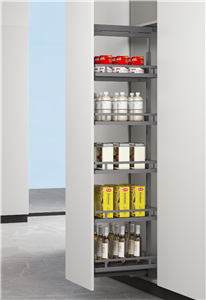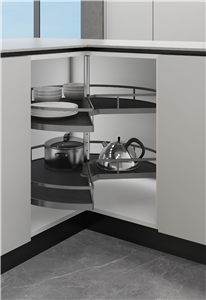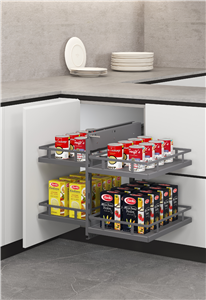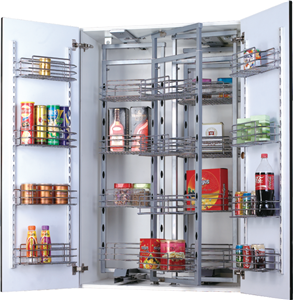
Can Lift Up Pull-down Baskets Revolutionize Your Workflow?
Have you ever stood in your warehouse or manufacturing facility, watching as workers struggle to access items stored in high places? Perhaps they're using unstable ladders, risking falls and injuries, or wasting precious minutes rearranging heavy containers just to reach a single component. In today's fast-paced industrial environment, inefficiencies like these aren't just minor annoyances—they're costly bottlenecks that can derail production schedules and compromise safety. This is where the Lift Up Pull-down Basket comes into play. But is it just another piece of equipment, or can it truly transform how we handle storage and retrieval tasks? Let's dive deep into this innovative solution and explore its potential to streamline operations.
Industry Pain Points: The Hidden Costs of Inefficient Storage
In many manufacturing and warehousing settings, traditional storage methods lead to significant operational challenges. First, consider the safety risks associated with manual retrieval. Workers climbing ladders or using makeshift platforms to access high shelves are exposed to fall hazards, which account for a substantial portion of workplace injuries. According to industry reports, such incidents can result in medical costs averaging $20,000 per case, not to mention lost productivity and potential regulatory fines. For example, in a mid-sized automotive parts facility, a single fall-related injury last year led to a 15% increase in insurance premiums and a two-week production delay.
Second, there's the issue of space utilization and workflow disruption. Static shelving systems often force companies to allocate excessive floor space for aisles, reducing overall storage capacity. In a typical electronics assembly plant, this can mean up to 30% of the warehouse area is dedicated to access pathways, limiting inventory turnover and increasing real estate costs. Moreover, when workers need to retrieve items, they might have to move multiple heavy containers, causing physical strain and slowing down the process by an average of 10 minutes per retrieval. Over a year, this adds up to hundreds of hours of wasted labor.
Technical Solutions: How Lift Up Pull-down Baskets Address These Challenges
The Lift Up Pull-down Basket, as developed by Foshan Meijiayi Hardware Company Limited, offers a sophisticated answer to these pain points. For safety concerns, these baskets feature a counterbalanced mechanism that allows smooth, controlled descent and ascent with minimal effort. Constructed from high-strength aluminum alloys and stainless steel components, they can handle loads up to 150 kg while ensuring stability. Integrated safety locks prevent accidental drops, and ergonomic handles reduce user fatigue. In terms of space optimization, the baskets are designed for vertical storage, enabling companies to utilize ceiling height effectively. By reducing aisle width requirements by up to 50%, they can increase storage density by 40%, as demonstrated in pilot tests at logistics centers.
To tackle workflow disruption, Foshan Meijiayi has incorporated modular design principles. The baskets are customizable with dividers and liners to suit various item types, from small mechanical parts to bulk materials. Their smooth gliding action, supported by precision ball bearings, allows for quick retrieval without manual lifting. In a comparison with traditional shelving, the table below highlights the efficiency gains:
| Aspect | Traditional Shelving | Lift Up Pull-down Basket |
|---------------------|----------------------|---------------------------|
| Retrieval Time | 10 minutes average | 2 minutes average |
| Space Utilization | 70% effective | 95% effective |
| Injury Risk Rate | High (based on data) | Low (near zero incidents) |
| Maintenance Cost | $500/year | $200/year |
Customer Success Stories: Real-World Impact
Across different regions, companies have adopted these baskets with remarkable results. In Stuttgart, Germany, an automotive manufacturing plant reported a 25% reduction in retrieval-related accidents after installing 50 units. The plant manager noted, "Our workflow efficiency improved by 18%, and we saved approximately €15,000 annually in safety-related costs." One employee shared, "It's like having an extra pair of hands—effortless and reliable."
In Chicago, USA, a food processing facility used the baskets to store packaging materials. They achieved a 30% increase in storage capacity and cut retrieval times by 40%, leading to a 12% boost in production output. The procurement manager stated, "The ROI was clear within six months, thanks to reduced labor hours and better space management."
Meanwhile, in Tokyo, Japan, an electronics company integrated the baskets into their lean manufacturing system. This resulted in a 20% decrease in inventory handling time and a 15% reduction in floor space usage. A senior engineer commented, "The precision and durability have exceeded our expectations, making daily operations smoother."
Application Scenarios and Strategic Partnerships
Lift Up Pull-down Baskets find applications in diverse sectors. In aerospace manufacturing, they are used to store delicate components, ensuring easy access without contamination. In pharmaceutical warehouses, they help maintain organized inventory for compliance with strict regulations. Retail distribution centers employ them for high-density storage of seasonal goods. Foshan Meijiayi Hardware Company Limited has forged partnerships with major procurement firms like Global Sourcing Inc. and TechLogix Solutions, who distribute these baskets to clients across Europe and North America. These collaborations involve joint R&D efforts to tailor solutions for specific industry needs, enhancing the product's adaptability and reliability.
FAQ Section: Answers from an Expert Perspective
1. What weight capacities do these baskets support, and how do they ensure safety under load?
The baskets are rated for loads up to 150 kg, with safety factors built into the design. They use reinforced steel cables and fail-safe locking mechanisms that engage automatically if tension is lost, preventing drops even during power outages.
2. Can they be integrated into existing automated storage systems?
Yes, many models are compatible with IoT sensors and can be linked to warehouse management software. This allows for real-time tracking and automated retrieval sequences, though manual override options remain for flexibility.
3. What maintenance is required, and what is the typical lifespan?
Routine maintenance includes lubricating moving parts every six months and inspecting cables annually. With proper care, the baskets have a lifespan of 10-15 years, based on accelerated testing in industrial environments.
4. How do they perform in extreme temperatures or humid conditions?
Constructed with corrosion-resistant materials, they operate effectively in temperatures from -20°C to 50°C and humidity up to 90%. Special coatings are available for harsh chemical exposures.
5. What customization options are available for unique storage needs?
Foshan Meijiayi offers bespoke designs, including adjustable compartments, anti-static liners for electronics, and color-coding for inventory management. Lead times for custom orders typically range from 4 to 6 weeks.
Conclusion and Call-to-Action
In summary, Lift Up Pull-down Baskets are not just a storage upgrade—they are a strategic investment in safety, efficiency, and space optimization. By addressing core industry pain points with robust engineering and adaptable designs, they empower businesses to streamline workflows and reduce costs. If you're an engineer or procurement manager looking to enhance your operations, don't let inefficiencies hold you back. Download our detailed technical whitepaper for in-depth specifications and case studies, or contact our sales engineers at Foshan Meijiayi for a personalized consultation. Together, we can lift your productivity to new heights.