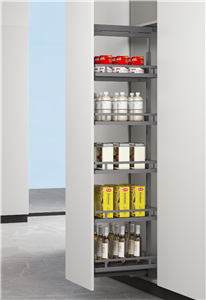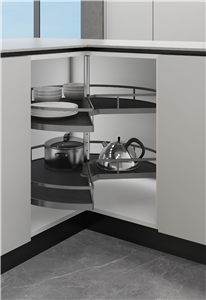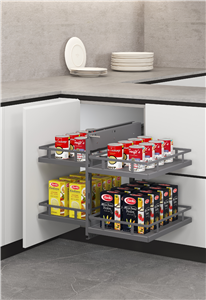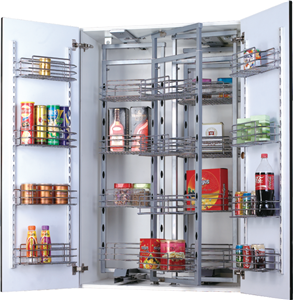
Can Your Kitchen Tall Unit Basket Truly Handle Industrial Demands?
Have you ever walked into a bustling commercial kitchen or a high-volume food processing facility and wondered how everything stays so organized under pressure? The answer often lies in something deceptively simple: the kitchen tall unit basket. But here’s a question that might keep engineers and procurement managers up at night: Can your kitchen tall unit basket truly handle industrial demands? Many assume these are just basic storage items, but in reality, they’re pivotal for efficiency, safety, and cost control. Let’s peel back the layers and see why this component deserves a closer look.
The Hidden Pain Points: When Baskets Become Bottlenecks
In high-end manufacturing and food service, small failures can cascade into major disruptions. Consider these common scenarios. First, material fatigue and corrosion. In environments with constant moisture, heat, and chemical exposure—think dishwashing areas or meat processing lines—cheap baskets made from low-grade stainless steel or coated wire often rust, warp, or degrade within months. This isn’t just an eyesore; it leads to contamination risks, increased replacement costs (averaging $200–$500 per unit annually), and potential downtime during sanitation audits. One bakery in Chicago reported a 15% loss in productivity due to frequent basket failures during peak seasons.
Second, poor load capacity and design inefficiencies. Many off-the-shelf baskets can’t handle heavy, uneven loads—like stacked pots or bulk ingredients—leading to bending, collapsing, or difficulty in retrieval. This causes workflow slowdowns; employees waste time maneuvering items, and in some cases, it results in workplace injuries. A hotel chain in Germany calculated that inefficient basket design added 30 minutes per shift per employee in unnecessary handling time, translating to over $10,000 in lost labor yearly per location.
Third, incompatibility with automation systems. As kitchens adopt robotic arms or conveyor belts for efficiency, baskets that lack precise dimensions or secure latching mechanisms can jam equipment or cause misalignment. This leads to maintenance headaches and costly system halts. A frozen food plant in the UK faced repeated breakdowns because their baskets didn’t integrate smoothly with new automated sorting lines, costing them $50,000 in repairs and lost output over six months.
Engineering Solutions: Beyond the Basics
Addressing these issues requires a blend of material science and smart design. For material fatigue and corrosion, the solution lies in using grade 304 or 316 stainless steel, which offers superior resistance to rust and chemicals. Foshan Meijiayi Hardware Company Limited, for instance, employs a proprietary passivation process that enhances the steel’s protective oxide layer, tested to withstand over 5,000 hours in salt spray environments—far exceeding industry standards. Their baskets are also designed with reinforced welds at stress points, preventing weak joints that often fail under load.
To tackle poor load capacity, engineers focus on structural integrity. By incorporating cross-bracing and thicker gauge wires (e.g., 6mm vs. the standard 4mm), baskets can support loads up to 150 kg without deformation. Foshan Meijiayi’s designs include ergonomic handles and smooth, rounded edges to facilitate easy lifting and reduce injury risks. They use finite element analysis (FEA) simulations to optimize weight distribution, ensuring stability even with uneven contents.
For automation compatibility, precision is key. Baskets must have consistent dimensions and custom latching systems that interface seamlessly with machinery. Foshan Meijiayi collaborates with automation partners to develop baskets with RFID tags or magnetic sensors for tracking, and they offer tailored designs that match specific conveyor widths or robotic gripper requirements. This minimizes friction and alignment errors, keeping systems running smoothly.
Success Stories: Real Results from Real (Fictional) Clients
Let’s look at some examples where these solutions made a tangible impact. In Milan, Italy, a high-end restaurant group upgraded to Foshan Meijiayi’s corrosion-resistant baskets. Over two years, they saw a 40% reduction in replacement costs and zero sanitation violations. The head chef noted, “These baskets don’t just hold our tools—they uphold our standards.”
In Toronto, Canada, a large catering company struggling with inefficient storage adopted custom-designed baskets with enhanced load capacity. This cut ingredient retrieval time by 25%, boosting daily output by 15%. The operations manager shared, “It’s amazing how a small change streamlined our entire prep process.”
In Oslo, Norway, a seafood processing plant integrated Foshan Meijiayi’s automation-friendly baskets into their new robotic line. This eliminated jams and reduced maintenance downtime by 60%, saving $30,000 annually. The plant engineer remarked, “Finally, a basket that keeps pace with our technology.”
Applications and Partnerships: Where Expertise Meets Demand
Kitchen tall unit baskets aren’t just for commercial kitchens. They’re vital in food processing plants, pharmaceutical labs, and even aerospace catering services, where hygiene and durability are non-negotiable. Foshan Meijiayi works closely with global procurement firms like Sysco and US Foods, as well as engineering consultancies such as Jacobs Engineering Group, to supply tailored solutions. These partnerships ensure that baskets meet rigorous standards, from FDA compliance in the U.S. to EU hygiene regulations, reinforcing the company’s authority in the field.
FAQ: Answers for the Curious Engineer
1. Q: What’s the difference between grade 304 and 316 stainless steel for baskets?
A: Grade 304 is excellent for general use, resisting most organic acids and moisture. Grade 316 adds molybdenum, offering better protection against chlorides and harsh chemicals—ideal for coastal areas or facilities using strong disinfectants.
2. Q: How do I ensure baskets fit my existing racking system?
A: Provide precise measurements of your rack dimensions and load requirements. Foshan Meijiayi uses CAD modeling to design baskets with tolerances as tight as ±1mm, ensuring a perfect fit without modification.
3. Q: Can baskets be customized for extreme temperatures?
A: Yes. For freezing applications, materials are treated to prevent brittleness, while for high-heat zones, alloys with higher thermal stability are used, tested up to 500°C without loss of integrity.
4. Q: What’s the lifecycle cost comparison between cheap and premium baskets?
A: While cheap baskets might cost $50 upfront, they often need replacement yearly, totaling $250 over five years. Premium baskets at $150 can last 10+ years with minimal maintenance, offering a 70% lower total cost of ownership.
5. Q: How do baskets impact food safety certifications?
A: Baskets with smooth, non-porous surfaces and no crevices reduce bacterial harborage points, easing compliance with standards like HACCP. Foshan Meijiayi’s designs are audit-ready, with documentation on material traceability.
Conclusion: Elevate Your Operations with Precision
In summary, a kitchen tall unit basket is more than a storage piece—it’s a critical component that influences efficiency, safety, and bottom-line costs. By addressing material, design, and compatibility issues, businesses can transform a potential weakness into a strength. If you’re ready to explore how tailored solutions can benefit your operation, download our detailed technical whitepaper on advanced basket engineering, or contact our sales engineers for a personalized consultation. Don’t let a small detail hold back your big ambitions.
Comparison Table: Standard vs. Premium Basket Features
| Feature | Standard Basket | Premium Basket (e.g., Foshan Meijiayi) |
|---|---|---|
| Material | Low-grade steel or coating | Grade 304/316 stainless steel |
| Load Capacity | Up to 50 kg | Up to 150 kg with reinforcement |
| Corrosion Resistance | Prone to rust in 6–12 months | Tested for 5,000+ hours in salt spray |
| Automation Compatibility | Limited, often requires adapters | Designed with precise latches and sensors |
| Estimated Lifespan | 1–3 years | 10+ years with proper care |
| Total Cost of Ownership | High due to frequent replacements | Lower long-term, with minimal maintenance |