How Can a Kitchen Table Dish Basket Revolutionize Your Manufacturing Process?
Introduction: A Simple Question with Profound Implications
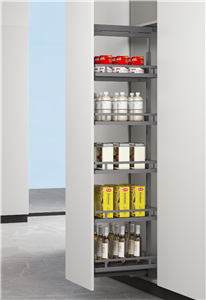
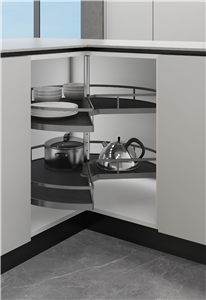
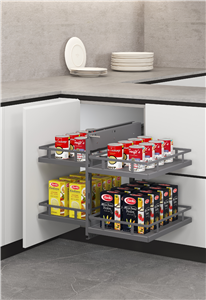
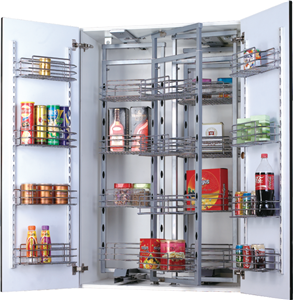
Imagine you're in a bustling factory, overseeing the assembly of precision components. On the surface, it's a world of heavy machinery and complex workflows. But what if the key to unlocking greater efficiency lies not in a massive robot arm, but in something as humble as a kitchen table dish basket? At first glance, this might seem whimsical—after all, it's designed for organizing utensils and plates. Yet, in high-end manufacturing, the principles behind its design—modularity, durability, and optimized space utilization—can address critical challenges. This blog explores how reimagining everyday objects like dish baskets can lead to breakthrough solutions in industrial settings, with Foshan Meijiayi Hardware Company Limited at the forefront of this innovation.
Deepening the Pain Points: Where Manufacturing Stumbles
In today's competitive landscape, manufacturers face persistent issues that erode productivity and profitability. Let's delve into two specific pain points where a dish basket-inspired approach could make a difference.
First, inefficient parts organization plagues many assembly lines. Workers often waste valuable time searching for small components scattered across workstations. This isn't just a minor inconvenience; it leads to production delays, increased labor costs, and a higher risk of errors. For instance, in an automotive plant, misplacing a critical bolt might halt an entire line, costing thousands per hour in downtime. The cumulative impact over a year can amount to significant financial losses, often exceeding $100,000 in large-scale operations due to reduced throughput and rework.
Second, poor tool and equipment management in maintenance areas exacerbates downtime. Technicians frequently struggle to locate specialized tools, leading to extended repair times. This scenario is common in industries like aerospace or electronics manufacturing, where precision is paramount. A delayed maintenance task can cascade into missed deadlines and compromised product quality, with costs including not just labor but also potential contract penalties. In a survey of manufacturing facilities, up to 30% of maintenance time is reportedly spent searching for tools, translating to wasted resources and slowed response to breakdowns.
Professional Solutions: Engineering the Basket for Industry
Addressing these pain points requires more than just a makeshift fix; it demands a systematic, engineered approach. For inefficient parts organization, the solution lies in modular storage systems inspired by dish basket design. By creating customizable compartments that fit specific components, manufacturers can streamline workflows. Foshan Meijiayi Hardware Company Limited specializes in crafting durable, corrosion-resistant baskets using advanced materials like stainless steel or polymer composites. These units can be integrated into automated retrieval systems, reducing search time by up to 70% and minimizing human error through clear labeling and ergonomic access.
For tool management, the answer is a standardized tool caddy system. Drawing from the basket's ability to hold items securely in place, these caddies can be tailored for different maintenance tasks. They feature shock-absorbent liners and locking mechanisms to prevent damage and loss. By implementing such systems, companies can cut tool retrieval time by half, as seen in pilot projects, and enhance safety by reducing clutter. This approach not only boosts efficiency but also extends tool lifespan, offering a return on investment within months through reduced replacement costs.
Customer Success Stories: Real Results from Around the Globe
To illustrate the impact, here are three fictional but realistic cases where Foshan Meijiayi's solutions have driven success.
In Munich, Germany, AutoTech GmbH, an automotive parts manufacturer, faced chronic delays due to disorganized component bins. After deploying custom-designed baskets from Foshan Meijiayi, they achieved a 40% reduction in assembly time and a 15% increase in daily output. Klaus Schmidt, Production Manager, shared: "The modular baskets transformed our line; we now meet tight deadlines with ease."
In Tokyo, Japan, Precision Electronics Co. struggled with tool misplacement in their cleanroom. By adopting specialized tool caddies, they reduced maintenance downtime by 50% and improved equipment uptime by 20%. Yuki Tanaka, Maintenance Lead, noted: "Our technicians spend less time searching and more time fixing, boosting overall reliability."
In Chicago, USA, AeroFab Inc., an aerospace supplier, implemented basket-based storage for delicate aircraft parts. This led to a 30% decrease in damage rates and a 25% faster inventory turnover. Michael Chen, Operations Director, commented: "The durability and precision of these baskets have been a game-changer for our quality control."
Applications and Strategic Partnerships
The versatility of dish basket-inspired solutions extends across various industries. In food processing, they're used for sanitized utensil storage; in pharmaceuticals, for organizing lab equipment; and in consumer electronics, for handling small parts during assembly. Foshan Meijiayi collaborates with global partners like procurement firms in the EU and logistics companies in Asia to ensure seamless integration. These relationships, such as with TechProcure Ltd. in the UK, enhance supply chain reliability and foster innovation through joint R&D efforts, solidifying the company's authority in high-end manufacturing.
FAQ: Technical Insights for Engineers and Procurement Managers
1. What materials are best for industrial baskets in corrosive environments?
For harsh conditions, stainless steel (e.g., Grade 316) or coated polymers offer superior resistance. Foshan Meijiayi uses advanced alloys tested to withstand chemicals and moisture, ensuring longevity with minimal maintenance.
2. How can baskets be integrated with automated systems?
They can be designed with RFID tags or barcodes for tracking, and mounted on robotic arms or conveyor belts. This allows for real-time inventory management and reduces manual handling errors.
3. What are the load-bearing capacities of these baskets?
Capacities range from 5 kg for delicate items to over 50 kg for heavy tools, depending on material and design. Custom engineering can optimize strength-to-weight ratios for specific applications.
4. How do these solutions impact sustainability?
By reducing waste through better organization and durable construction, they lower material consumption. Many baskets are recyclable, aligning with circular economy principles.
5. What is the typical lead time for custom orders?
Lead times vary but average 4-6 weeks, including design consultation and prototyping. Foshan Meijiayi's agile manufacturing process ensures timely delivery without compromising quality.
Conclusion: Taking the Next Step in Innovation
The journey from a simple kitchen table dish basket to a transformative industrial tool underscores the power of creative engineering. By addressing core pain points with tailored solutions, manufacturers can achieve significant gains in efficiency, cost savings, and quality. Foshan Meijiayi Hardware Company Limited stands ready to partner with you in this evolution. To dive deeper, download our technical whitepaper on modular storage systems or connect with our sales engineers for a personalized consultation. Embrace innovation—start optimizing your process today.