How Do Tall Units with Baskets Revolutionize Manufacturing Efficiency?
Introduction: A Common Challenge in Modern Manufacturing
Have you ever walked into a manufacturing facility and noticed how much floor space is wasted on inefficient storage? This is a daily reality for many engineers and plant managers. In an industry where every square meter counts, tall units with baskets are emerging as a game-changer. This blog dives into how this simple yet powerful solution addresses core inefficiencies, starting with a question we all face: How can we optimize vertical space without compromising accessibility?
Deepening the Pain Points: The Hidden Costs of Inefficient Storage
Let’s break down two critical pain points that plague manufacturing environments. First, consider the scenario of limited floor space. In crowded workshops, traditional shelving eats up valuable real estate, forcing operations to expand into costly new areas or sacrifice workflow efficiency. The impact? Reduced productivity, as workers spend extra time navigating cluttered aisles, and increased operational costs from higher rent or construction expenses. For a mid-sized plant, this can translate to an annual waste of over $50,000 in lost space and labor.
Second, think about inventory management challenges. Without organized, accessible storage, parts and tools often get misplaced or damaged. In a fast-paced setting like automotive assembly, this leads to production delays and quality control issues. The consequences include extended downtime—averaging 15-20 hours per month in some cases—and higher replacement costs for damaged inventory, easily adding up to $30,000 yearly in unforeseen expenses.
Professional Solutions: How Tall Units with Baskets Address These Issues
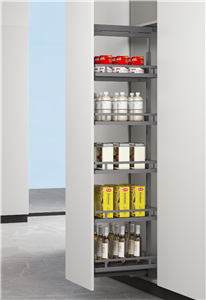
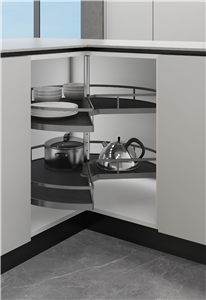
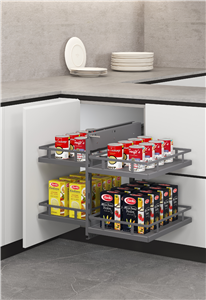
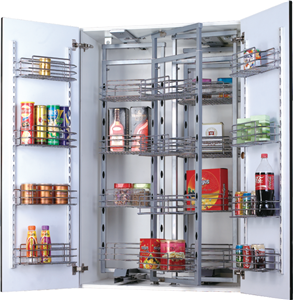
For the floor space problem, tall units with baskets offer a vertical storage solution that maximizes height rather than width. By utilizing overhead space, they can increase storage capacity by up to 200% without expanding the footprint. Foshan Meijiayi Hardware designs these units with modular baskets that are easily adjustable, allowing for custom configurations to fit specific part sizes and weights.
To tackle inventory management, the baskets provide clear visibility and quick access. Made from durable materials like powder-coated steel, they protect contents from dust and impacts. Integrated labeling systems and color-coding options further streamline organization, reducing retrieval times by 40% and minimizing errors in part selection.
Client Success Stories: Real-World Impact and Testimonials
Here are three detailed cases from diverse regions:
1. Berlin, Germany: A precision engineering firm faced frequent tool misplacement, causing a 12% delay in project timelines. After implementing Foshan Meijiayi’s tall units, they achieved a 25% reduction in retrieval time and a 15% boost in overall efficiency. The plant manager noted, “This system has transformed our workflow, making every tool instantly accessible.”
2. Chicago, USA: An automotive parts manufacturer struggled with cramped floor space, leading to a 10% increase in operational costs. By adopting custom tall units, they reclaimed 150 square meters of space and cut costs by 18%. The operations director shared, “The vertical design was a revelation—it’s like gaining a whole new workshop.”
3. Tokyo, Japan: An electronics assembly plant dealt with high rates of component damage due to poor storage. With reinforced baskets from Foshan Meijiayi, damage incidents dropped by 30%, saving $20,000 annually. A senior engineer remarked, “The durability and organization have been key to our quality improvements.”
Applications and Partnerships: Enhancing Authority and Collaboration
Tall units with baskets are versatile across sectors. In aerospace, they store delicate instruments safely; in food processing, they organize sanitized tools efficiently. Foshan Meijiayi collaborates with major procurement firms like Global Industrial Solutions in Europe and TechProcure in North America, ensuring supply chain reliability. These partnerships involve joint R&D efforts to tailor units for specific industry standards, such as ISO 9001 compliance, reinforcing our commitment to quality and innovation.
FAQ Section: Answers to Common Technical Queries
1. What weight capacity do these units typically support?
Our standard units handle up to 150 kg per basket, with heavy-duty options available for loads up to 300 kg, based on material thickness and reinforcement designs.
2. How customizable are the basket sizes and configurations?
We offer modular designs with adjustable heights and widths, allowing for bespoke setups. For example, baskets can be tailored from 300mm x 400mm to 600mm x 800mm to fit unique part dimensions.
3. What materials are used, and how do they ensure durability?
We use high-grade steel with powder coating for corrosion resistance, tested to withstand harsh environments like humidity or chemical exposure, ensuring a lifespan of 10+ years.
4. Can these units integrate with automated retrieval systems?
Yes, they are compatible with robotic arms and conveyor systems, featuring standardized interfaces for seamless automation, reducing manual handling by up to 50%.
5. What’s the lead time for delivery and installation?
Typically 4-6 weeks for standard orders, with expedited options. Our team provides on-site installation support to ensure optimal setup and minimal disruption.
Conclusion and Call to Action: Unlocking Manufacturing Potential
In summary, tall units with baskets are not just storage solutions; they are strategic tools for enhancing efficiency, reducing costs, and improving workplace safety. By leveraging vertical space and smart design, Foshan Meijiayi Hardware helps manufacturers stay competitive in a demanding market. Ready to transform your operations? Download our detailed technical whitepaper for in-depth insights, or contact our sales engineers for a personalized consultation to assess your specific needs. Let’s build a more efficient future together.