How Does a 180-Degree Revolving Basket Revolutionize High-Volume Assembly?
Imagine this: you're overseeing a high-volume assembly line where components move from station to station. Operators reach, twist, and lift parts repeatedly—each motion a potential delay or error. Over a shift, these micro-inefficiencies add up, slowing throughput and straining your team. What if one simple innovation could streamline this flow, cutting waste and boosting productivity? That's the promise of the 180-degree revolving basket, a tool redefining efficiency in precision manufacturing.
Pain Points in Modern Assembly Lines
In industries like automotive, electronics, and aerospace, assembly processes face persistent challenges. One major issue is throughput bottlenecks. When operators manually transfer parts between stations, even a few seconds of handling time per component can accumulate into hours of lost production daily. For example, in an automotive plant assembling 1,000 units per day, a 5-second delay per part might cost over 10 hours of downtime weekly, translating to significant revenue loss and missed deadlines.
Another critical pain point is ergonomic strain and related costs. Repetitive motions, such as twisting to access parts, increase the risk of musculoskeletal disorders among workers. In the U.S. alone, ergonomic injuries cost manufacturers billions annually in medical expenses and lost productivity. A study by the National Institute for Occupational Safety and Health notes that poor ergonomics can reduce efficiency by up to 20%, as fatigued workers make more errors and require frequent breaks.
Quality control inconsistencies further compound these issues. Manual handling often leads to part misalignment, contamination, or damage, especially with delicate components like circuit boards or precision gears. In electronics manufacturing, a single mishandled part can cause a 5% defect rate, necessitating rework or scrap. This not only inflates costs but also tarnishes brand reputation, with recalls or customer complaints adding long-term financial strain.
How 180-Degree Revolving Baskets Provide Solutions
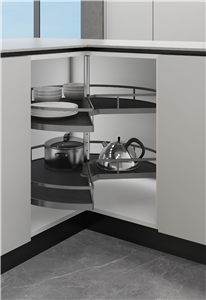
The 180-degree revolving basket addresses these pain points through intelligent design. For throughput bottlenecks, it enables seamless part rotation between stations, reducing handling time by up to 30%. Operators simply rotate the basket to access components, eliminating unnecessary movements. This is achieved via a robust pivot mechanism that ensures smooth, controlled turns—often integrated with automation for even greater speed.
To mitigate ergonomic strain, these baskets are engineered for optimal height and accessibility. By minimizing twisting and reaching, they lower injury risks and enhance worker comfort, which can boost morale and reduce absenteeism. Features like adjustable bases and lightweight materials, such as aluminum alloys, further customize the user experience, aligning with OSHA guidelines for workplace safety.
For quality control, the baskets offer precise component organization. With dedicated compartments and anti-static coatings, they prevent part damage and contamination. In cleanroom environments, for instance, this reduces defect rates by ensuring components remain in designated, contamination-free zones throughout assembly.
Customer Success Stories and Testimonials
Foshan Meijiayi Hardware Company Limited has deployed 180-degree revolving baskets globally, with notable results:
1. Automotive Supplier in Stuttgart, Germany: A manufacturer of engine components integrated these baskets into their assembly line. Throughput increased by 25% within three months, and ergonomic injuries dropped by 40%. The production manager noted, "This simple tool transformed our workflow, making operations smoother and safer."
2. Electronics Firm in Silicon Valley, USA: Specializing in sensor production, this company reduced handling errors by 15% and cut rework costs by $50,000 annually. The lead engineer shared, "The baskets' precision alignment has been a game-changer for our delicate assemblies."
3. Aerospace Contractor in Toulouse, France: Facing tight tolerances in wing assembly, they achieved a 20% improvement in part accuracy and a 10% reduction in assembly time. The quality assurance head remarked, "We've seen fewer defects and faster turnaround, thanks to this innovative solution."
4. Medical Device Maker in Tokyo, Japan: In producing surgical instruments, they enhanced cleanliness standards, lowering contamination incidents by 30%. The operations director said, "It's not just a basket; it's a critical component of our quality protocol."
5. Industrial Machinery Manufacturer in Milan, Italy: By adopting these baskets, they streamlined heavy-part handling, boosting efficiency by 18% and reducing worker fatigue significantly. The plant supervisor commented, "Our team is more productive and less stressed, which shows in our output."
Applications and Strategic Partnerships
180-degree revolving baskets are versatile across sectors. In automotive, they facilitate engine and transmission assembly; in electronics, they support PCB and microchip handling; in aerospace, they aid in avionics and structural component organization. Key applications include just-in-time production lines, lean manufacturing setups, and automated robotic cells.
Foshan Meijiayi collaborates with leading procurement partners, such as industrial distributors in Europe and North America, to ensure global availability. These partnerships, backed by certifications like ISO 9001, reinforce the company's authority in precision hardware. By working closely with engineering teams, they tailor baskets to specific needs—whether for high-temperature environments or anti-corrosion requirements.
FAQ: Insights for Engineers and Procurement Managers
1. Q: What materials are best for 180-degree revolving baskets in corrosive environments?
A: For corrosion resistance, stainless steel (e.g., 304 or 316 grade) is ideal, as it withstands harsh chemicals and moisture. In less aggressive settings, powder-coated aluminum offers a lightweight alternative with good durability.
2. Q: How do these baskets integrate with automated systems?
A: They can be equipped with RFID tags or barcodes for tracking, and their rotation mechanisms often sync with PLCs (Programmable Logic Controllers) for seamless automation, reducing manual intervention by up to 50%.
3. Q: What load capacities are typical, and how do they affect design?
A: Standard baskets handle 50-200 kg, but custom designs can exceed 500 kg. Heavier loads require reinforced pivots and bearings, such as ball-bearing systems, to maintain smooth operation and prevent wear.
4. Q: Are there customization options for specific part sizes or shapes?
A: Yes, compartments can be modular, with adjustable dividers or custom molds. For irregular parts, foam inserts or CNC-machined holders ensure secure placement, minimizing movement during rotation.
5. Q: What maintenance is involved, and what's the typical lifespan?
A: Minimal maintenance is needed—regular lubrication of pivot points and inspection for wear. With proper care, these baskets last 5-10 years in continuous use, depending on environmental factors and load stress.
Conclusion and Call to Action
The 180-degree revolving basket is more than a simple tool; it's a strategic asset that tackles core manufacturing challenges—from inefficiency and ergonomic risks to quality lapses. By enhancing throughput, safety, and precision, it delivers tangible ROI across diverse industries. If you're looking to optimize your assembly line, consider how this innovation could fit your needs.
To dive deeper, request our technical white paper on advanced basket designs, or connect with our sales engineers for a customized consultation. At Foshan Meijiayi, we're committed to partnering with you for smarter, more efficient manufacturing solutions. Reach out today to start the conversation and transform your production floor.