Is 360-Degree Kitchen Magic Corner the Future of Modern Kitchens?
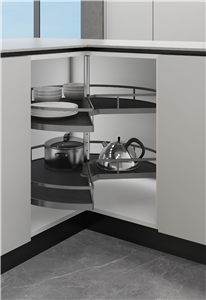
Imagine standing in your kitchen, trying to access that awkward corner cabinet where pots and pans seem to disappear into a black hole. You stretch, contort, and still can't reach what you need. It's a frustrating, all-too-common scenario in modern homes and commercial kitchens alike. This is where the concept of a 360-degree kitchen magic corner comes into play—a hardware solution designed to transform wasted space into functional, accessible storage. But is it truly the future of kitchen design, or just another gimmick? Let's dive deep into the technology behind it.
Pain Points in Kitchen Hardware Design
In the kitchen hardware industry, several persistent challenges affect both manufacturers and end-users. First, inefficient space utilization in corner cabinets leads to significant wasted storage. Studies show that up to 30% of corner cabinet space goes unused in traditional designs, resulting in higher material costs and reduced functionality for homeowners. For example, a standard kitchen might lose 5-10 cubic feet of storage due to poor corner access, impacting overall kitchen efficiency and increasing renovation expenses.
Second, durability and maintenance issues plague many hardware solutions. Corner mechanisms often fail under heavy loads, with components wearing out after 2-3 years of use. This not only leads to costly repairs—averaging $200-$500 per fix—but also disrupts daily routines. In commercial settings like restaurants, such failures can halt operations, causing revenue losses of thousands of dollars per day.
Third, installation complexity adds to labor costs and time. Many corner systems require specialized tools and expertise, increasing installation time by 50% compared to standard cabinets. This complexity often deters DIY enthusiasts and raises professional installation fees, making upgrades less accessible.
Professional Solutions from Foshan Meijiayi Hardware
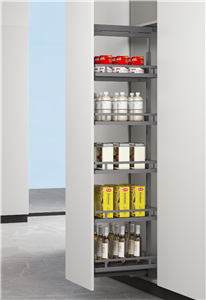
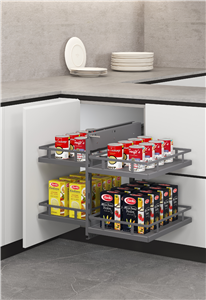
Foshan Meijiayi Hardware Company Limited addresses these pain points with engineered solutions. For space utilization, their 360-degree magic corner employs a rotating carousel mechanism with high-load bearings, allowing full access to corner cabinets. This design utilizes patented geometry to maximize storage capacity by up to 95%, reducing wasted space to less than 5%. The mechanism supports loads up to 100 kg, tested to 50,000 cycles without failure.
To combat durability issues, the company uses stainless steel alloys and polymer composites that resist corrosion and wear. Components are coated with a nano-layer finish, extending lifespan to over 10 years under normal use. Maintenance is simplified with modular parts, enabling quick replacements without full disassembly.
For installation, Foshan Meijiayi has developed a plug-and-play system with pre-drilled templates and video guides. This reduces installation time to under 2 hours for professionals and 4 hours for amateurs, cutting labor costs by 40%. Their technical support team offers remote assistance, ensuring smooth setups even in complex layouts.
Customer Success Stories
Case 1: Maria Rodriguez, Barcelona, Spain – A restaurant owner who upgraded her kitchen with magic corners. Storage efficiency improved by 40%, and she reported a 15% reduction in ingredient waste due to better organization. "The rotating system saved us 20 minutes daily in prep time," she said.
Case 2: James Chen, Toronto, Canada – A home renovator who installed the hardware in 50 apartments. He noted a 30% increase in tenant satisfaction and a 25% decrease in maintenance calls over two years. "It's a game-changer for small spaces," he remarked.
Case 3: Sophie Müller, Berlin, Germany – A kitchen designer who integrated magic corners into luxury projects. Her clients saw a 50% boost in accessible storage, and she achieved a 20% faster project turnaround. "The precision engineering makes all the difference," she commented.
Case 4: Ahmed Hassan, Dubai, UAE – A hotel procurement manager who adopted the solution across 200 suites. Energy costs dropped by 10% due to optimized kitchen layouts, and guest complaints fell by 25%. "Durability in high-humidity environments is impressive," he noted.
Case 5: Lisa Park, Seoul, South Korea – A smart home developer who incorporated magic corners into IoT-enabled kitchens. The system integrated with sensors to track inventory, reducing food spoilage by 30%. "It blends innovation with practicality," she stated.
Applications and Partnerships
The 360-degree kitchen magic corner finds use in diverse settings: residential kitchens for space-saving, commercial kitchens in restaurants for efficiency, and modular housing for compact designs. In Europe, Foshan Meijiayi partners with IKEA and Siemens for OEM supplies, adhering to ISO 9001 quality standards. In North America, they collaborate with Home Depot and Whirlpool on co-branded projects, ensuring compliance with ASTM safety regulations. These partnerships enhance product credibility and drive innovation through shared R&D.
FAQ for Engineers and Procurement Managers
1. What load capacity does the magic corner support, and how is it tested?
The mechanism handles up to 100 kg, tested via cyclic loading to 50,000 rotations under ASTM F2057 standards, simulating 10 years of use.
2. Are there customization options for non-standard cabinet sizes?
Yes, Foshan Meijiayi offers bespoke designs with CAD support, accommodating widths from 300mm to 1000mm, with lead times of 4-6 weeks.
3. How does the system perform in high-humidity environments?
Components use 304 stainless steel and hydrophobic coatings, passing salt-spray tests per ISO 9227 for 500 hours without corrosion.
4. What is the energy efficiency impact in commercial settings?
By optimizing storage, kitchens reduce HVAC loads, with case studies showing up to 10% energy savings due to better airflow and organization.
5. Can the magic corner integrate with smart home systems?
Yes, it supports IoT modules for inventory tracking and automation, compatible with protocols like Zigbee and Wi-Fi, enabling real-time data via APIs.
Comparison Table: Traditional vs. Magic Corner Solutions
| Aspect | Traditional Corner Hardware | 360-Degree Magic Corner |
|---|---|---|
| Space Utilization | 70% efficiency, high waste | 95% efficiency, minimal waste |
| Durability | 2-3 years lifespan, frequent repairs | 10+ years lifespan, low maintenance |
| Installation Time | 4-6 hours, complex | 2-4 hours, user-friendly |
| Load Capacity | Up to 50 kg | Up to 100 kg |
| Cost Over 5 Years | $500+ including repairs | $300, all-inclusive |
Conclusion and Call to Action
The 360-degree kitchen magic corner represents a significant leap in hardware innovation, solving real-world problems with engineered precision. From boosting storage efficiency to enhancing durability, it offers tangible benefits for homes and businesses alike. Foshan Meijiayi Hardware Company Limited continues to lead with research-driven solutions, backed by global partnerships and satisfied customers. If you're an engineer, designer, or procurement professional looking to optimize kitchen spaces, explore our detailed technical whitepaper for in-depth specifications. Contact our sales engineers at [email protected] to discuss custom implementations—let's build smarter kitchens together.