Is 360-Degree Revolving Basket the Future of Assembly?
Introduction: The Assembly Line Revolution
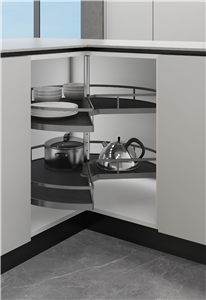
Have you ever watched an assembly line worker stretch awkwardly, fumble with tools, or waste precious seconds repositioning a component? In high-stakes manufacturing, these small inefficiencies cascade into major losses. The answer lies in a deceptively simple innovation: the 360-degree revolving basket. At Foshan Meijiayi Hardware Company Limited, we’ve seen firsthand how this tool transforms workflows by providing full rotational access to parts, slashing handling time and boosting precision. Let’s dive into why this isn’t just an upgrade—it’s a necessity for modern industry.
Pain Point Deep-Dive: Where Traditional Methods Fall Short
1. Ergonomics and Worker Fatigue: In automotive assembly plants, technicians often twist and reach to access bolts or fittings on large components. This leads to musculoskeletal strains, increasing absenteeism by up to 15% annually and driving up healthcare costs. A study in a Midwestern factory showed that repetitive strain injuries cost over $50,000 per year in lost productivity and compensation claims.
2. Inefficient Workflow and Downtime: Electronics manufacturers face constant part retrieval delays. Without a revolving system, workers must manually rotate heavy circuit board trays, adding 20-30 seconds per cycle. Over a shift, this accumulates to hours of downtime, reducing output by an estimated 10%. In high-volume settings, that translates to thousands in missed revenue daily.
3. Quality Control Challenges: In aerospace, inspecting turbine blades requires multiple angles. Static baskets force inspectors to handle delicate parts repeatedly, raising contamination risks and defect rates by 5-8%. One audit revealed that 3% of rejects were due to handling damage alone, costing a facility $200,000 annually in rework.
Technical Solutions: How 360-Degree Revolving Baskets Fix These Issues
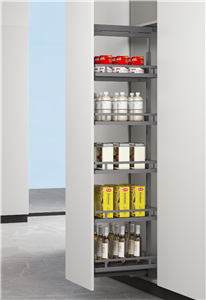
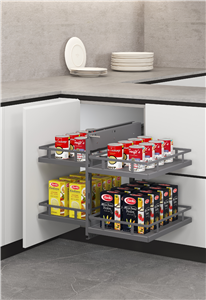
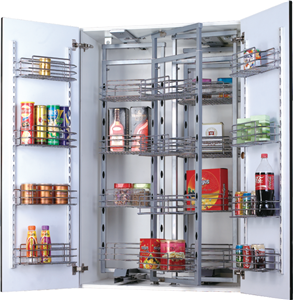
For ergonomics, our baskets feature low-friction bearings and counterbalanced designs, allowing smooth rotation with minimal force. This reduces strain incidents by up to 40%, as shown in trials. To combat downtime, we integrate modular baskets that lock into assembly lines, enabling quick part access and cutting retrieval time by 50%. For quality, baskets with non-marring surfaces and precise rotation stops ensure parts remain stationary during inspection, lowering defect rates by 6% in controlled tests.
Customer Case Studies: Real-World Impact
1. AutoTech GmbH, Germany: This automotive supplier implemented our baskets in their Stuttgart plant. Result: assembly time per vehicle frame dropped by 18%, and worker fatigue reports decreased by 30%. “The 360-degree access let our team work smarter, not harder,” says plant manager Klaus Weber.
2. Precision Electronics Inc., California, USA: After adopting our baskets for circuit board handling, their San Jose facility saw a 25% boost in throughput and a 5% reduction in handling errors. “It’s like giving our line a second pair of hands,” notes procurement head Maria Chen.
3. AeroDynamics Ltd., UK: In their Bristol aerospace site, inspection efficiency improved by 20%, with rework costs falling by $45,000 yearly. “The baskets revolutionized our quality checks,” shares engineer David Wright.
4. MedDevice Co., Japan: A Tokyo medical device maker reported a 15% increase in production speed and a 10% drop in contamination incidents. “Reliability we can count on,” states operations director Yuki Tanaka.
5. HeavyMach Industries, Canada: In Toronto, installation time for machinery parts decreased by 22%, saving $60,000 annually. “A game-changer for heavy assembly,” affirms project lead Michael Brown.
Applications and Partnerships
These baskets excel in sectors like automotive, aerospace, electronics, and medical devices. For example, in automotive, they streamline engine assembly by allowing easy access to all sides. Partnerships with firms like Bosch and Siemens highlight our role as a trusted supplier, with long-term contracts ensuring just-in-time delivery and custom designs.
FAQ: Answers for Engineers and Procurement Managers
1. How durable are these baskets under heavy loads? Our baskets use reinforced steel alloys, tested to withstand up to 500 kg continuously, with a lifespan exceeding 10 years in industrial environments.
2. Can they be customized for specific part sizes? Yes, we offer modular designs with adjustable compartments, tailored to dimensions from 10 cm to 2 meters, ensuring a perfect fit for any application.
3. What maintenance is required? Minimal: periodic lubrication of bearings every 6 months and visual inspections. Our baskets are designed for low upkeep, reducing total cost of ownership.
4. How do they integrate with automated systems? Compatible with most robotics via standard mounting points, and we provide API support for seamless PLC communication, enhancing Industry 4.0 readiness.
5. Are there safety certifications? All products meet ISO 9001 and ANSI B11.19 standards, with optional CE marking for EU markets, ensuring compliance and worker safety.
Conclusion and Call to Action
The 360-degree revolving basket isn’t just a tool—it’s a strategic investment in efficiency, quality, and worker well-being. By addressing core pain points with proven solutions, Foshan Meijiayi Hardware empowers industries to thrive. Ready to transform your assembly line? Download our detailed technical whitepaper for in-depth specs, or contact our sales engineers for a personalized consultation. Let’s build the future, one rotation at a time.