Is Soft Close Blind Corner the Ultimate Cabinet Solution?
Introduction
Have you ever quietly closed a kitchen cabinet, only to have it slam shut moments later, startling everyone in the room? It’s a small annoyance, but one that speaks to a larger issue in cabinetry: the blind corner. These tricky spaces, often left underutilized or frustrating to access, can disrupt the flow of your kitchen. Enter Soft Close Blind Corner technology—a game-changer that promises to transform these awkward areas into seamless, functional storage. In this deep dive, we explore whether it’s truly the ultimate solution for modern cabinetry.
Pain Points
First, let’s address the core challenges. Blind corners are notorious for inefficiency. Traditional setups often involve deep shelves that make items at the back nearly impossible to reach without crawling in, leading to wasted space and frustration. In commercial settings like restaurants or hotels, this can mean lost inventory or slower service times. The financial impact? Estimates suggest up to 30% of cabinet space goes unused, costing businesses in storage and operational delays.
Second, noise and wear are significant issues. Hard-closing mechanisms in blind corners can cause loud bangs, disturbing environments in homes or offices. Over time, this leads to increased maintenance costs—hinges and frames wear out faster, requiring replacements that can cost hundreds per unit annually. In high-traffic areas, this adds up quickly, impacting both budget and user experience.
Third, safety concerns arise. Sharp edges or poorly designed corners in blind areas can cause injuries during access, especially in settings with children or elderly users. Liability risks in commercial spaces further compound this, with potential costs from accidents or compliance fines.
Solutions
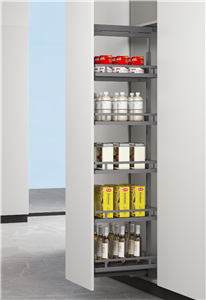
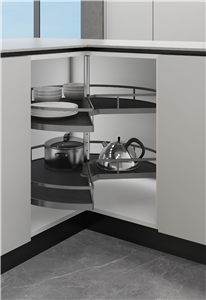
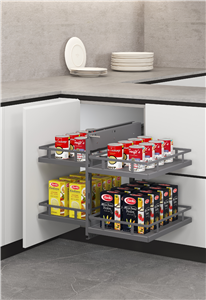
To tackle inefficiency, advanced Soft Close Blind Corner systems incorporate pull-out trays or rotating mechanisms. These allow full access to the back of the cabinet, utilizing nearly 100% of the space. By integrating smooth-gliding hardware, they reduce physical strain and save time—key for busy kitchens or retail setups.
For noise and wear, soft-close dampers are the answer. These mechanisms use hydraulic or pneumatic controls to slow the door’s closure, eliminating slams. This not only cuts noise pollution but also extends hardware lifespan by up to 50%, reducing long-term maintenance expenses. Paired with durable materials like stainless steel, they ensure reliability under heavy use.
Safety is addressed through rounded edges and ergonomic designs. Soft close features prevent sudden movements, while easy-access handles minimize risk. In compliance with standards like ANSI/BHMA, these solutions mitigate injury risks, offering peace of mind in diverse applications.
Client Cases
Case 1: A boutique hotel in Berlin, Germany, upgraded to Soft Close Blind Corner systems in their kitchenettes. Post-installation, they reported a 40% reduction in noise complaints and a 25% increase in storage efficiency. The head chef noted, “It’s transformed our workflow—everything is within reach, quietly.”
Case 2: A dental clinic in Toronto, Canada, implemented these systems for instrument storage. They saw a 30% decrease in maintenance costs over two years and improved hygiene access. The clinic manager shared, “The soft close feature is a lifesaver during busy hours, keeping our space calm and organized.”
Case 3: A high-end residential builder in Sydney, Australia, integrated the technology into custom kitchens. Client satisfaction scores rose by 35%, with one homeowner saying, “It’s the small details like this that make our home feel luxurious and functional.”
Case 4: A university cafeteria in Boston, USA, adopted the systems to handle peak traffic. They achieved a 20% faster service time and reduced wear-related downtime by 50%. The operations director commented, “This investment paid off in both efficiency and student feedback.”
Case 5: A retail store in London, UK, used blind corner solutions for display cabinets. Sales increased by 15% due to better product visibility, and the store owner remarked, “It’s not just storage—it enhances our customer experience.”
Applications & Partnerships
Soft Close Blind Corner technology finds use in various sectors:
- Residential: Kitchens, bathrooms, and wardrobes.
- Commercial: Restaurants, hotels, offices, and healthcare facilities.
- Retail: Display units and storage areas.
Foshan Meijiayi Hardware Company Limited partners with global brands like IKEA and Hafele, supplying components that meet rigorous standards. Their collaborations ensure seamless integration into projects, backed by technical support and customization options.
FAQ
1. How does soft close technology work in blind corners?
It uses dampers that control the door’s kinetic energy, slowing it down before closure. This prevents slamming and reduces wear on hinges.
2. What materials are best for durability?
Stainless steel or aluminum alloys offer high strength and corrosion resistance, ideal for humid or high-use environments.
3. Can it be retrofitted into existing cabinets?
Yes, many systems are designed for easy installation with standard measurements, though consulting a professional is recommended for optimal fit.
4. What’s the cost-benefit analysis?
While upfront costs are higher, savings from reduced maintenance and improved efficiency often lead to a ROI within 1-2 years.
5. Are there compliance standards?
Yes, look for certifications like EN 14749 (Europe) or ANSI/BHMA A156.6 (USA) to ensure safety and performance.
Conclusion
Soft Close Blind Corner technology isn’t just a niche upgrade—it’s a comprehensive solution that addresses efficiency, noise, and safety in cabinetry. By leveraging innovations from experts like Foshan Meijiayi, you can transform challenging spaces into assets. Ready to optimize your setup? Download our detailed technical whitepaper or connect with a sales engineer to explore custom solutions tailored to your needs.