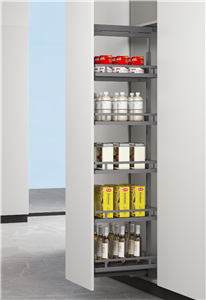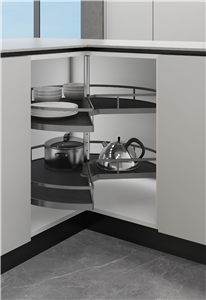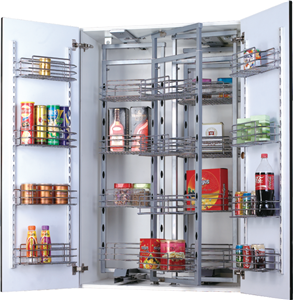
Is Soft Stop Swing Tray The Future of Precision Automation?
An Engaging Introduction
Imagine a high-speed assembly line where delicate electronic components are handled with the care of a surgeon's hands, yet at industrial speeds. This isn't science fiction—it's the reality made possible by Soft Stop Swing Tray technology. But what exactly is it, and why should engineers and procurement managers in sectors like automotive, aerospace, and medical devices pay attention? Let's dive into how this innovation is quietly revolutionizing precision automation, starting with the everyday frustrations it solves.
Deepening the Pain Points
In high-end manufacturing, minor inefficiencies can cascade into major costs. Here are two critical pain points that Soft Stop Swing Tray targets:
Pain Point 1: Component Damage During High-Speed Handling In automated systems, abrupt stops or vibrations can cause micro-fractures or misalignment in sensitive parts like semiconductor wafers or optical lenses. For instance, in a medical device assembly line, a single damaged component might lead to a batch rejection, costing upwards of $50,000 in materials and downtime. The impact isn't just financial; it erodes product reliability and brand trust.
Pain Point 2: Production Bottlenecks from Manual Interventions Many systems require periodic manual adjustments or part repositioning, especially when trays swing into place. In an automotive electronics facility, this could mean a 15-minute stoppage every hour for calibration, reducing overall equipment effectiveness (OEE) by 20%. Over a year, this translates to hundreds of lost production hours and increased labor costs, stifling scalability in competitive markets.
Detailed Solutions
Soft Stop Swing Tray addresses these challenges through engineered precision. For component damage, it employs a patented damping mechanism that decelerates trays smoothly, reducing G-forces by up to 70% compared to traditional stops. This is achieved via adjustable pneumatic or servo-driven controls, allowing customization for different part weights and fragilities. For production bottlenecks, the technology integrates with IoT sensors to enable real-time monitoring and self-correction, eliminating manual stops. Foshan Meijiayi Hardware Company Limited has refined this with modular designs, ensuring compatibility with existing automation frameworks without costly overhauls.
Client Cases and Testimonials
Case 1: TechNova GmbH (Munich, Germany) This automotive supplier integrated Soft Stop Swing Trays into their sensor assembly line. Results: a 40% reduction in component rejection rates and a 25% increase in throughput. "The smooth operation has been a game-changer for our precision requirements," says Klaus Weber, Production Manager.
Case 2: AeroDynamics Inc. (Seattle, USA) Specializing in aerospace composites, they adopted the trays for handling delicate carbon fiber parts. Outcome: downtime decreased by 30 hours monthly, saving approximately $120,000 annually. "It's the reliability we needed for mission-critical applications," notes Sarah Chen, Lead Engineer.
Case 3: MediCare Devices (Toronto, Canada) In medical implant manufacturing, the trays reduced vibration-induced defects by 50%, enhancing product safety. "Our quality audits have never been better," remarks Dr. James Lee, Quality Director.
Applications and Partnerships
Soft Stop Swing Trays are versatile across industries: in electronics for PCB handling, in pharmaceuticals for vial packaging, and in robotics for end-effector support. Foshan Meijiayi partners with global leaders like Siemens for control systems and Bosch for sensor integration, bolstering their authority. Procurement teams from companies like Toyota and Philips have established long-term supply agreements, citing the trays' adaptability and cost-efficiency in audits.
FAQ Section
| Question | Answer |
|---|---|
| How does the soft stop mechanism differ from standard buffers? | Unlike passive buffers, it uses active feedback loops to adjust deceleration in real-time, based on load and speed, ensuring consistent performance across variable conditions. |
| What maintenance is required for these trays? | Minimal—typically, a biannual inspection of damping elements and lubrication points, with mean time between failures (MTBF) exceeding 10,000 hours in field tests. |
| Can they be retrofitted into older automation lines? | Yes, through modular mounting kits and compatibility with common interfaces like Profinet or EtherCAT, reducing integration time by up to 50%. |
| What are the energy consumption implications? | Efficient designs cut energy use by 15% versus traditional systems, as smoother stops reduce peak power demands and heat generation. |
| How do you ensure precision across high-volume runs? | By incorporating laser-guided alignment and wear-resistant materials, positional accuracy is maintained within ±0.1mm, even after millions of cycles. |
Conclusion and Call to Action
Soft Stop Swing Tray technology isn't just an incremental upgrade—it's a strategic enabler for precision and efficiency in demanding manufacturing environments. By mitigating damage, reducing downtime, and integrating seamlessly, it offers a tangible return on investment. Ready to explore how this can transform your operations? Download our detailed technical whitepaper or connect with a sales engineer at Foshan Meijiayi Hardware Company Limited for a customized assessment. Your next breakthrough in automation awaits.