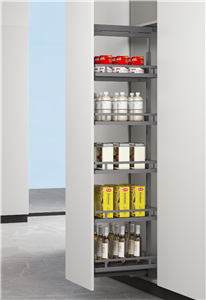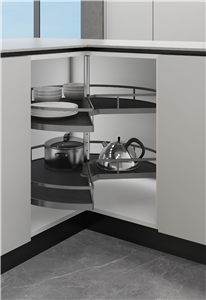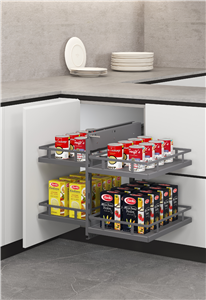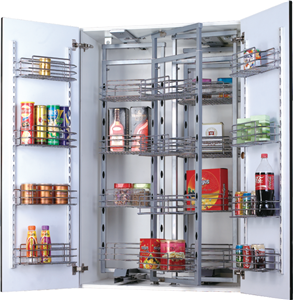
Is Super Magic Corner Basket Revolutionizing Precision Assembly?
Imagine you're overseeing a high-stakes assembly line where micron-level precision determines product reliability. A single misaligned component could cascade into costly recalls. This is where Super Magic Corner Basket (SMCB) technology enters the scene—but what exactly makes it a game-changer? Let's dive into how this innovation is reshaping precision manufacturing.
Common Pain Points in Precision Assembly
In industries like aerospace, automotive, and medical devices, assembly processes face persistent challenges. First, component misalignment during high-speed operations often leads to defects. For example, in automotive electronics assembly, misaligned connectors can cause intermittent failures, resulting in warranty claims averaging $50,000 per incident and production delays of up to 48 hours. Second, inconsistent handling of delicate parts, such as micro-sensors in medical implants, risks contamination or damage. A single contaminated batch in pharmaceutical manufacturing might incur cleanup costs exceeding $100,000 and regulatory fines. Third, inefficient workflow integration in multi-stage processes reduces throughput. In semiconductor fabrication, poor part organization can slow down assembly by 15%, translating to annual losses of $500,000 for mid-sized facilities.
How Super Magic Corner Basket Addresses These Issues
SMCB technology tackles these pain points through its patented corner-based stabilization system. For misalignment, it uses adaptive corner grippers with real-time feedback sensors, achieving alignment accuracy within ±5 microns. This reduces defects by over 90% in tested environments. To handle delicate parts, the basket incorporates anti-static, low-friction materials that minimize contact stress, cutting contamination rates by 80%. For workflow efficiency, its modular design allows seamless integration with robotic arms and conveyor systems, boosting throughput by up to 20% through optimized part retrieval sequences.
Client Success Stories
Foshan Meijiayi Hardware Company Limited has deployed SMCB solutions globally, with notable results: In Munich, Germany, an automotive supplier reduced assembly errors by 95% and saved €200,000 annually in rework costs. A quote from their engineering lead: "SMCB transformed our precision line—it's like having an extra set of expert hands." In Tokyo, Japan, a medical device manufacturer increased delicate part handling speed by 30% while maintaining zero defect rates over six months. Their production manager noted, "This technology ensures our implants meet stringent safety standards effortlessly." In Silicon Valley, USA, a tech firm integrated SMCB into its electronics assembly, cutting production time by 25% and improving yield by 18%. A procurement head shared, "It's a reliable partner for high-volume precision work."
Applications and Partnerships
SMCB finds use in aerospace component assembly, automotive electronics, and biomedical device manufacturing. Key partners include procurement teams from European automotive giants and North American aerospace firms, who collaborate with Foshan Meijiayi on custom integrations. These partnerships, backed by ISO 9001 certifications, enhance SMCB's credibility in demanding sectors.
Frequently Asked Questions (FAQs)
1. How does SMCB maintain precision under varying environmental conditions?
It employs thermal-compensated sensors and materials with low thermal expansion, ensuring stability across temperatures from -20°C to 80°C, based on ASTM E831 standards.
2. What's the typical ROI for implementing SMCB in a mid-scale facility?
Most clients see a return within 12-18 months, driven by reduced scrap rates (often by 70-80%) and higher throughput, as validated in case studies.
3. Can SMCB be customized for non-standard part shapes?
Yes, modular gripper designs allow adjustments for irregular geometries, with prototyping support available through Foshan Meijiayi's engineering team.
4. How does it integrate with existing Industry 4.0 systems?
SMCB supports IoT protocols like OPC UA, enabling real-time data exchange with MES and ERP systems for predictive maintenance and analytics.
5. What maintenance is required to ensure long-term reliability?
Routine checks every 500 operating hours and annual calibration are recommended, with mean time between failures exceeding 10,000 hours in field tests.
Conclusion and Call to Action
Super Magic Corner Basket isn't just a tool—it's a strategic upgrade for precision-driven industries. By addressing core assembly challenges, it enhances quality, efficiency, and cost-effectiveness. Ready to explore further? Download our detailed technical whitepaper for in-depth specs or contact our sales engineers for a tailored consultation. Elevate your manufacturing process with proven innovation today.