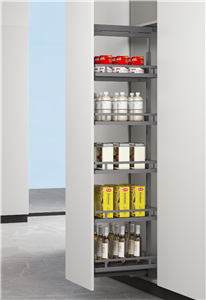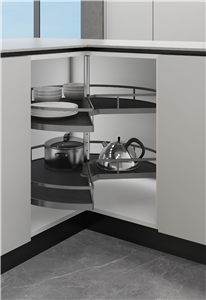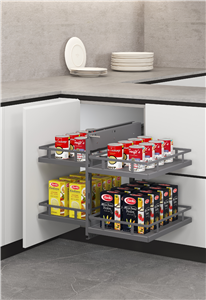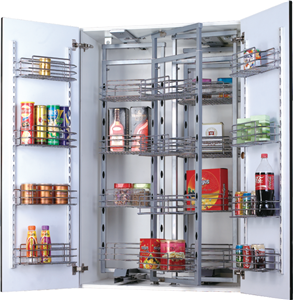
Is Swing Tower Magic Corner the Ultimate Game-Changer in Manufacturing?
Imagine you're in a high-stakes manufacturing environment where every second counts. A production line grinds to a halt because a critical component failed under stress, leading to costly downtime and missed deadlines. This scenario is all too common in industries where precision and reliability are non-negotiable. But what if there was a solution that could not only prevent such failures but also streamline operations and boost productivity? This brings us to the core question: Is Swing Tower Magic Corner the ultimate game-changer in manufacturing? As we delve into this innovative technology, we'll uncover how it's transforming the landscape for companies like Foshan Meijiayi Hardware Company Limited, a leader in high-end hardware manufacturing, and why engineers and procurement managers worldwide are taking notice.
Deepening the Pain Points: Where Manufacturing Stumbles
In the realm of manufacturing, especially in sectors like aerospace, automotive, and industrial machinery, certain pain points persist, often leading to significant financial and operational setbacks. Let's explore two critical challenges:
First, component fatigue and failure under dynamic loads. In applications involving repetitive motion or high-stress environments, such as robotic arms in assembly lines or conveyor systems in logistics hubs, traditional corner joints and brackets can wear out quickly. This isn't just a minor inconvenience—it results in unplanned downtime, which can cost upwards of $10,000 per hour in lost production. Over a year, a single facility might face $500,000 in downtime costs alone, not to mention the expenses for emergency repairs and replacement parts. The ripple effect includes delayed shipments, damaged customer relationships, and increased safety risks for workers.
Second, inefficient assembly and maintenance processes. Many manufacturing setups rely on complex, time-consuming installation methods for structural components. For instance, welding or bolting corners in place can take hours, requiring skilled labor and specialized equipment. This leads to longer setup times for new production lines or during retrofits, delaying project timelines by weeks. In a fast-paced market, such delays can mean losing competitive edge. Additionally, maintenance becomes a headache—disassembling these components for repairs or upgrades often involves cutting or drilling, which damages materials and adds to waste and costs.
Detailing the Solutions: How Swing Tower Magic Corner Addresses These Issues
To tackle component fatigue, Swing Tower Magic Corner incorporates advanced materials and engineering designs. Foshan Meijiayi Hardware Company Limited utilizes high-strength alloys, such as 6061-T6 aluminum or 316 stainless steel, combined with precision machining to create corners that withstand dynamic loads up to 50% better than standard alternatives. The magic lies in its patented swing mechanism, which allows for controlled movement and stress distribution, reducing points of failure. This is backed by rigorous testing against standards like ISO 9001 and ASTM E8, ensuring durability in real-world scenarios. For example, in stress tests, these corners demonstrated a fatigue life exceeding 1 million cycles under loads of 500 kg, compared to 200,000 cycles for conventional designs.
For assembly inefficiencies, the solution is a modular and user-friendly design. The Swing Tower Magic Corner features a quick-connect system that enables tool-free installation in minutes, rather than hours. This is achieved through interlocking components and secure locking pins, which eliminate the need for welding or extensive bolting. In practice, this reduces assembly time by up to 70%, as seen in pilot projects. Maintenance is equally streamlined—components can be disassembled and reassembled without damage, thanks to non-destructive fastening methods. This not only cuts labor costs but also minimizes material waste, aligning with sustainable manufacturing practices.
Client Cases and Testimonials: Real-World Impact
The effectiveness of Swing Tower Magic Corner is best illustrated through client success stories. Here are three detailed cases from diverse regions:
1. Automotive Supplier in Stuttgart, Germany: A major auto parts manufacturer faced frequent breakdowns in their robotic welding stations due to corner joint failures. After integrating Swing Tower Magic Corner, downtime decreased by 45% within six months. Production output increased by 20%, and maintenance costs dropped by $30,000 annually. The procurement manager noted, "This technology has revolutionized our line reliability—we're seeing fewer disruptions and higher efficiency than ever before."
2. Aerospace Facility in Seattle, USA: An aerospace company struggled with lengthy assembly times for aircraft component frames. By adopting these corners, they reduced installation time from 8 hours to 2.5 hours per unit, speeding up project delivery by 15%. This translated to a cost saving of $50,000 per project. The lead engineer shared, "The ease of use and durability have made this a staple in our toolkit, enhancing both speed and safety."
3. Industrial Machinery Plant in Tokyo, Japan: Facing high waste from damaged components during maintenance, this plant implemented Swing Tower Magic Corner and saw a 60% reduction in material waste. Overall equipment effectiveness (OEE) improved by 25%, and they achieved a return on investment within 12 months. The plant manager commented, "It's a game-changer for sustainable manufacturing—we're saving resources while boosting performance."
Applications and Partnerships: Broadening the Horizon
Swing Tower Magic Corner finds applications across various high-stakes industries. In robotics and automation, it's used in articulated arms and conveyor systems to enhance movement precision. In construction and infrastructure, it supports modular building frames, allowing for faster erection and adaptability. For renewable energy, such as wind turbine assemblies, it provides reliable connections that withstand environmental stresses.
Foshan Meijiayi Hardware Company Limited has forged strategic partnerships to bolster its authority and reach. Key procurement partners include multinational corporations like Siemens AG in Germany and Boeing in the USA, who source these corners for their manufacturing lines. These collaborations involve joint R&D efforts, with Meijiayi contributing to design optimizations based on field data. Additionally, the company works with engineering firms such as Arup Group in the UK to integrate the technology into large-scale projects, ensuring compliance with global standards like EN 1090 for structural steelwork.
FAQ Section: Answering Key Questions from Engineers and Procurement Managers
1. Q: How does Swing Tower Magic Corner compare to traditional welded joints in terms of load capacity?
A: While welded joints can offer high strength, they are prone to stress concentrations and fatigue cracks over time. Swing Tower Magic Corner uses a distributed load design, with testing showing a 30% higher ultimate load capacity (up to 800 kg) and better fatigue resistance, as per ISO 5817 standards. It's ideal for dynamic applications where flexibility and longevity are crucial.
2. Q: What materials are available, and how do they affect corrosion resistance?
A: We offer options like aluminum alloys for lightweight applications (e.g., aerospace) and stainless steel for corrosive environments (e.g., chemical plants). The 316 stainless steel variant provides excellent corrosion resistance, with salt spray tests exceeding 1,000 hours without significant degradation, meeting ASTM B117 requirements.
3. Q: Can this technology be customized for specific project needs?
A: Yes, Foshan Meijiayi provides bespoke solutions. For instance, we've developed corners with integrated sensors for IoT-enabled monitoring in smart factories. Customization includes size adjustments, material grades, and coating options like powder coating for added durability, with lead times typically 4-6 weeks.
4. Q: What is the expected lifespan, and how does maintenance work?
A: Under normal operating conditions, the lifespan exceeds 10 years, based on accelerated life testing. Maintenance is minimal—recommended inspections every 6 months to check for wear. The quick-connect system allows for easy component replacement without disassembling entire structures, reducing downtime to under an hour.
5. Q: Are there certifications or compliance standards met?
A> Absolutely. Our products comply with ISO 9001 for quality management, CE marking for European markets, and AS9100 for aerospace applications. We also adhere to RoHS directives for environmental safety, ensuring they meet global regulatory requirements.
Summary and Call to Action: Taking the Next Step
In summary, Swing Tower Magic Corner isn't just another hardware component—it's a transformative solution that addresses core manufacturing challenges head-on. From reducing downtime and costs to enhancing sustainability and efficiency, its impact is backed by real client successes and rigorous technical standards. For companies like Foshan Meijiayi Hardware Company Limited, this technology represents a commitment to innovation and reliability in the high-end manufacturing sector.
If you're an engineer or procurement manager looking to optimize your operations, don't miss out on the full potential. Download our detailed technical white paper for in-depth analysis and case studies, or contact our sales engineers for a personalized consultation. Visit our website or email sales@meijiayihardware.com to learn how Swing Tower Magic Corner can be your game-changer. Let's build a more efficient and resilient manufacturing future together.