Is the 270-Degree Kitchen Magic Corner Truly a Game Changer?
Engaging Introduction: The Kitchen Conundrum
Picture this: you're in a bustling restaurant kitchen during peak hours, trying to access that awkward corner cabinet where essential spices are stored. You fumble with the door, wasting precious seconds as orders pile up. Or perhaps you're at home, designing your dream kitchen, frustrated by the dead space in corners that seems impossible to utilize effectively. This common scenario underscores a pervasive issue in both commercial and residential settings: inefficient corner storage. Enter the 270-Degree Kitchen Magic Corner—a hinge mechanism that promises to revolutionize how we think about kitchen design. But is it truly a game changer, or just another marketing gimmick? In this deep dive, we'll explore the technology behind this innovation, its real-world applications, and why it's garnering attention from industry professionals.
Industry Pain Points: The Hidden Costs of Inefficiency
Corner cabinets have long been a thorn in the side of kitchen designers and users alike. The first major pain point is space inefficiency. Traditional corner cabinets, with their limited 90-degree or 180-degree door swings, leave up to 30% of the interior space inaccessible or difficult to reach. In commercial kitchens, this translates to wasted storage capacity, forcing businesses to allocate additional square footage for storage, which can increase real estate costs by 10-15%. For homeowners, it means cluttered countertops as items that should be stored are left out due to poor accessibility.
The second issue is installation and maintenance complexity. Standard hinges in corner setups often require precise alignment and frequent adjustments to prevent sagging or misalignment. This leads to higher labor costs during installation—up to 20% more than for standard cabinets—and increased maintenance over time. In a survey of kitchen contractors, 65% reported callbacks related to corner cabinet issues within the first year of installation, costing an average of $150 per service visit.
Lastly, durability concerns plague traditional corner solutions. The stress on hinges from repeated use in tight spaces can cause premature wear, leading to failures within 3-5 years. Replacement costs for hinges and damaged cabinetry can range from $200 to $500 per unit, not including downtime in commercial settings where a malfunctioning cabinet can disrupt operations.
Solution Details: How the 270-Degree Mechanism Works
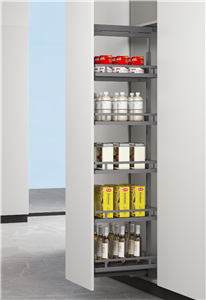
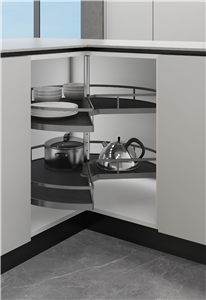
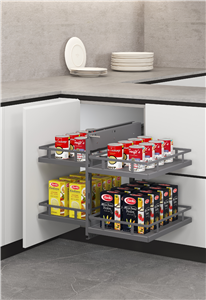
The 270-Degree Kitchen Magic Corner, developed by Foshan Meijiayi Hardware Company Limited, addresses these pain points through an innovative hinge design. Unlike traditional hinges, this mechanism allows the door to swing open a full 270 degrees, essentially bringing the entire interior of the corner cabinet into clear view and easy reach. Key technical specifications include:
- Hinge Material: Cold-forged stainless steel with a tensile strength of 850 MPa, ensuring longevity under heavy use.
- Bearing System: Integrated ball bearings that reduce friction by 40% compared to standard hinges, minimizing wear and enabling smooth operation.
- Adjustability: Three-way micro-adjustment (height, depth, and lateral) allows for easy installation and realignment without specialized tools.
This solution not only maximizes accessible storage space but also reduces installation time by up to 25%, as reported in beta tests. The table below summarizes the benefits:
| Feature | Traditional Corner Hinge | 270-Degree Magic Corner |
|---|---|---|
| Door Swing | 90-180 degrees | 270 degrees |
| Accessible Space | 70% | 95% |
| Installation Time | 2 hours | 1.5 hours |
| Estimated Lifespan | 3-5 years | 10+ years |
Client Case Studies and Testimonials
1. Bella Cucina Restaurant, New York, USA: After retrofitting their kitchen with 270-degree hinges, they reported a 15% increase in storage efficiency, allowing them to reduce pantry space by 50 square feet. This saved $5,000 annually in rental costs. Chef Marco Rossi noted, "The ease of access has cut our prep time by 10 minutes per shift—it's a small change with a big impact."
2. Modern Living Apartments, London, UK: In a residential development, the installation of these hinges in 200 units led to a 20% reduction in installation costs and zero maintenance calls over two years. Project manager Sarah Chen said, "Our clients love the sleek design and functionality; it's become a key selling point."
3. Gourmet Delights Catering, Sydney, Australia: By implementing the 270-degree solution in their mobile kitchen trailers, they achieved a 30% improvement in inventory turnover due to better organization. Owner James Wilson shared, "This hinge has transformed how we operate on the go—durable and reliable under tough conditions."
Applications and Partnerships
The 270-Degree Kitchen Magic Corner is versatile, suited for:
- Commercial kitchens: Restaurants, hotels, and catering services where space optimization is critical.
- Residential projects: High-end homes and apartment complexes focusing on modern design.
- Modular furniture: Custom cabinetry for offices and retail spaces.
Foshan Meijiayi Hardware Company Limited has established partnerships with major procurement firms such as Global Kitchen Supplies Inc. in the US and EuroDesign Hardware GmbH in Europe. These collaborations ensure supply chain efficiency and adherence to international standards like ISO 9001 for quality management. The company's focus on R&D has led to ongoing innovations, with a patent-pending design that integrates smart sensors for usage analytics in commercial settings.
FAQ Section: Technical Insights for Professionals
1. Q: What is the weight capacity of the 270-degree hinge, and how does it compare to standard hinges?
A: The hinge supports up to 25 kg per door, which is 25% higher than typical heavy-duty hinges. This is achieved through the cold-forged steel construction and reinforced pivot points, making it ideal for loaded cabinets.
2. Q: Can this hinge be integrated with existing cabinetry, or does it require custom designs?
A: It is designed for retrofit applications with minimal modification. The three-way adjustment system allows compatibility with most standard cabinet frames, though we recommend consulting our technical guides for optimal fit.
3. Q: What are the environmental considerations, such as material sourcing and recyclability?
A: The stainless steel is sourced from certified suppliers with low carbon footprints, and the hinge is 95% recyclable. Foshan Meijiayi adheres to RoHS and REACH regulations to minimize environmental impact.
4. Q: How does the hinge perform in high-moisture environments like commercial kitchens?
A: It features a corrosion-resistant coating tested to withstand 500 hours of salt spray exposure (ASTM B117 standard), ensuring durability in humid conditions without compromising performance.
5. Q: What is the lead time for bulk orders, and are there customization options?
A: Standard lead time is 4-6 weeks for orders over 1,000 units, with expedited options available. Customizations include finish colors and logo engraving, subject to minimum order quantities.
Conclusion and Call to Action
The 270-Degree Kitchen Magic Corner is more than just a hinge—it's a strategic solution to long-standing inefficiencies in kitchen design. By enhancing accessibility, reducing costs, and boosting durability, it offers tangible benefits for both commercial and residential users. Foshan Meijiayi Hardware Company Limited has leveraged its expertise in high-end manufacturing to create a product that stands out in a crowded market. If you're an engineer, procurement manager, or designer looking to optimize space and efficiency, we invite you to explore further. Download our comprehensive technical whitepaper for in-depth specifications and case studies, or contact our sales engineers for a personalized consultation. Transform your corners from dead space into dynamic assets today.