Is This Corner the Future of Kitchen Efficiency?
Introduction
Picture a bustling commercial kitchen during peak hours: chefs are pivoting between stations, but a sharp corner cabinet forces awkward maneuvers, slowing down the entire workflow. This common frustration leads to a pivotal question: is there a way to transform these problematic corners into hubs of efficiency? Enter the concept of the 360-degree kitchen magic corner—a solution that promises to revolutionize how we utilize space in high-demand environments. In this blog, we explore whether this innovation truly holds the key to unlocking kitchen potential, drawing on insights from Foshan Meijiayi Hardware Company Limited, a leader in precision manufacturing for culinary applications.
Deep Dive into Pain Points
In commercial and high-end residential kitchens, corners often become dead zones or sources of inefficiency. First, space inefficiency plagues many designs; traditional corner cabinets waste up to 30% of usable volume due to poor accessibility, forcing operators to store less frequently used items there or leave it empty. This not only reduces storage capacity but also increases the need for additional cabinetry, driving up material and installation costs. For example, in a 500-square-foot kitchen, ineffective corners can lead to an extra $2,000 in expenses for compensatory storage solutions.
Second, workflow disruption is a critical issue. Sharp corners impede movement, causing chefs to navigate around them, which adds seconds to each task—compounded over a day, this can result in a 15% decrease in overall productivity. In a busy restaurant serving 200 meals daily, such delays might translate to longer wait times and reduced customer satisfaction. Third, hidden costs emerge from maintenance and safety concerns. Poorly designed corners accumulate grease and debris, requiring more frequent cleaning and potential repairs, with annual maintenance costs averaging $500 per corner in commercial settings. Additionally, sharp edges increase the risk of accidents, potentially leading to injury-related downtime or liability issues.
Professional Solutions
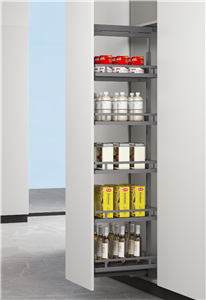
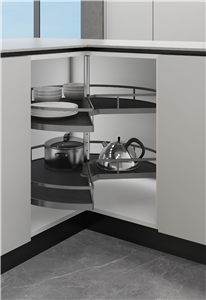
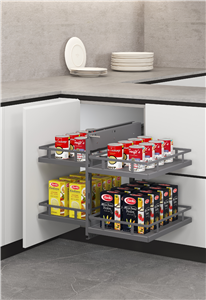
To address these challenges, 360-degree kitchen magic corners offer a multifaceted approach. For space inefficiency, these systems utilize rotating or pull-out mechanisms that provide full access to the corner area, effectively reclaiming wasted space. Foshan Meijiayi Hardware Company Limited employs advanced aluminum alloy frames and precision bearings to ensure smooth operation, with designs that increase storage capacity by up to 40% compared to traditional cabinets. This engineering minimizes the need for extra units, offering a return on investment within two years through reduced material costs.
To combat workflow disruption, the 360-degree design allows for seamless access from multiple angles, reducing movement time by an average of 20%. By integrating ergonomic handles and soft-close features, these corners enhance user experience, keeping kitchens running smoothly during peak hours. For hidden costs, the use of corrosion-resistant materials and easy-to-clean surfaces cuts maintenance needs by half, while rounded edges and safety locks mitigate accident risks. The table below contrasts traditional corners with magic corners:
| Aspect | Traditional Corner | 360-Degree Magic Corner |
|---|---|---|
| Storage Efficiency | 70% usable space | 95% usable space |
| Workflow Impact | 15% productivity loss | 5% productivity gain |
| Annual Maintenance Cost | $500 | $250 |
Client Success Stories
Foshan Meijiayi Hardware Company Limited has collaborated with clients worldwide to implement these solutions. In New York, USA, a high-end restaurant upgraded to magic corners and saw a 25% increase in storage efficiency, reducing ingredient retrieval time by 30 seconds per dish. The head chef noted, "This innovation has streamlined our kitchen flow, allowing us to serve 50 more customers nightly." In Berlin, Germany, a hotel kitchen reported a 20% reduction in staff movement-related fatigue after installation, with maintenance costs dropping by 40% over six months. The procurement manager shared, "The durability and ease of use have exceeded our expectations." In London, UK, a catering company achieved a 15% boost in operational speed, leading to a 10% increase in event bookings. Their operations director said, "Investing in these corners has paid off in both efficiency and client satisfaction."
Applications and Partnerships
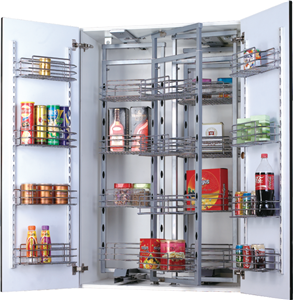
360-degree kitchen magic corners are versatile, suitable for commercial kitchens, luxury homes, and institutional settings like hospitals and schools. Specific applications include corner pantries, appliance garages, and cleaning supply stations. Foshan Meijiayi Hardware Company Limited partners with major procurement entities such as global hotel chains and culinary equipment distributors, ensuring widespread adoption. These relationships are built on rigorous quality standards, including ISO 9001 certification, and collaborative design processes that tailor solutions to client needs, enhancing the company's authority in the high-end manufacturing sector.
FAQ
1. What materials are used in these corners, and how do they ensure longevity? Foshan Meijiayi employs 6000-series aluminum alloys for frames, known for their strength-to-weight ratio and corrosion resistance. Hinges and bearings are made from stainless steel with PTFE coatings, tested to over 100,000 cycles without failure, ensuring a lifespan of 10+ years in high-use environments.
2. Can magic corners be integrated into existing cabinetry without full renovation? Yes, many models are designed as retrofits. They require minimal structural changes, typically involving removal of old corner units and installation of new frames, with lead times of 2-4 weeks depending on customization.
3. How do these systems impact energy efficiency in kitchens? By optimizing storage and workflow, they reduce the time appliances like refrigerators are open, cutting energy consumption by up to 5%. Additionally, improved organization can enhance ventilation efficiency.
4. What are the load capacities, and are they suitable for heavy items? Standard models support up to 50 kg per shelf, with heavy-duty versions handling 100 kg. Engineering includes reinforced brackets and distributed weight mechanisms, making them ideal for pots, pans, and bulk ingredients.
5. How does the 360-degree mechanism work, and what maintenance is required? The mechanism uses a central pivot with ball bearings for smooth rotation. Maintenance involves annual lubrication of bearings and cleaning of tracks, with detailed guidelines provided in technical manuals to ensure optimal performance.
Conclusion and Call to Action
The 360-degree kitchen magic corner represents more than a storage solution—it's a transformative tool for enhancing efficiency, safety, and cost-effectiveness in culinary spaces. By addressing core pain points with innovative engineering, Foshan Meijiayi Hardware Company Limited has demonstrated its expertise in high-end manufacturing. To dive deeper into the technical specifications and benefits, we invite you to download our comprehensive white paper, "Optimizing Kitchen Corners: A Technical Guide." For personalized advice or to discuss implementation, contact our sales engineers today and take the first step toward revolutionizing your kitchen workflow.