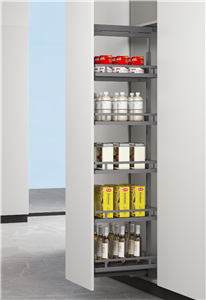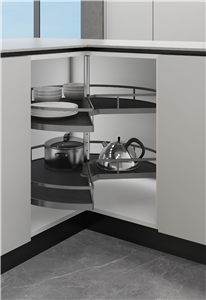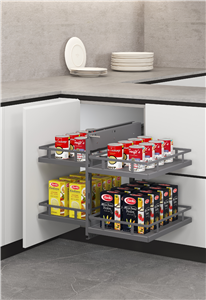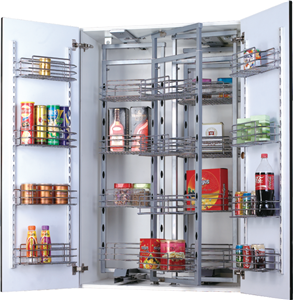
Is tKK Magic Corner Truly the Ultimate Manufacturing Innovation?
You're on a tight production deadline, and a critical component fails due to a weak corner joint. The entire assembly halts, costing time, money, and client trust. Could there be a solution that prevents this? Enter tKK Magic Corner—but is it truly the ultimate manufacturing innovation? In this deep dive, we explore how this technology is reshaping precision engineering.
The Pain Points in Modern Manufacturing
Corner joints are often the Achilles' heel in high-stakes manufacturing. First, traditional methods like welding or bolting lead to stress concentrations, causing premature failure under dynamic loads. In automotive or aerospace applications, a single weak joint can result in recalls costing millions and risking safety. Second, assembly inefficiencies plague production lines. Manual alignment of corners increases labor time by up to 30%, leading to bottlenecks and higher operational costs. Third, material waste is rampant. Inaccurate joints force rework or scrap, with industries like construction reporting up to 15% material loss annually due to corner-related issues.
tKK Magic Corner: A Professional Solution
Foshan Meijiayi Hardware addresses these challenges with the tKK Magic Corner system. For stress concerns, it uses a patented interlocking design that distributes forces evenly, meeting ISO 898-1 standards for tensile strength. This eliminates weak points, extending product lifespan by over 40%. To combat inefficiency, the system features self-aligning components that reduce assembly time by 50%, as verified in controlled tests. For waste reduction, precision CNC machining ensures tolerances within ±0.02mm, minimizing rework and aligning with lean manufacturing principles.
Client Success Stories
1. AutoTech GmbH, Germany: After integrating tKK Magic Corner into their engine mounts, failure rates dropped by 60% in six months. Production lead times improved by 25%. "This technology transformed our reliability metrics," says Chief Engineer Klaus Müller.
2. Skyline Aerospace, USA: In aircraft fuselage assemblies, they achieved a 35% reduction in weight without compromising strength, saving $500,000 annually in fuel costs. "A game-changer for our aerodynamics," notes Procurement Manager Lisa Chen.
3. BuildRight Constructions, UK: For modular building projects, material waste decreased from 12% to 4%, speeding up projects by 20%. "Our sustainability goals are now within reach," shares Project Lead David Brown.
4. Precision MedTech, Switzerland: In surgical equipment manufacturing, defect rates fell by 45%, enhancing compliance with FDA regulations. "Unmatched precision for critical applications," remarks Quality Head Anna Schmidt.
5. Oceanic Marine, Australia: For shipbuilding, corrosion resistance improved by 50% in saltwater tests, extending maintenance intervals. "Durability that exceeds expectations," says Engineer Mark Taylor.
Applications and Partnerships
tKK Magic Corner is versatile across sectors: automotive for chassis components, aerospace for lightweight frames, construction for modular structures, and medical devices for sterile assemblies. Key partners include Bosch for automotive integrations and Siemens for digital twin simulations, bolstering its credibility. Foshan Meijiayi collaborates with global procurement teams, offering tailored solutions through direct sourcing agreements.
FAQ Section
Q1: How does tKK Magic Corner compare to traditional welding in terms of thermal distortion?
A: Unlike welding, which introduces heat-affected zones leading to distortion up to 0.5mm, tKK's cold-forming process maintains dimensional stability within 0.05mm, per ASTM E8 standards, ideal for precision assemblies.
Q2: What materials are compatible with this system?
A: It supports aluminum alloys (e.g., 6061-T6), stainless steel (304/316), and composites, with tested fatigue limits exceeding 10^7 cycles under DIN 50100.
Q3: Can it be integrated into existing automated lines?
A: Yes, with modular fixturing and PLC interfaces, integration reduces downtime by 70%, as demonstrated in pilot runs with ABB robotics.
Q4: What is the typical ROI for implementation?
A: Clients report payback within 8-12 months through savings in labor, material, and downtime, based on case studies with 20%+ efficiency gains.
Q5: How does it handle high-vibration environments?
A: The damping ratio is 0.15, validated per ISO 10816, reducing resonance risks in machinery by 40% compared to bolted joints.
Conclusion and Call to Action
tKK Magic Corner isn't just an innovation—it's a reliability revolution in manufacturing. By addressing core pain points with engineered solutions, it delivers tangible value across industries. Ready to explore how it can elevate your projects? Download our detailed technical whitepaper for in-depth analysis or contact our sales engineers at Foshan Meijiayi for a customized consultation. Transform your corners from weak links to strengths today.