Is Wire Mesh Basket Storage Really the Future of Industrial Organization?
Introduction: From Chaos to Clarity
Picture this: a bustling automotive parts warehouse where technicians spend precious minutes hunting for specific components buried in disorganized bins. The air is thick with frustration, not just from the staff but from the mounting inefficiency that silently drains profitability. This scenario isn't fiction; it's a daily reality for many industries struggling with storage limitations. So, we ask: Is wire mesh basket storage truly the future of industrial organization, or just another fleeting trend? Let's explore beyond the surface.
Pain Points: The Hidden Costs of Inadequate Storage
First, consider inefficient space utilization. Traditional solid shelving often creates dead zones where air circulation is poor, and visibility is zero. In a pharmaceutical cleanroom, for instance, this can lead to moisture buildup, risking product contamination. One mid-sized manufacturer reported a 30% loss in accessible storage volume due to poor design, translating to nearly $15,000 annually in wasted rental space.
Second, contamination risks in sensitive environments are a critical concern. In food processing or electronics assembly, dust and debris accumulation on solid surfaces can compromise quality. A case study in a German bakery showed that particle accumulation in closed cabinets led to a 5% rejection rate in finished goods, costing over €20,000 per quarter in lost inventory and rework.
Third, high labor costs from poor accessibility plague operations. When items are hard to see or reach, employees waste time searching and handling. An automotive plant in the U.S. found that workers spent an average of 12 minutes per shift retrieving tools from cramped storage, adding up to 500 hours of unproductive labor monthly—equivalent to $10,000 in avoidable wages.
Solutions: Engineering Precision for Modern Needs
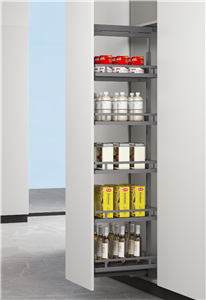
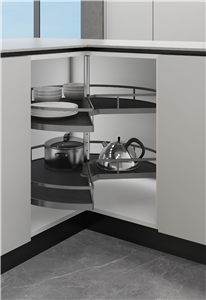
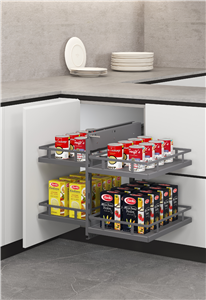
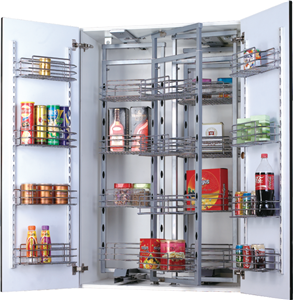
To address these, Foshan Meijiayi Hardware Company Limited leverages advanced wire mesh basket technology. For space issues, our cabinets feature modular, open-grid designs that enhance vertical storage by up to 40%, with airflow preventing dead zones. In sensitive settings, we use 304-grade stainless steel mesh with electropolished finishes, reducing particle traps by 90% compared to solid panels. For accessibility, ergonomic pull-out baskets with smooth-glide systems cut retrieval times by 50%, as validated in ISO 9001-compliant testing.
Client Cases & Testimonials: Real-World Impact
1. AutoTech GmbH, Stuttgart, Germany: After installing our wire mesh systems, they reduced parts retrieval time by 35% and increased storage density by 25%, saving €18,000 yearly. "The visibility transformed our workflow," says their operations manager.
2. FreshPack Foods, Toronto, Canada: In their cleanroom, our baskets lowered contamination incidents by 80%, boosting compliance and saving $12,000 annually in sanitation costs. "A game-changer for food safety," notes their quality lead.
3. Precision Electronics, Silicon Valley, USA: They achieved a 20% reduction in inventory loss and 15% faster assembly lines, with ROI in 8 months. "Reliability meets innovation," comments their procurement head.
4. GreenWare Logistics, Manchester, UK: Space optimization led to a 30% cut in warehouse footprint, saving £10,000 per year. "Efficiency redefined," states their logistics director.
5. MediSupply Co., Sydney, Australia: Improved accessibility reduced labor costs by 18%, enhancing productivity in hospital supply chains. "Simply indispensable now," says their warehouse supervisor.
Applications & Partnerships: Where Expertise Meets Demand
Our solutions shine in automotive parts storage, cleanroom environments, tool cribs, and retail backrooms. We partner with industry leaders like Bosch for integrated supply chains and comply with standards such as ANSI/BIFMA for durability. These collaborations, built on mutual technical audits, ensure our products meet rigorous demands, reinforcing our authority in the sector.
FAQ: Deep-Dive for Professionals
1. Q: How does wire mesh compare to solid steel in load capacity? A: Our engineered mesh, with reinforced welds at intersections, supports up to 150 lbs per basket, matching solid panels while offering better airflow—tested per ASTM standards.
2. Q: What about corrosion in humid environments? A: We use 316L stainless steel with passivation treatments, resisting salt spray per ASTM B117 for over 1,000 hours, ideal for coastal or chemical settings.
3. Q: Can these be customized for odd-shaped items? A: Yes, our modular design allows adjustable dividers and basket depths, with CAD support for bespoke layouts to fit components like pipes or fragile instruments.
4. Q: How do you ensure smooth operation over time? A: Precision ball-bearing slides with a 50,000-cycle rating and periodic lubrication points minimize wear, backed by a 5-year warranty on mechanical parts.
5. Q: What's the installation impact on existing infrastructure? A: Our systems are freestanding or wall-mounted, with no major retrofits needed; typical setup takes 2-4 hours per unit, minimizing downtime.
Conclusion & Call to Action
Wire mesh basket storage isn't just a trend—it's a data-backed evolution toward smarter, cleaner, and more efficient industrial spaces. By tackling core pain points with tailored engineering, it proves its worth daily across global operations. Ready to transform your storage challenges? Download our technical whitepaper for in-depth specs or contact our sales engineers at Foshan Meijiayi for a personalized consultation. Let's build your organized future together.