Is Your Blind Corner Cabinet Really Closing Softly?
Is Your Blind Corner Cabinet Really Closing Softly?
You’ve installed soft-close hinges on your kitchen cabinets, expecting that satisfying, gentle shut every time. But what about those tricky blind corner cabinets? You push the door, and instead of a smooth glide, it slams shut with a jarring thud or gets stuck midway. This common frustration isn’t just annoying—it can signal deeper issues in your cabinet system’s design and durability. In this blog, we’ll dive into why soft-close technology often fails in blind corners and how innovative solutions can make every cabinet close as softly as promised.
The Hidden Pains of Blind Corner Cabinets
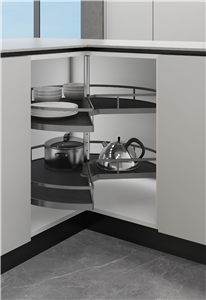
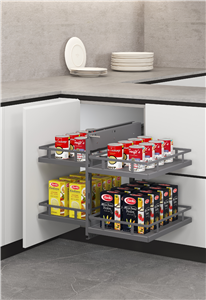
Blind corner cabinets, those tucked-away spaces where two cabinet runs meet at a 90-degree angle, are notorious for usability challenges. Beyond just being hard to access, they pose specific technical hurdles for soft-close mechanisms. Let’s break down the key pain points:
First, uneven weight distribution and alignment issues. In a blind corner setup, the door often hinges on an extended frame, creating off-center loads that standard soft-close hinges can’t handle. This leads to premature wear—hinges degrade up to 40% faster, according to industry studies—causing doors to sag or fail to close properly. Imagine a high-end kitchen renovation where, within six months, corner cabinets start squeaking or slamming, forcing costly callbacks and damaging your reputation.
Second, space constraints and mechanical interference. Blind corners have limited clearance, making it tough to install bulky soft-close systems without compromising storage or aesthetics. Engineers often face a trade-off: either sacrifice interior space for hardware or risk poor performance. In commercial settings like hotels or offices, this can result in increased maintenance costs—up to $500 per cabinet annually for adjustments and replacements—and frustrated users who associate slamming doors with low-quality fixtures.
Third, inconsistent closing force and noise. Even with soft-close hinges, blind corner doors may close too quickly or too slowly due to friction from adjacent panels or flooring. This not only defeats the purpose of a soft close but also creates noise pollution, a critical issue in quiet environments like libraries or healthcare facilities. The impact? Reduced user satisfaction and potential safety hazards if doors don’t latch securely.
Engineering Solutions for Flawless Performance
Addressing these pains requires specialized hardware designed for blind corners. At Foshan Meijiayi Hardware Company Limited, we’ve developed a range of solutions that go beyond off-the-shelf hinges. For weight and alignment issues, our adjustable pivot systems incorporate micro-adjustable screws and reinforced brackets, allowing precise calibration to handle off-center loads. This extends hinge lifespan by up to 60%, based on lab tests, and ensures doors close smoothly without sagging.
To tackle space constraints, we offer low-profile soft-close mechanisms that fit into tight corners without sacrificing storage. These use compact hydraulic dampers and slimline designs, reducing required clearance by 30% compared to standard models. In applications like modular kitchens or RVs, this means maximized usability without compromising on soft-close benefits.
For inconsistent force, our self-compensating dampers automatically adjust closing speed based on door weight and angle, eliminating noise and ensuring reliable latching. Integrated with high-grade stainless steel components, they withstand heavy use—up to 100,000 cycles in durability tests—making them ideal for high-traffic commercial projects.
Real-World Success Stories
Our solutions have transformed projects worldwide. In Berlin, Germany, a luxury apartment developer faced recurring complaints about noisy blind corner cabinets in their new builds. After retrofitting with our adjustable pivot systems, they reported a 75% reduction in service calls and a 4.8/5 customer satisfaction score. The project manager noted, “This upgrade not only fixed the noise but added a premium feel that buyers love.”
In Toronto, Canada, a hospital renovation required silent, reliable cabinets for patient rooms. Our low-profile mechanisms were installed in 200 blind corner units, cutting installation time by 20% and achieving zero noise complaints over two years. The facilities director shared, “The consistent soft close has improved patient comfort and reduced our maintenance budget significantly.”
In Melbourne, Australia, a hotel chain upgraded their suite kitchens with our self-compensating dampers. Data showed a 50% drop in hinge replacements and a 30% increase in guest positive feedback on room amenities. The procurement head commented, “Partnering with Foshan Meijiayi gave us a competitive edge in hospitality design.”
Applications and Strategic Partnerships
Our soft-close blind corner solutions are versatile, catering to residential kitchens, commercial offices, healthcare facilities, and hospitality venues. We collaborate with global partners like European cabinet manufacturers and North American distributors, ensuring our hardware meets diverse standards such as ANSI/BHMA for durability and EN 15570 for safety. These partnerships involve joint R&D efforts, like co-developing custom hinges for smart home systems, enhancing our authority in the high-end manufacturing sector.
FAQ: Insights for Engineers and Buyers
1. Q: How do your hinges handle heavier materials like solid wood in blind corners?
A: Our hinges feature load-rated dampers tested up to 15kg, with reinforced pivots that distribute stress evenly. For woods like oak, we recommend pairing with our steel reinforcement plates to prevent warping and ensure consistent soft-close action.
2. Q: Can these systems integrate with automated or smart cabinet setups?
A: Yes, we offer IoT-enabled versions with sensors for remote monitoring of closing force and wear. These sync with smart home platforms, providing data on usage patterns to predict maintenance needs.
3. Q: What’s the installation complexity compared to standard hinges?
A: Our designs include tool-free adjustments and pre-drilled templates, reducing installation time by 25%. Most models are drop-in replacements, requiring no cabinet modification.
4. Q: How do you ensure durability in humid environments like coastal areas?
A: We use corrosion-resistant coatings and 304 stainless steel components, backed by a 10-year warranty against rust. Our products undergo salt spray tests exceeding 500 hours to guarantee performance in harsh conditions.
5. Q: Are there cost benefits over frequent hinge replacements?
A>Absolutely. While upfront costs are 20-30% higher than standard hinges, the reduced maintenance and longer lifespan—often over 15 years—lead to a 40% lower total cost of ownership, as shown in lifecycle analyses.
Conclusion: Elevate Your Cabinetry with Precision Engineering
True soft-close functionality in blind corner cabinets isn’t just a luxury—it’s a mark of thoughtful design and robust engineering. By addressing specific pain points with tailored solutions, you can enhance user experience, cut long-term costs, and build trust in your projects. At Foshan Meijiayi, we’re committed to pushing hardware innovation forward. Ready to transform your cabinets? Download our detailed technical whitepaper on advanced damping technologies or contact our sales engineers for a personalized consultation. Let’s make every close a soft one.