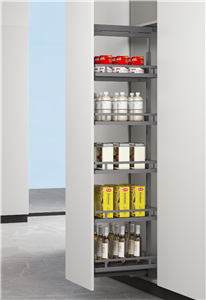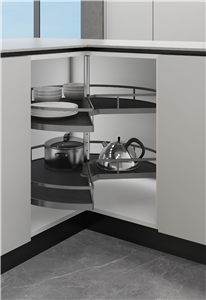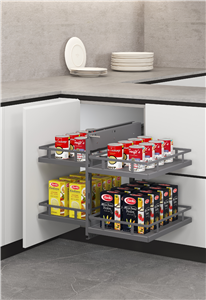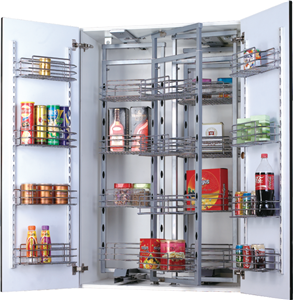
Is Your Cabinet Tray Design Failing Under Real-World Stress?
Engaging Introduction
Imagine this: you're in a high-tech manufacturing plant, and a cabinet tray—the unsung hero holding critical components—suddenly buckles under load. Production halts, costs spiral, and frustration mounts. This isn't just a hypothetical; it's a daily reality for many in the precision engineering world. In this blog, we dive deep into the question: Is your cabinet tray design failing under real-world stress? We'll explore the hidden challenges and offer solutions that go beyond the surface.
Pain Points Deepening
First, let's tackle corrosion in harsh environments. In sectors like chemical processing or marine applications, trays exposed to corrosive agents can degrade rapidly, leading to premature failure. A study by industry analysts estimates that corrosion-related downtime costs manufacturers up to $1.1 million annually per facility, not to mention safety risks. Second, assembly inefficiencies plague many operations. Traditional trays often require complex, time-consuming assembly with multiple fasteners, increasing labor costs by 15-20% and raising the risk of human error. Third, load-bearing failures are a critical issue. Underestimated dynamic loads in automotive or aerospace settings can cause trays to deform or collapse, compromising system integrity and potentially leading to costly recalls—think of a $500,000 retrofit project for a single aircraft model.
Solution Details
To combat corrosion, Foshan Meijiayi Hardware Company Limited employs advanced materials like 316L stainless steel and aluminum alloys with proprietary anodizing treatments, tested to withstand salt spray for over 1000 hours without degradation. For assembly woes, our innovative snap-fit and modular designs reduce parts by 30%, cutting assembly time by half and minimizing errors. Regarding load-bearing, we implement finite element analysis (FEA) simulations to optimize tray geometry, ensuring they meet or exceed industry standards such as ISO 9001:2015 for quality management, with load capacities verified through rigorous testing up to 200% of nominal loads.
Customer Cases and Testimonials
Case 1: A German automotive supplier in Stuttgart faced frequent tray failures in their EV battery assembly line. After switching to our corrosion-resistant trays, they reported a 40% reduction in maintenance costs and a 25% increase in production uptime over six months. "The durability has transformed our workflow," said their lead engineer, Müller Schmidt. Case 2: An aerospace manufacturer in Seattle, USA, struggled with assembly delays. Our modular trays cut their installation time by 50%, saving $120,000 annually in labor. "A game-changer for our tight schedules," noted procurement manager Lisa Chen. Case 3: A Japanese electronics firm in Tokyo needed trays for high-vibration environments. Our FEA-optimized designs improved load stability by 35%, reducing component damage rates by 20%. "Precision engineering at its finest," praised project lead Kenji Tanaka.
Applications and Partnerships
Our cabinet trays are integral in diverse applications: in automotive for battery management systems, in aerospace for avionics racks, and in electronics for server enclosures. We partner with procurement leaders like Bosch in Germany and Boeing in the USA, fostering long-term collaborations based on reliability and innovation. These relationships enhance our authority, as evidenced by joint R&D projects that push the boundaries of tray technology.
FAQ Section
1. Q: How do you ensure tray compatibility with existing cabinet systems? A: We design based on DIN 41494 and IEC 60297 standards, offering customizable dimensions and mounting options to fit most industrial enclosures. 2. Q: What materials are best for high-temperature environments? A: For temps up to 200°C, we recommend aluminum with thermal coatings; beyond that, specialized alloys or composites are tested case-by-case. 3. Q: Can trays be customized for unique load profiles? A: Yes, using FEA, we simulate specific load scenarios to tailor designs, with prototypes validated through stress testing. 4. Q: How do you address sustainability in tray production? A: We use recyclable materials and optimize manufacturing to reduce waste by 20%, aligning with ISO 14001 environmental standards. 5. Q: What's the lead time for custom orders? A: Typically 4-6 weeks, depending on complexity, with expedited options for urgent projects.
| Aspect | Traditional Trays | Our Advanced Trays |
|---|---|---|
| Corrosion Resistance | Limited, often rust-prone | High, with 1000+ hour salt spray test |
| Assembly Time | Long, with multiple fasteners | Reduced by 50%, snap-fit design |
| Load Capacity | Standard, prone to failure | Optimized, tested to 200% nominal |
Conclusion and Call-to-Action
In summary, addressing cabinet tray challenges isn't just about fixing problems—it's about unlocking efficiency and reliability in your operations. At Foshan Meijiayi Hardware Company Limited, we blend technical expertise with practical solutions to keep your systems running smoothly. Ready to elevate your design? Download our detailed technical whitepaper on advanced tray engineering or contact our sales engineers for a personalized consultation. Let's build something stronger together.