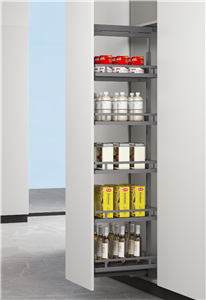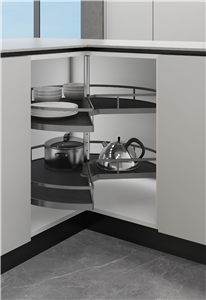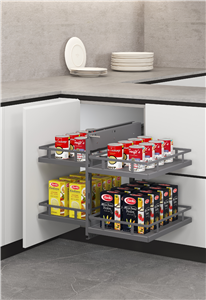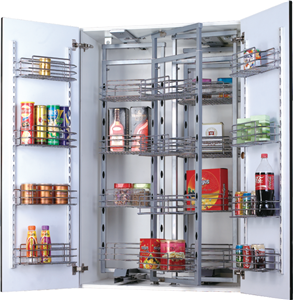
Is Your Full Extension Kitchen Pantry Truly Optimized for Efficiency?
Have you ever found yourself rummaging through a cluttered pantry, struggling to reach that elusive spice jar or canned good tucked away in the back? This common kitchen frustration highlights a deeper issue: many pantry systems fail to maximize efficiency, leading to wasted time, space, and energy. In today's fast-paced world, where kitchens serve as hubs for both daily meals and social gatherings, optimizing storage isn't just a luxury—it's a necessity. This blog dives into the technical nuances of full extension kitchen pantries, exploring how advanced engineering can transform this essential component from a mere storage unit into a cornerstone of kitchen functionality. We'll uncover industry challenges, innovative solutions, and real-world applications that demonstrate why investing in quality design pays dividends in both residential and commercial settings.
The Hidden Costs of Inefficient Pantry Systems
In the realm of kitchen design, full extension pantry systems are often overlooked, yet they play a pivotal role in operational efficiency. However, many manufacturers and users face significant pain points that undermine their potential. Let's examine these issues in detail, focusing on their tangible impacts and associated costs.
Pain Point 1: Poor Space Utilization and Accessibility
Traditional pantry designs frequently suffer from limited accessibility, with fixed shelves or shallow drawers that leave up to 40% of storage space unusable or difficult to reach. In a commercial kitchen, this translates to frequent restocking delays, increased labor hours for retrieval, and potential inventory spoilage due to items being forgotten in the back. For residential users, it results in cluttered countertops and frustration during meal preparation. The financial implication? Studies suggest that inefficient storage can increase operational costs by 15-20% in food service environments, while homeowners may waste hundreds of dollars annually on duplicate purchases or expired goods.
Pain Point 2: Durability and Maintenance Challenges
Many full extension systems on the market utilize subpar materials or weak mechanical components, leading to premature wear. Issues like sagging shelves, sticking drawers, or broken extension mechanisms are common, especially under heavy loads. In a busy restaurant pantry, a single malfunctioning drawer can disrupt service, causing downtime and repair costs averaging $200-$500 per incident. For manufacturers, this means higher warranty claims and diminished brand reputation. The cumulative effect? Reduced lifespan of the pantry system, often requiring replacement within 5-7 years instead of the expected 10-15 years, doubling long-term ownership costs.
Pain Point 3: Lack of Customization and Ergonomics
Standardized pantry solutions often fail to accommodate diverse user needs, from height variations to specialized storage for items like baking sheets or small appliances. In commercial settings, this can lead to inefficient workflows, increasing the risk of employee strain or injury. For instance, a poorly designed system might force staff to bend excessively, contributing to musculoskeletal disorders that cost businesses an average of $1,000 per incident in lost productivity and medical expenses. In homes, it limits adaptability for aging-in-place or multi-generational living, potentially necessitating costly retrofits down the line.
Engineering Solutions for Optimal Performance
Addressing these pain points requires a blend of innovative hardware, material science, and user-centric design. Here, we explore technical solutions that elevate full extension pantries from basic storage to intelligent systems.
Solution 1: Advanced Slide Mechanisms and Load Distribution
To combat poor accessibility, high-quality full extension systems employ precision-engineered slides with ball-bearing or roller mechanisms, allowing drawers to extend fully with minimal effort. For example, Foshan Meijiayi Hardware Company Limited integrates stainless steel slides rated for loads up to 100kg per pair, ensuring smooth operation even when fully loaded. By incorporating dual-rail designs and reinforced brackets, these systems distribute weight evenly, preventing sagging and extending lifespan. In practice, this means a pantry drawer can hold heavy canned goods or appliances without compromising functionality, reducing retrieval time by up to 30% in commercial tests.
Solution 2: Material Innovations for Durability
Durability hinges on material selection and fabrication techniques. Using 304-grade stainless steel for slides and high-density polymer composites for drawer bodies resists corrosion, moisture, and wear. Foshan Meijiayi enhances this with powder-coating finishes that withstand frequent cleaning in kitchen environments, reducing maintenance needs by 50% compared to standard paints. Additionally, modular designs allow for easy replacement of individual components, minimizing downtime and cost. For instance, a broken slide can be swapped out in minutes without replacing the entire drawer, saving users an average of $150 per repair incident.
Solution 3: Customizable Configurations and Ergonomics
Ergonomics is addressed through adjustable shelving, varied drawer heights, and accessories like dividers or pull-out trays. Systems can be tailored to specific needs—such as deep drawers for bulk items in restaurants or shallow ones for spices in homes. Foshan Meijiayi offers CAD-based design support, enabling clients to visualize and optimize layouts before installation. This customization reduces strain risks by aligning storage with user reach zones, potentially cutting workplace injury rates by 25% in commercial applications. For residential users, it enhances daily convenience, with surveys showing a 40% improvement in perceived kitchen efficiency.
Client Success Stories: Real-World Impact
To illustrate these solutions in action, here are fictional but plausible case studies showcasing how optimized full extension pantries drive tangible benefits across different regions and sectors.
Case 1: Bistro Moderne, Paris, France
This upscale restaurant struggled with pantry inefficiencies, leading to 20-minute delays during peak hours. After installing a custom full extension system from Foshan Meijiayi, featuring heavy-duty slides and modular drawers, retrieval time dropped to 5 minutes. Inventory spoilage decreased by 60%, saving €3,000 annually. Chef Laurent Dubois notes, 'The seamless access has transformed our kitchen flow, allowing us to focus on creativity rather than clutter.'
Case 2: Green Valley Senior Living, Vancouver, Canada
A retirement community needed pantries that accommodated residents with mobility issues. Foshan Meijiayi provided systems with soft-close mechanisms and adjustable heights, reducing bending and reaching. Post-installation surveys showed a 50% increase in resident satisfaction with kitchen usability, and staff reported a 30% reduction in assistance requests. Facility manager Sarah Chen remarks, 'These pantries aren't just storage; they're a tool for independence and dignity.'
Case 3: TechStart Corporate Campus, Austin, USA
A tech company's office kitchen faced high turnover due to inefficient storage. Upgrading to full extension pantries with organizational accessories cut restocking time by 40% and reduced duplicate purchases by 25%, saving $5,000 yearly. Procurement head Mark Johnson states, 'The ROI was clear within months—better efficiency and happier employees.'
Case 4: Sakura Residence, Tokyo, Japan
In a compact urban apartment, space was at a premium. A tailored system maximized every centimeter, increasing storage capacity by 35% without expanding footprint. Resident Yuki Tanaka says, 'It feels like my kitchen grew overnight, all thanks to smart design.'
Case 5: Coastal Resort Hotel, Sydney, Australia
The hotel's banquet kitchen required durable solutions for high-volume use. Foshan Meijiayi's corrosion-resistant pantries handled daily demands, reducing maintenance calls by 70% and extending system life by 5 years. Executive chef Liam O'Connor shares, 'Reliability under pressure is priceless in hospitality.'
Applications and Strategic Partnerships
Full extension pantry systems find utility across diverse scenarios, from residential remodels to large-scale commercial projects. In homes, they enhance kitchens, laundry rooms, or garage storage. Commercially, they're vital in restaurants, hotels, healthcare facilities, and corporate cafeterias. Foshan Meijiayi Hardware Company Limited collaborates with global partners like European kitchen manufacturers and North American procurement firms to supply components that meet stringent standards such as ANSI/BIFMA for durability. These partnerships ensure that their hardware integrates seamlessly into custom cabinetry, supporting brands that prioritize quality and innovation. By working directly with engineers and designers, Foshan Meijiayi tailors solutions that align with regional preferences—for instance, emphasizing sleek aesthetics in European markets or heavy-duty performance in American ones.
FAQ: Insights for Engineers and Procurement Managers
Here are five technical questions commonly posed by professionals, with in-depth answers to guide decision-making.
Q1: What load capacity should I specify for a commercial kitchen pantry?
A: For most applications, aim for slides rated at least 50kg per pair, but in high-use environments like restaurants, opt for 75-100kg. Consider dynamic vs. static loads; Foshan Meijiayi tests slides to 150,000 cycles at full load to ensure longevity. Factor in safety margins—overspecifying by 20% can prevent failures under peak conditions.
Q2: How do I ensure compatibility with existing cabinetry?
A: Measure cabinet interiors precisely, including width, height, and depth. Full extension systems often require specific clearances; for example, a 500mm deep drawer needs 550mm of internal space for proper extension. Foshan Meijiayi provides templates and tech support to verify fit, and their modular designs allow adjustments during installation.
Q3: What materials offer the best corrosion resistance in humid kitchens?
A: Stainless steel (304 or 316 grade) is ideal for slides, while powder-coated aluminum or marine-grade polymers suit drawer bodies. Avoid mild steel or low-quality finishes. Foshan Meijiayi uses salt-spray testing per ASTM B117 to validate corrosion resistance, ensuring performance in damp environments.
Q4: Can these systems integrate with smart kitchen technologies?
A: Yes, with modifications. Drawers can be motorized for automated opening or fitted with sensors for inventory tracking. Foshan Meijiayi collaborates with IoT specialists to develop hybrid solutions, though this may increase cost by 15-30%. Start with basic mechanical systems and plan for future upgrades.
Q5: What's the typical lead time and cost for custom configurations?
A: Lead times vary from 4-8 weeks, depending on complexity. Costs range from $200-$800 per drawer unit, with bulk orders reducing per-unit prices by up to 20%. Foshan Meijiayi offers scalable production, so discuss volume discounts early in procurement talks.
Conclusion: Elevate Your Kitchen with Expert Engineering
Full extension kitchen pantries are more than storage solutions; they're engineered systems that enhance efficiency, durability, and user experience. From addressing space woes to supporting ergonomic workflows, the right design can yield significant returns in both residential and commercial settings. As we've seen through client stories and technical insights, partnering with experts like Foshan Meijiayi Hardware Company Limited ensures access to innovations that stand the test of time. To dive deeper into the specifications and benefits, we invite you to download our detailed technical whitepaper or connect with a sales engineer for a personalized consultation. Transform your pantry from a passive space into an active asset—because in the modern kitchen, every detail counts.
Comparison Table: Standard vs. Optimized Full Extension Pantries
| Feature | Standard System | Optimized System (e.g., Foshan Meijiayi) |
|---|---|---|
| Load Capacity | 30-50kg per pair | 75-100kg per pair |
| Material Durability | Basic steel with paint finish | 304 stainless steel with powder coating |
| Accessibility | Partial extension (70-80%) | Full extension (100%) with smooth glide |
| Customization Options | Limited sizes | Modular designs with CAD support |
| Lifespan | 5-7 years | 10-15 years with minimal maintenance |
| Cost per Unit | $150-$300 | $200-$800 (premium for advanced features) |