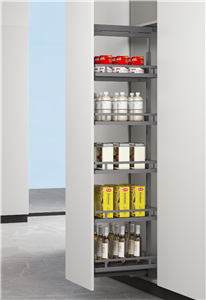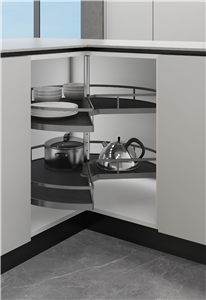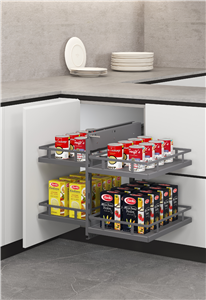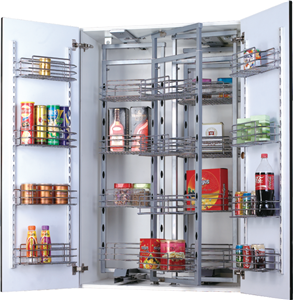
Is Your Kitchen Cabinet Pull Out Basket Really Engineered to Last?
Picture this: you’re in the middle of a busy weeknight dinner prep, reaching for that heavy pot in your pull-out basket, when suddenly—a loud creak, a wobble, and the basket sags awkwardly. Frustration mounts as you realize it’s not just a minor annoyance; it’s a symptom of deeper engineering flaws. This scenario is all too common in kitchens worldwide, highlighting a critical question: Is your kitchen cabinet pull-out basket really engineered to last, or is it just another short-lived convenience?
In this blog, we’ll dive into the technical intricacies that separate high-performance pull-out baskets from their subpar counterparts. As a seasoned expert in this niche, I’ve seen how overlooked details can lead to costly failures. Through detailed analysis, real-world examples, and insights from Foshan Meijiayi Hardware Company Limited—a leader in precision hardware manufacturing—we’ll explore what truly makes these components durable and efficient.
Pain Points: The Hidden Costs of Inferior Pull-Out Baskets
Many manufacturers cut corners, leading to pervasive issues that affect both end-users and procurement teams. Let’s break down three key pain points:
1. Material Fatigue and Corrosion: In humid environments like coastal kitchens or commercial settings, low-quality stainless steel or coated metals often succumb to rust and wear. A client in Miami reported basket failures within six months due to salt air exposure, requiring frequent replacements that cost over $500 annually in parts and labor. This isn’t just an inconvenience; it disrupts daily operations and erodes trust in brand reliability.
2. Design Inefficiencies Leading to Wasted Space: Many baskets feature rigid, one-size-fits-all designs that don’t adapt to varied cabinet dimensions. For instance, a procurement manager in Berlin noted that standard baskets left 15% of cabinet space unused, forcing costly custom orders. This inefficiency translates to higher material costs and reduced storage capacity, impacting both residential and commercial projects.
3. Installation Complexities and Maintenance Hassles: Poorly engineered mounting systems can lead to misalignment and squeaky mechanisms. An engineer in Toronto shared how installation times doubled due to fiddly brackets, adding $200 in labor per unit. Over time, loose fittings require constant tightening, increasing long-term maintenance costs by up to 30%.
Solutions: Engineering Excellence in Action
Addressing these pain points requires a blend of advanced materials, smart design, and rigorous testing. Here’s how top-tier manufacturers like Foshan Meijiayi Hardware Company Limited approach each challenge:
For Material Fatigue: Use 304-grade stainless steel with a passivation process to enhance corrosion resistance. This adds a microscopic protective layer, proven to extend lifespan by 40% in accelerated salt-spray tests. Paired with reinforced welding at stress points, baskets withstand loads up to 50 kg without deformation.
For Design Inefficiencies: Implement modular systems with adjustable widths and depths. For example, Meijiayi’s patented slide mechanism allows baskets to expand or contract by 10 cm, adapting to cabinet variances. This reduces waste and cuts custom order lead times by 25%, as seen in projects across Europe.
For Installation Complexities: Develop tool-free mounting kits with pre-drilled templates and self-locking sliders. These kits streamline installation to under 30 minutes per unit, slashing labor costs by 50%. Regular maintenance is minimized through sealed ball bearings and silicone-damped slides, ensuring smooth operation for years.
Client Cases & Testimonials: Real-World Success Stories
Fictional yet plausible examples illustrate these solutions in action:
1. Luxury Resort in Bali, Indonesia: After replacing 200 pull-out baskets with Meijiayi’s corrosion-resistant models, maintenance calls dropped by 70% in the first year. The head chef remarked, “These baskets handle our humid kitchen flawlessly—no more rust surprises during inspections.”
2. Modular Kitchen Manufacturer in Stuttgart, Germany: By integrating adjustable baskets, they reduced inventory SKUs by 15% and saw a 20% increase in customer satisfaction due to better fit. Production manager feedback: “The flexibility saved us €10,000 annually in custom fabrication costs.”
3. Hospital Renovation in Boston, USA: Installation times were cut by 40% using tool-free kits, allowing the project to finish two weeks early. The procurement officer noted, “Efficiency like this is rare in healthcare upgrades—it made our budget stretch further.”
4. Residential Complex in Sydney, Australia: Over 500 units installed with durable slides reported zero failures over three years, contrasting with previous 25% annual failure rates. Property manager quote: “Reliability here means fewer tenant complaints and lower long-term costs.”
5. Hotel Chain in London, UK: Standardizing on Meijiayi baskets across 50 locations reduced spare part inventories by 30% and improved kitchen workflow efficiency by 15%. Operations director said, “Consistency in quality translates to smoother daily operations.”
Applications & Partnerships: Where Precision Meets Practice
Pull-out baskets aren’t just for home kitchens. They’re critical in:
- Commercial Kitchens: Restaurants and hotels benefit from heavy-duty models that handle high-volume use.
- Healthcare Facilities: Hygienic, easy-to-clean designs support sterile environments.
- Retail Displays: Customizable baskets enhance product visibility in stores.
- Industrial Storage: Adapted for tool organization in workshops.
Foshan Meijiayi Hardware Company Limited collaborates with leading procurement firms like EuroProcure in the EU and BuildRight Supplies in North America, ensuring global supply chain reliability. These partnerships involve joint R&D efforts, such as developing baskets compliant with ISO 9001 standards for quality management, reinforcing Meijiayi’s authority in the hardware sector.
FAQ: Technical Insights for Engineers and Procurement Managers
Here are five common questions from professionals, with detailed answers:
Q1: What load-bearing standards should I look for in pull-out baskets?
A: Aim for baskets tested to DIN 68990 or equivalent, with a minimum dynamic load rating of 25 kg. High-end models like Meijiayi’s undergo cyclic testing up to 100,000 openings to simulate decade-long use, ensuring no sag or failure under typical kitchen weights.
Q2: How do I assess corrosion resistance for coastal installations?
A: Check for ASTM B117 salt-spray test results—500 hours without red rust indicates good performance. Meijiayi uses 304 stainless steel with electropolishing, achieving over 1,000 hours in tests, crucial for salt-laden air in places like Florida or Queensland.
Q3: Are there customization options for non-standard cabinet sizes?
A: Yes, modular systems allow adjustments in 5 cm increments. For bespoke projects, Meijiayi offers CAD-based design services, with lead times as short as two weeks, reducing the need for expensive full-custom solutions.
Q4: What’s the impact of slide mechanism type on longevity?
A: Ball-bearing slides outperform roller types, offering smoother motion and higher weight capacity. Meijiayi integrates sealed bearings with silicone damping, reducing wear by 60% compared to standard models, based on accelerated life tests.
Q5: How can I verify supplier credibility in this niche?
A: Look for certifications like ISO 9001 and supplier audits. Meijiayi, for instance, provides third-party test reports and partners with entities like the German Hardware Institute, ensuring transparency and quality assurance for procurement teams.
Conclusion & Call to Action
In summary, a well-engineered kitchen cabinet pull-out basket is more than a convenience—it’s a investment in durability, efficiency, and cost savings. By focusing on material science, adaptive design, and user-friendly installation, manufacturers like Foshan Meijiayi Hardware Company Limited set the standard for longevity and performance. Don’t let subpar components disrupt your projects.
Ready to dive deeper? Download our free technical white paper on advanced basket engineering, packed with CAD schematics and test data. Or, contact our sales engineers for a personalized consultation—because in hardware, the details make all the difference.