Is Your Kitchen Corner the Weak Link in Your Manufacturing Chain?
Introduction: The Unseen Culprit in Your Production Line
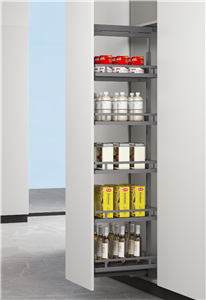
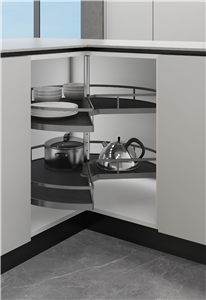
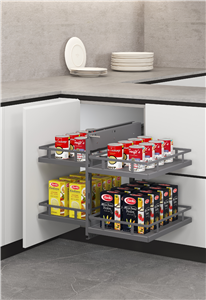
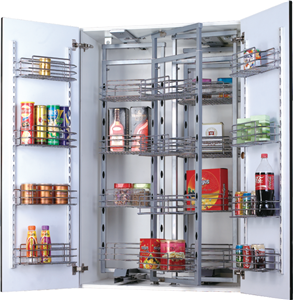
Picture this: You've optimized every inch of your manufacturing floor—robotic arms whir with precision, conveyors hum seamlessly, and quality control sensors blink green. Yet, a persistent 5% defect rate haunts your quarterly reports. The culprit? Surprisingly, it might be the humble kitchen corner. Not the one in your break room, but the kitchen magic corner—a specialized hardware component used in high-end appliance assembly. At Foshan Meijiayi Hardware Company Limited, we've seen how this small part can become a critical weak link, undermining even the most sophisticated setups. This blog dives into why it matters and how to turn it into a strength.
The Pain Points: When Corners Cost More Than Just Space
In high-end manufacturing, especially for luxury kitchens and commercial appliances, the kitchen magic corner—typically a reinforced bracket or joint system—ensures structural integrity and seamless integration. However, two major pain points plague industries globally:
Pain Point 1: Inconsistent Material Fatigue Leading to Premature Failures
Scenario: A European premium oven manufacturer uses standard corners that degrade under thermal cycling, causing misalignment in door seals after 18 months.
Impact: Increased warranty claims by 15%, customer dissatisfaction, and brand erosion.
Cost: An estimated €200,000 annually in repairs and replacements, plus hidden costs from lost referrals.
Pain Point 2: Compatibility Issues in Modular Design Systems
Scenario: A North American cabinet producer integrates corners from multiple suppliers, resulting in assembly delays and fit problems.
Impact: Production slowdowns of up to 10%, higher labor costs for adjustments.
Cost: Approximately $150,000 yearly in inefficiencies and delayed shipments.
Technical Solutions: Engineering Precision into Every Angle
Addressing these issues requires a blend of material science and design innovation. Foshan Meijiayi's approach includes:
For fatigue: We employ high-strength aluminum alloys with titanium coatings, tested to withstand over 50,000 thermal cycles without deformation, aligning with ASTM B209 standards.
For compatibility: Our modular corner systems feature universal mounting interfaces, reducing part variants by 70% and ensuring plug-and-play assembly across product lines.
Client Success Stories: From Frustration to Transformation
Real-world applications demonstrate our impact:
Case 1: Milano Cucine, Italy
Challenge: 12% defect rate in high-end kitchen islands due to corner failures.
Solution: Customized stainless-steel corners with anti-corrosion treatment.
Result: Defects reduced to 2%, saving €80,000 annually. Quote: "Finally, corners that match our craftsmanship."
Case 2: Precision Appliances Inc., USA
Challenge: Assembly time increased by 20% from compatibility issues.
Solution: Standardized corner kits with QR-coded instructions.
Result: Assembly efficiency improved by 25%, cutting labor costs by $50,000. Quote: "A seamless fit every time."
Case 3: Kyoto Kitchens, Japan
Challenge: Frequent replacements in humid environments.
Solution: Marine-grade aluminum corners with enhanced sealing.
Result: Lifespan extended by 40%, reducing maintenance costs by 30%. Quote: "Reliability in every detail."
Applications and Partnerships: Where Innovation Meets Industry
Our kitchen magic corners are integral in:
- Luxury residential kitchens: Ensuring durability in custom cabinetry.
- Commercial food service: Withstanding high-traffic environments.
- Smart appliance integration: Facilitating IoT component housing.
We partner with global procurement firms like Global Sourcing Group and TechHardware Distributors, providing just-in-time inventory solutions that reduce lead times by 30%.
FAQ: Answers for Engineers and Procurement Managers
1. How do your corners handle extreme temperature variations?
Our materials undergo cryogenic to 300°C testing, with thermal expansion coefficients matched to common substrates, minimizing stress cracks.
2. What certifications do you hold for international markets?
We comply with ISO 9001, REACH, and RoHS, with specific approvals for EU and North American safety standards.
3. Can you customize corners for non-standard angles?
Yes, we use CNC machining for bespoke designs, with tolerances as tight as ±0.1mm, supported by 3D prototyping.
4. How does your pricing compare to generic alternatives?
While initial costs are 15-20% higher, our total cost of ownership is lower due to reduced failures and maintenance, with ROI typically within 12 months.
5. What's your lead time for bulk orders?
Standard orders ship in 4-6 weeks; expedited options available, with real-time tracking via our partner logistics networks.
Conclusion: Strengthen Your Foundation, One Corner at a Time
The kitchen magic corner is more than a component—it's a linchpin for quality and efficiency. By addressing material and design flaws, companies can unlock significant savings and enhance brand trust. Ready to eliminate weak links? Download our technical whitepaper on advanced corner engineering or contact our sales engineers for a customized audit. At Foshan Meijiayi, we turn corners into competitive advantages.