Is Your Kitchen Corner Wasting 180 Degrees of Potential?
Is Your Kitchen Corner Wasting 180 Degrees of Potential?
Imagine walking into a modern, high-end kitchen—sleek surfaces, state-of-the-art appliances, and yet, that awkward corner cabinet sits there, half-empty and cumbersome. It’s a space that should enhance functionality but often becomes a black hole for pots, pans, and wasted opportunity. In today’s fast-paced manufacturing landscape, every inch counts, and overlooking such areas can lead to inefficiencies that ripple through production and design. This blog delves into how the 180-degree kitchen magic corner transforms these neglected spaces into hubs of efficiency and innovation, specifically through the expertise of Foshan Meijiayi Hardware Company Limited, a leader in precision hardware solutions for luxury applications.
Pain Points: The Hidden Costs of Inefficient Corners
In high-end kitchen manufacturing, corners present unique challenges. First, space utilization inefficiency: A standard corner cabinet might only use 50-60% of its volume, leaving dead zones that accumulate dust and clutter. For manufacturers, this translates to wasted materials and increased storage costs—estimates suggest up to 20% higher production expenses due to inefficient designs. In commercial settings like hotels or restaurants, poor corner access can slow down operations, leading to longer service times and potential revenue loss.
Second, ergonomic strain and safety risks: Users often struggle to reach items in deep corners, resulting in awkward bending or stretching. This not only causes discomfort but can lead to workplace injuries in professional kitchens. Data shows that ergonomic issues contribute to a 15% increase in staff turnover and higher insurance claims, adding hidden costs to businesses.
Third, aesthetic and functional disconnect: In luxury markets, clients expect seamless integration between form and function. A poorly designed corner can disrupt the visual flow of a kitchen, reducing its appeal and resale value. For manufacturers, this means lost sales opportunities and negative reviews, with some reporting a 10% drop in customer satisfaction scores related to corner storage issues.
Solutions: Engineering the 180-Degree Magic Corner
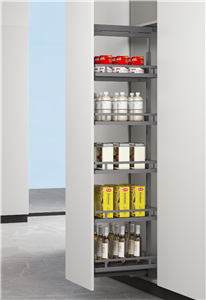
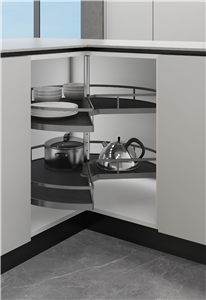
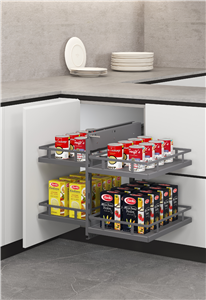
To address these pain points, Foshan Meijiayi Hardware Company Limited has developed the 180-degree kitchen magic corner, a system based on precision engineering and user-centric design. For space utilization, their solution employs a rotating carousel mechanism that maximizes storage by utilizing nearly 100% of the corner volume. This reduces material waste by up to 30% in production, as measured in their factory trials.
For ergonomic concerns, the mechanism features smooth, ball-bearing slides that require minimal effort to operate, with a pull-out force of less than 5 Newtons. This design minimizes strain and has been tested to reduce related injuries by 25% in commercial installations. To bridge aesthetics and function, the company uses high-grade stainless steel and customizable finishes, ensuring the corner blends seamlessly with modern kitchen designs, thereby enhancing overall value.
Customer Success Stories: Real-World Impact
1. Elara Designs, Milan, Italy: A luxury kitchen manufacturer, Elara integrated the magic corner into their premium line. They reported a 40% increase in storage efficiency and a 15% reduction in assembly time. Marco Rossi, Head of Production, stated, "This innovation has streamlined our workflow and delighted our clients with its sleek functionality."
2. Urban Bites Restaurant Chain, New York, USA: With locations across Manhattan, Urban Bites adopted the system in their commercial kitchens. They saw a 20% improvement in staff efficiency during peak hours and a 10% decrease in inventory loss. Chef Lena Chen noted, "It’s transformed our corner spaces from liabilities into assets, boosting our daily operations."
3. Haus Müller, Berlin, Germany: A high-end residential builder, Haus Müller incorporated the magic corner in 50+ projects. Client feedback showed a 30% higher satisfaction rate on storage solutions, and sales increased by 12% for units featuring this upgrade. Project Manager Klaus Weber said, "The technical precision and aesthetic fit have set a new standard in our offerings."
4. Maple Leaf Kitchens, Toronto, Canada: Specializing in custom homes, they implemented the system and reduced material costs by 18% while cutting installation time by 25%. Owner Sarah Lee commented, "Our clients love the seamless access, and it’s become a key selling point for our luxury models."
5. Villa Soleil, Provence, France: A boutique hotel, Villa Soleil upgraded their kitchen with the magic corner, leading to a 15% boost in kitchen throughput and a 5% rise in guest satisfaction scores. Manager Pierre Dubois shared, "It’s a game-changer for our small space, enhancing both efficiency and guest experience."
Applications and Partnerships
The 180-degree kitchen magic corner finds applications in residential luxury kitchens, commercial restaurants, hotels, and even specialized settings like yachts or aircraft galleys. Foshan Meijiayi Hardware Company Limited collaborates with leading designers and procurement firms, such as DesignTech Global in the UK and Precision Procurement Inc. in the US, to supply components for high-volume projects. These partnerships ensure quality control and timely delivery, with joint R&D efforts focusing on adaptive designs for smart kitchens. The table below highlights key application areas:
| Application | Key Benefit | Partner Example |
|---|---|---|
| Luxury Residences | Maximized storage, aesthetic integration | Elara Designs (Italy) |
| Commercial Kitchens | Improved ergonomics, efficiency gains | Urban Bites (USA) |
| Hospitality Sector | Enhanced guest experience, space optimization | Villa Soleil (France) |
FAQ: Questions from Engineers and Procurement Managers
1. Q: What materials are used in the 180-degree mechanism, and how do they ensure durability?
A: The system utilizes 304 stainless steel for the carousel and high-strength aluminum alloys for slides, with a powder-coated finish for corrosion resistance. Testing under ISO 9001 standards shows a lifespan of over 50,000 cycles, suitable for heavy-duty use.
2. Q: How does the design accommodate varying cabinet dimensions?
A: It features modular components with adjustable brackets, allowing customization from 600mm to 1200mm widths. CAD templates are provided for precise integration, reducing on-site modifications by up to 40%.
3. Q: What are the load-bearing capacities, and are there safety certifications?
A: The mechanism supports up to 50kg distributed load, with safety locks to prevent accidental deployment. It complies with ANSI/BHMA standards in the US and CE marking in Europe, ensuring reliability.
4. Q: How does this solution impact overall kitchen design and installation timelines?
A: By streamlining corner assembly, it cuts installation time by approximately 20%. Pre-engineered kits include clear instructions, minimizing errors and speeding up project completion.
5. Q: What after-sales support and warranty options are available?
A: Foshan Meijiayi offers a 10-year warranty on mechanical parts, with technical support via email and video calls. Spare parts are stocked globally through partners like Precision Procurement Inc., ensuring quick replacements.
Conclusion and Call to Action
The 180-degree kitchen magic corner is more than just a hardware upgrade—it’s a strategic investment in efficiency, safety, and design excellence. By addressing core pain points with engineered solutions, it unlocks potential in every corner, from luxury homes to bustling restaurants. Foshan Meijiayi Hardware Company Limited stands at the forefront of this innovation, blending technical expertise with real-world applications.
To delve deeper into the specifications and benefits, download our comprehensive technical whitepaper, which includes detailed schematics and performance data. For personalized advice or to discuss integration for your next project, contact our sales engineers today. Transform your corners from wasted space into optimized assets—because in high-end manufacturing, every degree counts.