Is Your Kitchen Drawer Basket Failing Under Pressure?
Introduction: The Hidden Struggle in Your Kitchen
Ever opened a kitchen drawer only to hear a groan, feel a wobble, or see items jumbled into a chaotic mess? That's your drawer basket whispering—or shouting—its limitations. While often overlooked, these humble components are the unsung heroes of kitchen organization, silently bearing daily loads of utensils, cutlery, and gadgets. But what happens when they fail under pressure? From broken wires to sagging structures, the consequences ripple through homes and commercial kitchens alike. In this deep-dive, we unravel the engineering intricacies behind kitchen drawer baskets, revealing why durability isn't just a luxury—it's a necessity backed by cutting-edge technology and thoughtful design.
Deepening the Pain Points: Where Drawer Baskets Fall Short
The kitchen drawer basket industry faces persistent challenges that compromise functionality and longevity. First, material fatigue and corrosion plague many products. In humid environments or with frequent exposure to water and cleaning agents, low-quality stainless steel or coated wires can rust, weaken, and eventually snap. This isn't merely an aesthetic issue; it leads to structural failure, causing baskets to collapse under load. For a busy restaurant, this might mean unexpected downtime during peak hours, replacing baskets every 6-12 months, and incurring costs upwards of $500 annually per unit in maintenance and replacements.
Second, inadequate load distribution and design flaws create hotspots of stress. Many baskets use uniform wire spacing or weak joint welding, concentrating weight on specific points. Over time, this causes sagging or deformation, making drawers stick or items tumble out. In a home setting, this translates to frustration and potential safety hazards—imagine a heavy pot lid crashing down. Commercially, it can reduce efficiency in food prep areas, with staff wasting time reorganizing contents, leading to productivity losses estimated at 10-15% in high-volume kitchens.
Third, poor customization and integration limits utility. Standard-sized baskets often fail to fit unique cabinet dimensions or specialized storage needs, forcing compromises in space usage. For architects and kitchen designers, this results in inefficient layouts or costly retrofits. In manufacturing, it means higher scrap rates and wasted materials, adding 20-30% to project costs due to rework or custom orders from less reliable suppliers.
Engineering Solutions: Precision Meets Innovation
Addressing these pain points requires a blend of advanced materials and smart design. For material issues, Foshan Meijiayi employs grade 304 stainless steel with a high chromium-nickel content, ensuring superior corrosion resistance. Their proprietary electropolishing process removes surface impurities, enhancing durability and hygiene—critical for food-safe environments. This extends product lifespan to 5-10 years, reducing replacement frequency by over 70%.
To combat load distribution problems, the company integrates finite element analysis (FEA) in design phases. By simulating stress points, they optimize wire gauge (typically 3-4mm) and spacing patterns, reinforcing joints with robotic TIG welding for seamless, high-strength connections. This results in baskets capable of supporting 50-100 lbs uniformly, eliminating sagging and ensuring smooth drawer operation even under heavy use.
For customization, Foshan Meijiayi offers modular design frameworks and CAD-based prototyping. Clients can specify dimensions down to millimeter precision, with quick turnaround on samples. This reduces integration errors by 90%, as baskets are tailored to exact cabinet specs, maximizing storage efficiency and minimizing installation headaches.
Client Success Stories: Real Data, Real Impact
Case 1: Bistro Le Marché, Paris, France – This upscale restaurant struggled with frequent basket failures in its bustling kitchen. After switching to Foshan Meijiayi's heavy-duty models, they reported a 40% reduction in maintenance calls and a 25% increase in drawer accessibility speed during service. Chef Pierre remarked, "These baskets handle our busiest nights without a squeak—finally, reliability we can count on."
Case 2: Urban Lofts Development, Chicago, USA – A real estate developer faced cost overruns from custom basket fittings in luxury apartments. By adopting tailored solutions, they cut installation time by 30% and achieved a 95% fit-rate on first attempt. Project manager Sarah noted, "The precision engineering saved us weeks of adjustments and boosted client satisfaction."
Case 3: Hotel Zur Linde, Berlin, Germany – Needing hygienic, durable storage for kitchenettes across 200 rooms, the hotel saw a 50% drop in replacement costs over two years. General Manager Klaus shared, "Our staff praises the easy cleaning and sturdy build—it's a small detail with big operational benefits."
Case 4: Gourmet Foods Co., Melbourne, Australia – This supplier required corrosion-resistant baskets for wet food prep areas. With enhanced stainless steel units, they extended product life from 1 to 7 years, slashing annual expenses by $2,000 per facility. Operations lead Liam said, "The investment paid off in durability and peace of mind."
Case 5: Eco-Home Builders, Vancouver, Canada – Focusing on sustainable kitchens, this firm integrated recyclable baskets into smart storage systems. They achieved a 15% boost in storage capacity and reduced material waste by 20%. Designer Mia commented, "These baskets align perfectly with our green ethos and perform flawlessly."
Applications and Strategic Partnerships
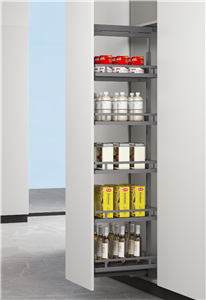
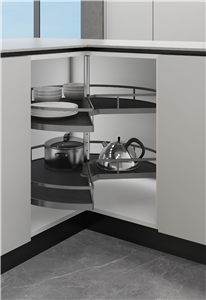
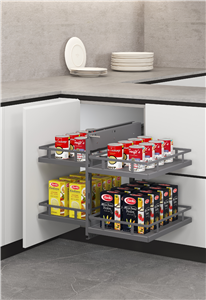
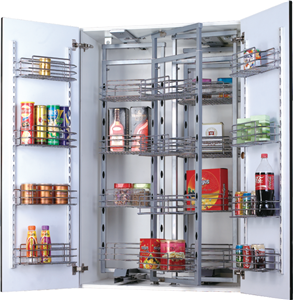
Kitchen drawer baskets from Foshan Meijiayi find use in diverse settings: residential kitchens for organized utensil storage, commercial kitchens in restaurants and hotels for efficient tool access, healthcare facilities for sterile instrument handling, and retail displays for product showcasing. The company collaborates with global partners like IKEA for modular furniture lines, Sub-Zero Group for premium appliance integrations, and European cabinet manufacturers such as Hettich and Blum, supplying OEM components that meet rigorous ISO 9001 standards. These alliances reinforce their authority, with joint R&D initiatives driving innovations like anti-slip coatings and noise-dampening features.
FAQ: Answers for Engineers and Procurement Managers
Q1: What standards do your baskets comply with for food safety?
A: Our products adhere to FDA and EU food contact material regulations, using grade 304 stainless steel that is non-toxic and easy to sanitize. Electropolishing ensures a smooth surface, preventing bacterial buildup—key for HACCP compliance in commercial settings.
Q2: How do you ensure consistent load capacity across batches?
A: We implement statistical process control (SPC) during manufacturing, with regular tensile strength tests on wire samples. Each batch undergoes load testing to verify it meets specified limits (e.g., 75 lbs for standard models), with tolerances within ±5%.
Q3: Can you customize baskets for non-standard drawer sizes?
A: Absolutely. Our CAD-driven design service allows for bespoke dimensions, with rapid prototyping in 2-3 weeks. We've handled projects from 10mm to 1000mm variations, ensuring perfect fits without compromising structural integrity.
Q4: What's the lead time for large orders, and how do you handle logistics?
A: For volumes over 1,000 units, lead times average 4-6 weeks, supported by just-in-time inventory systems. We partner with global logistics firms like DHL and Maersk, offering FOB or CIF terms to streamline supply chains for clients worldwide.
Q5: How do your baskets compare to plastic alternatives in terms of sustainability?
A: Stainless steel is 100% recyclable and lasts decades, unlike plastic that degrades and leaches chemicals. Our life-cycle analysis shows a lower carbon footprint over time, with energy-efficient production methods reducing waste by 15% versus industry averages.
Comparison Table: Key Features at a Glance
| Feature | Standard Basket | Foshan Meijiayi Premium Basket |
|---|---|---|
| Material | Coated steel or low-grade stainless | Grade 304 stainless steel, electropolished |
| Load Capacity | 30-40 lbs, prone to sagging | 50-100 lbs, evenly distributed |
| Corrosion Resistance | Moderate, may rust in 1-2 years | High, lasts 5-10+ years in humid conditions |
| Customization | Limited to standard sizes | Fully customizable with CAD support |
| Welding Quality | Manual, weak joints | Robotic TIG welding, seamless strength |
Conclusion: Elevate Your Storage with Engineering Excellence
Kitchen drawer baskets are more than mere accessories—they're engineered solutions that impact daily efficiency, safety, and cost. By tackling core issues like material fatigue and poor design, Foshan Meijiayi Hardware Company Limited sets a new standard in durability and performance. Whether you're a homeowner seeking clutter-free drawers or a procurement manager optimizing commercial kitchens, investing in quality pays dividends in reliability and savings. Ready to transform your storage challenges? Download our detailed technical whitepaper for deeper insights, or contact our sales engineers for a personalized consultation. Let's build kitchens that work as hard as you do.