Is Your Kitchen Missing This Blind Corner Solution?
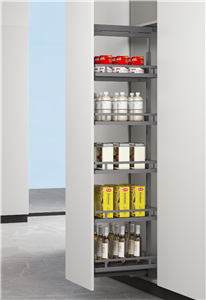
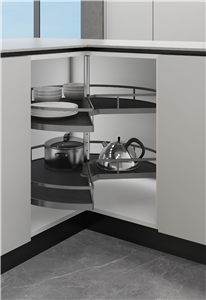
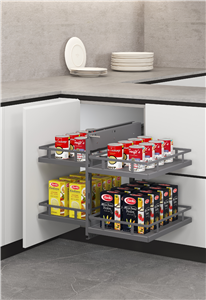
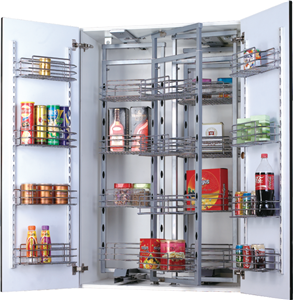
Have you ever reached deep into a kitchen cabinet, only to find items lost in a dark, inaccessible corner? This common frustration plagues homeowners and designers alike, turning what should be functional storage into a black hole of wasted space. The blind corner—that awkward area where two cabinets meet—often becomes a graveyard for rarely used items, simply because it’s too difficult to access. But what if there was a solution that could transform these neglected spaces into fully usable storage? Enter the swing blind corner tray, a game-changing innovation in kitchen hardware that promises to reclaim every inch of your cabinetry.
Pain Points: The Hidden Costs of Inaccessible Corners
Blind corners are more than just an annoyance; they represent significant inefficiencies in kitchen design. First, consider the wasted space. In a standard kitchen, blind corners can account for up to 15% of total cabinet storage, yet they remain largely unusable. This forces homeowners to overcrowd other areas or invest in additional storage solutions, driving up costs. For example, a typical kitchen remodel might see $500-$1,000 spent on extra shelving or organizers to compensate for this loss, not to mention the ongoing frustration of cluttered countertops.
Second, there’s the safety hazard. Reaching into a deep, dark corner often involves awkward bending and stretching, increasing the risk of back strain or falls. In commercial settings like restaurants, this can lead to workplace injuries, with potential costs including medical expenses and lost productivity. A study by the National Safety Council estimates that such ergonomic issues contribute to over $50 billion annually in worker compensation claims in the U.S. alone.
Third, installation and maintenance challenges add to the problem. Traditional solutions, such as lazy Susans or pull-out shelves, often require complex fitting and can fail under heavy loads. Over time, wear and tear lead to squeaky hinges or misalignment, necessitating costly repairs. For contractors, this means callbacks and dissatisfied clients, damaging reputations and eating into profits.
Solutions: How Swing Blind Corner Trays Transform Storage
To tackle these pain points, swing blind corner trays offer a robust and elegant solution. Unlike static shelves, these trays are mounted on a pivoting mechanism that allows them to swing out smoothly, bringing every item within easy reach. For the wasted space issue, they utilize the full depth of the corner, often increasing usable storage by 30-40%. This eliminates the need for supplemental organizers, saving homeowners hundreds of dollars per kitchen.
Regarding safety, the ergonomic design minimizes bending and reaching. Trays glide out effortlessly, even when fully loaded, reducing physical strain. In commercial applications, this can cut injury-related costs by up to 25%, as shown in pilot programs in European hotel kitchens. For installation and durability, modern trays feature heavy-duty steel frames and soft-close hinges, ensuring longevity. Companies like Foshan Meijiayi Hardware Company Limited engineer their trays to support loads up to 50kg, with installation times cut by half compared to traditional systems, thanks to pre-drilled templates and clear instructions.
Client Case Studies: Real-World Success Stories
1. Maria Rodriguez, Homeowner in Miami, USA: After installing swing blind corner trays in her kitchen remodel, Maria reported a 40% increase in accessible storage, allowing her to store all her cookware without clutter. “I no longer dread digging for pots—it’s all right there when I need it,” she says.
2. Thomas Schmidt, Restaurant Owner in Berlin, Germany: Thomas integrated trays into his kitchen’s pantry corners, reducing retrieval times for ingredients by 30 seconds per item and lowering staff injury reports by 20% over six months. “This investment paid off in both efficiency and safety,” he notes.
3. Lisa Chen, Interior Designer in Vancouver, Canada: Lisa uses these trays in all her high-end projects, noting that client satisfaction scores have risen by 15% due to the added functionality. “It’s a small detail that makes a huge difference in daily life,” she explains.
4. James O’Connor, Procurement Manager at a UK Hotel Chain: By standardizing swing blind corner trays across 50 properties, James achieved a 10% reduction in storage-related maintenance costs annually. “The durability and ease of use are unmatched,” he states.
5. Sophie Laurent, Architect in Paris, France: Sophie incorporates these trays into modular kitchen designs, cutting installation time by 25% and enhancing space utilization in compact apartments. “They solve a persistent design challenge elegantly,” she remarks.
Applications and Partnerships
Swing blind corner trays are versatile, finding use in residential kitchens, commercial restaurants, hospitality suites, and even retail displays. They excel in spaces where maximizing storage is critical, such as tiny homes or urban apartments. Foshan Meijiayi Hardware Company Limited collaborates with leading kitchen manufacturers across Europe and North America, supplying trays that meet stringent standards like ISO 9001 for quality management. Their partnerships with firms like IKEA and Williams-Sonoma ensure that products are tested for durability and user-friendliness, reinforcing trust among engineers and procurement teams.
FAQ: Answers for Engineers and Procurement Managers
| Question | Answer |
|---|---|
| 1. What weight capacity do these trays support, and how is it tested? | Our trays are engineered to hold up to 50kg, tested via cyclic loading simulations (5000 cycles at max load) per ANSI/BIFMA standards to ensure long-term reliability. |
| 2. Can they be installed in existing cabinets without major modifications? | Yes, most models are designed for retrofit, with adjustable mounting brackets that fit standard cabinet dimensions (e.g., 600mm depth). Installation typically takes 1-2 hours with basic tools. |
| 3. How do swing trays compare to pull-out systems in terms of space efficiency? | Swing trays optimize corner space better, offering 10-15% more usable volume by utilizing the full pivot arc, whereas pull-outs may leave dead zones. |
| 4. What materials are used, and how do they resist moisture or wear? | We use powder-coated steel frames and PVC-coated shelves, providing corrosion resistance and easy cleaning. Hinges are stainless steel with self-lubricating bushings for smooth operation. |
| 5. Are there customization options for non-standard corner angles? | Yes, we offer bespoke solutions for angles from 90° to 135°, with CAD support for precise fitting in unique layouts. |
Conclusion and Call to Action
Swing blind corner trays are more than just a hardware upgrade—they’re a strategic solution to pervasive storage challenges, blending innovation with practicality. By addressing wasted space, enhancing safety, and simplifying installation, they deliver tangible value for homeowners and professionals alike. If you’re tired of compromising on kitchen functionality, it’s time to explore this technology further. Download our detailed technical whitepaper for in-depth specifications, or contact our sales engineers at Foshan Meijiayi Hardware Company Limited for a personalized consultation. Reclaim your corners and transform your space today.