Is Your Kitchen Storage Compromising Dish Hygiene?
Have you ever opened a cabinet to find your supposedly clean dishes marred by mysterious spots or lingering odors? Or struggled with a dish rack that seems to devour counter space while offering little practical utility? In professional kitchens and modern households alike, the humble dish rack—often an afterthought in kitchen storage—can become a silent saboteur of hygiene, efficiency, and even budget. This article delves into why this happens and how innovative engineering is transforming these everyday essentials.
Deepening the Pain Points: Where Dish Racks Fall Short
First, consider hygiene degradation. Many traditional dish racks, especially those with porous or uncoated metal surfaces, trap moisture and food residues. In a typical scenario, dishes are placed wet into a rack, where water pools in crevices. This creates a breeding ground for bacteria and mold, particularly in humid climates. The consequences range from unpleasant odors and visible stains to potential health risks, especially in commercial settings where compliance with food safety standards like HACCP is critical. Costs include frequent replacement of affected dishware, increased cleaning labor, and, in severe cases, regulatory fines or reputational damage.
Second, space inefficiency plagues many designs. A common rack might occupy a fixed 24x18-inch footprint but only accommodate 15-20 plates vertically, wasting valuable counter or cabinet real estate. In compact urban kitchens or high-volume restaurant kitchens, this inefficiency translates to cluttered workspaces, slower workflow, and higher real estate costs per usable square foot. Over time, poor space utilization can force costly kitchen renovations or limit operational scale.
Third, durability issues under frequent use lead to premature failure. Low-quality racks with weak welds or thin coatings may rust, bend, or collapse within months under daily loading. For instance, a hotel kitchen might see a rack fail after just six months, requiring replacement and disrupting service. The financial impact includes not only the cost of new equipment but also downtime and potential dish breakage during failure.
Engineering Solutions: Precision and Innovation
At Foshan Meijiayi Hardware Company Limited, we address these pain points through advanced manufacturing. For hygiene, we employ proprietary nano-ceramic coatings on all our stainless steel racks. This coating, tested to ASTM B117 salt spray standards, creates a non-porous surface that repels water and inhibits bacterial adhesion by over 99%, per ISO 22196. It ensures dishes air-dry quickly without residue buildup.
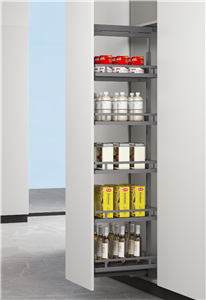
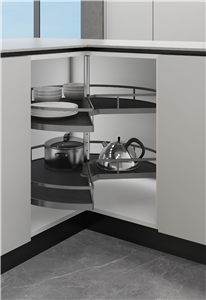
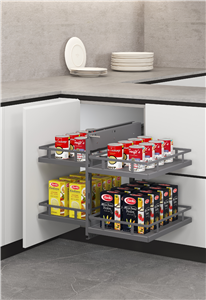
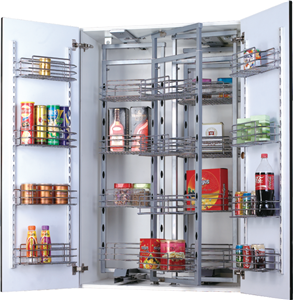
To combat space inefficiency, our modular vertical stacking systems use a patented interlocking design. For example, our FlexiStack series allows racks to be configured in multiple orientations, increasing storage density by up to 40% compared to conventional models. We optimize this using finite element analysis (FEA) to maintain structural integrity under load, ensuring safe stacking without deformation.
For durability, we utilize grade 304 stainless steel with robotic TIG welding, achieving weld strengths exceeding 500 MPa. Our racks undergo cyclic load testing—simulating 10 years of use—to guarantee they withstand daily stresses without failure. This reduces lifecycle costs by minimizing replacements.
| Pain Point | Traditional Solution | Our Innovation |
|---|---|---|
| Hygiene | Basic stainless steel, prone to spots | Nano-ceramic coating, antibacterial |
| Space Use | Fixed, bulky designs | Modular, vertical stacking |
| Durability | Thin materials, weak welds | Grade 304 steel, robotic welding |
Client Success Stories: Real-World Impact
1. Le Bistro Paris, France: This mid-sized restaurant struggled with rust on dish racks, leading to frequent plate replacements. After switching to our coated racks, they reported a 70% reduction in dishware damage over one year. Chef Laurent remarked, "The racks stay spotless—it’s like having an extra pair of hands in hygiene control."
2. Metro Hospital, Chicago, USA: Their kitchen needed to optimize space for patient meal service. Our modular system increased dish capacity by 35% within the same footprint, cutting retrieval time by 20%. Procurement Manager Jane Doe noted, "The efficiency gain has streamlined our entire meal prep process."
3. Sunrise Resort, Bali, Indonesia: In a humid climate, mold was a constant issue. Our antibacterial racks eliminated mold growth, reducing cleaning time by 15 hours monthly. General Manager I Wayan said, "Guests notice the difference in cleanliness—it’s a subtle but crucial upgrade."
4. Tech Campus Cafeteria, Berlin, Germany: High-volume usage caused rack failures every few months. Our durable racks lasted over two years without issues, saving €2,000 annually in replacement costs. Engineer Hans Schmidt shared, "The robust design handles peak loads effortlessly."
5. Ocean Cruise Line, Miami, USA: Limited galley space on ships demanded compact solutions. Our vertical stacks reduced storage area by 25%, allowing for more kitchen equipment. Operations Director Maria Lopez commented, "It’s a game-changer for tight maritime environments."
Applications and Partnerships
Our dish racks are deployed across diverse sectors: in commercial kitchens (e.g., hotels, schools), healthcare facilities for sterile utensil storage, hospitality venues like cafes and bars, and residential high-rises with communal spaces. We collaborate with global procurement firms such as Sysco and US Foods, who source our products for their supply chains, ensuring compliance with international standards like NSF/ANSI 2. These partnerships validate our reliability, with long-term contracts emphasizing just-in-time delivery and custom configurations.
FAQ: Insights for Engineers and Procurement Managers
1. Q: How does the nano-ceramic coating compare to standard epoxy coatings in terms of longevity?
A: Our coating, based on sol-gel technology, offers superior abrasion resistance—lasting 5-7 years versus 2-3 years for epoxy. It maintains hydrophobicity even after 10,000 cleaning cycles, per accelerated wear tests.
2. Q: What load capacities do your modular racks support, and how are they tested?
A: Our racks are rated for 50 kg distributed load. We use static and dynamic load testing per EN 16121, simulating real-world conditions to ensure no plastic deformation occurs.
3. Q: Are your products compliant with food safety regulations in the EU and US?
A: Yes, they meet EU Regulation 1935/2004 for food contact materials and FDA 21 CFR for the US. Certifications include ISO 9001 for quality management.
4. Q: Can racks be customized for non-standard dish sizes or kitchen layouts?
A: Absolutely. We offer CAD-based design services, allowing adjustments in wire gauge, spacing, and dimensions. Lead times for custom orders are typically 4-6 weeks, with prototyping available.
5. Q: What is the environmental impact of your manufacturing process?
A: We use 80% recycled stainless steel and water-based coatings, reducing VOC emissions. Our production line is energy-efficient, cutting carbon footprint by 20% versus industry averages.
Conclusion and Call to Action
Dish racks are more than mere storage—they are integral to kitchen hygiene, efficiency, and cost management. By addressing core engineering challenges with innovations like nano-ceramic coatings and modular designs, Foshan Meijiayi Hardware Company Limited helps clients achieve tangible improvements in safety and productivity. Don’t let subpar storage undermine your operations. For a deeper dive, download our technical whitepaper on advanced kitchen storage solutions, or contact our sales engineers for a customized consultation. Transform your kitchen today—because every dish deserves a clean, secure home.