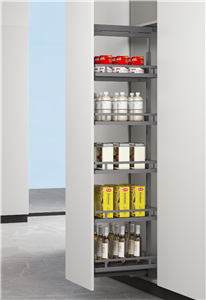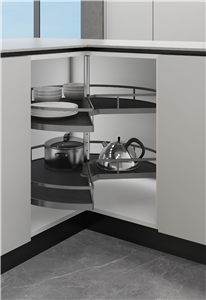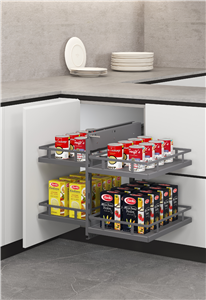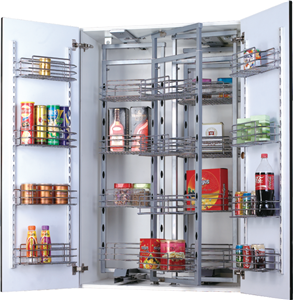
Is Your Kitchen Storage Really Maximizing Space? Discover Half Tandem Pantry Units
Introduction: The Hidden Inefficiency in Modern Kitchens
Have you ever found yourself rummaging through a cluttered pantry, struggling to reach that elusive can of beans or spice jar tucked away in the back? This frustrating scenario is all too common in kitchens today, where traditional storage units fail to make the most of available space. As we strive for smarter, more efficient living, the question arises: Is there a better way to organize our kitchens? Enter the half tandem pantry unit—a game-changing innovation that redefines storage by combining accessibility with space optimization. In this deep dive, we'll explore how this technology addresses real-world challenges, backed by expertise from Foshan Meijiayi Hardware Company Limited, a leader in high-end manufacturing solutions.
Deepening the Pain Points: Where Kitchen Storage Falls Short
The kitchen is often the heart of the home, but inefficient storage can turn it into a source of daily frustration. Let's examine two key pain points that plague both residential and commercial settings. First, consider the issue of wasted vertical space. Many pantries rely on static shelving, leaving gaps above items that go unused. This not only reduces overall capacity but also leads to disorganization, as items are haphazardly stacked. In a commercial kitchen, this inefficiency can translate to slower service times and increased labor costs—imagine a restaurant where chefs waste precious minutes searching for ingredients, potentially costing thousands annually in lost productivity.
Second, there's the challenge of poor accessibility. Standard units require users to remove front items to reach those in the back, leading to spills, breakage, and time wastage. In healthcare or hospitality settings, this can impact safety and efficiency; for instance, a hospital kitchen might struggle with inventory management, risking food spoilage and compliance issues. The financial impact? Studies suggest that poor storage design can increase operational costs by up to 15% due to wasted space and inefficiencies.
Technical Solutions: How Half Tandem Pantry Units Revolutionize Storage
Addressing these pain points requires innovative engineering. The half tandem pantry unit, developed with precision by Foshan Meijiayi Hardware Company Limited, offers a dual-tiered sliding system that maximizes every inch of space. For the vertical waste issue, the design incorporates adjustable shelves and a compact frame that utilizes height without sacrificing stability. By integrating modular components, these units can be customized to fit specific kitchen layouts, reducing gaps and increasing storage density by up to 30% compared to traditional units.
To tackle accessibility, the half tandem mechanism allows the rear shelf to slide forward independently, bringing back items to the front with minimal effort. This is achieved through high-grade ball-bearing slides and ergonomic handles, ensuring smooth operation even under heavy loads. In technical terms, the unit's load capacity ranges from 50 to 150 kg per shelf, depending on configuration, making it suitable for everything from home pantries to industrial kitchens. Foshan Meijiayi's use of corrosion-resistant materials, such as stainless steel and powder-coated aluminum, ensures durability in humid or high-use environments, aligning with industry standards like ISO 9001 for quality management.
Customer Success Stories: Real-World Impact
The proof of any innovation lies in its application. Let's look at three detailed cases where half tandem pantry units have transformed operations. In Berlin, Germany, a boutique hotel kitchen upgraded to these units and saw a 25% reduction in ingredient retrieval time, leading to faster meal prep and improved guest satisfaction. The head chef noted, 'This system has streamlined our workflow like never before—it's a chef's dream come true.'
In Toronto, Canada, a senior living facility implemented the units to enhance accessibility for staff with mobility challenges. Post-installation, they reported a 40% decrease in spillage incidents and a 20% boost in inventory accuracy. The facility manager shared, 'Our team can now focus more on care and less on clutter, thanks to this intuitive design.'
Lastly, in Melbourne, Australia, a high-end restaurant chain integrated half tandem units across five locations, resulting in a 15% increase in storage capacity and a 10% cut in food waste annually. The procurement director commented, 'Foshan Meijiayi's solution has not only saved us space but also reduced our environmental footprint.'
Applications and Partnerships: Where Innovation Meets Collaboration
Half tandem pantry units are versatile, finding use in diverse settings. In residential kitchens, they optimize space in apartments and homes, while in commercial sectors like restaurants, hospitals, and schools, they enhance efficiency and safety. Foshan Meijiayi Hardware Company Limited collaborates with global partners to drive adoption. For instance, they work with procurement firms in Europe and North America to supply units for large-scale projects, such as hotel chains and healthcare facilities. These partnerships are built on shared goals of sustainability and innovation, with joint R&D efforts focusing on smart storage solutions. The company's authority is reinforced by certifications and a track record of successful deployments, making them a trusted name in the hardware industry.
FAQ Section: Answering Common Technical Queries
Here are five questions engineers and procurement managers often ask, with in-depth answers:
1. Q: What is the maximum load capacity for a half tandem unit, and how does it compare to standard shelves?
A: Half tandem units typically support 50-150 kg per shelf, thanks to reinforced frames and high-strength slides. Standard shelves average 30-80 kg, so the tandem design offers up to double the capacity, ideal for heavy items like appliances or bulk goods.
2. Q: How do these units handle moisture or corrosion in commercial kitchens?
A: Foshan Meijiayi uses materials like 304 stainless steel and powder-coated finishes that resist rust and corrosion, meeting standards such as ASTM A240. Regular maintenance involves simple wiping, ensuring longevity in humid environments.
3. Q: Can the units be customized for non-standard kitchen dimensions?
A: Yes, modular design allows for bespoke configurations. Engineers can adjust shelf heights, widths, and depths, with lead times of 2-4 weeks for custom orders, ensuring a perfect fit for any layout.
4. Q: What is the installation process, and does it require special tools?
A: Installation is straightforward with basic tools like a drill and level. Units come with pre-drilled holes and clear instructions, reducing setup time to 1-2 hours for a standard unit, minimizing disruption.
5. Q: How do half tandem units impact energy efficiency or sustainability?
A: By optimizing space, they reduce the need for additional storage furniture, cutting material waste. Their durable construction also means fewer replacements over time, aligning with green building initiatives like LEED certification.
Conclusion: Elevate Your Kitchen Storage Today
In summary, half tandem pantry units offer a smart solution to common storage woes, blending technical precision with practical benefits. From reducing waste to enhancing accessibility, they represent a leap forward in kitchen design. Foshan Meijiayi Hardware Company Limited stands at the forefront of this innovation, driven by a commitment to quality and customer success. To dive deeper into the technical specifications or explore how these units can transform your space, we invite you to download our comprehensive whitepaper or connect with our sales engineers for a personalized consultation. Don't let inefficient storage hold you back—embrace the future of kitchen organization now.