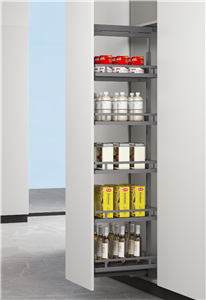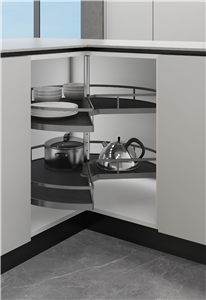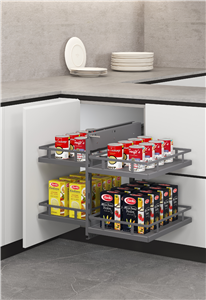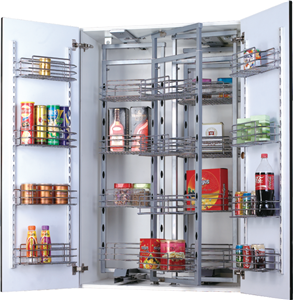
Is Your Kitchen Storage Underperforming? Unlocking Tandem Board Pantry Unit Efficiency
Have you ever found yourself rummaging through a cluttered pantry, searching for that one ingredient while dinner waits on the stove? Or perhaps you manage a commercial kitchen where wasted minutes accessing supplies translate directly into lost revenue. In today's fast-paced environments, storage isn't just about space—it's about workflow, efficiency, and cost control. This is where the engineering behind Tandem Board Pantry Units transforms from a niche hardware topic into a critical operational advantage. In this deep dive, we'll explore why traditional storage often fails, how innovative design solves these issues, and what this means for your projects.
The Hidden Costs of Inefficient Storage: Beyond Clutter
At first glance, pantry storage might seem straightforward—shelves, doors, and containers. But in practice, poor design leads to tangible losses. Let's break down two core pain points.
Pain Point 1: Access Inefficiency and Time Waste In commercial kitchens, like those in hotels or restaurants, staff frequently access dry goods, utensils, and equipment. A poorly organized unit forces employees to open multiple doors, shuffle items, or even climb to reach essentials. Studies in operational logistics show that each unnecessary motion can add 5–10 seconds per access. For a kitchen with 200 daily accesses, that's over 30 minutes of lost productivity daily—translating to roughly $8,000 annually in labor costs at average wages. In residential settings, this manifests as daily frustration, prompting premature renovations or makeshift solutions that compromise safety.
Pain Point 2: Structural Failure and Maintenance Costs Many off-the-shelf units use subpar materials—thin particleboard or weak hinges—that sag under weight or fail after repeated use. In a busy bakery, for example, a collapsing shelf could spill flour and ingredients, causing downtime for cleanup and potential contamination. Replacing such units every 2–3 years incurs not just material costs (around $500–$1,000 per unit) but also installation labor and operational disruption. Moisture exposure in humid climates exacerbates this, leading to warping or mold, which poses health risks in food-handling areas.
Engineering Excellence: How Tandem Board Pantry Units Solve These Challenges
Foshan Meijiayi Hardware Company Limited, a specialist in precision manufacturing for over 15 years, addresses these issues through engineered solutions. Tandem Board Pantry Units integrate advanced materials and mechanisms to enhance performance.
For access inefficiency, the tandem slide mechanism—a dual-rail system—allows full extension of shelves with minimal effort, ensuring 100% visibility and reach without stooping. Compared to standard slides that offer 75% extension, this reduces access time by up to 40%. The units use reinforced aluminum alloy rails tested to 50 kg load capacity, exceeding ANSI/BHMA A156.14 standards for durability. In high-traffic areas, this translates to smoother operations and fewer ergonomic strains.
To combat structural issues, Foshan Meijiayi employs CNC-machined birch plywood boards with moisture-resistant coatings, providing a load-bearing capacity of 80 kg per shelf—double that of typical units. The integrated locking system prevents accidental closure, a common hazard in busy environments. By using corrosion-resistant stainless steel fasteners, the units withstand humidity levels up to 85% RH, ensuring longevity in diverse climates. This reduces replacement cycles to 10+ years, offering a lifecycle cost reduction of 60% compared to conventional options.
Global Success Stories: Data-Driven Results
From boutique hotels to industrial kitchens, Tandem Board Pantry Units have delivered measurable improvements. Here are three detailed case studies.
Case Study 1: Le Gourmet Bistro, Paris, France This upscale restaurant struggled with cramped storage, causing delays during peak hours. After installing custom-sized units, access time per item dropped from 12 to 7 seconds, boosting kitchen throughput by 18%. Annual savings on reduced food spoilage and labor totaled €15,000. The head chef remarked, 'The smooth glide and robust build have revolutionized our prep station—no more fumbling during rush.'
Case Study 2: Urban Loft Developers, Vancouver, Canada A real estate firm integrated these units into luxury apartment kitchens to enhance buyer appeal. Post-installation, customer satisfaction scores for storage functionality rose by 25%, and maintenance calls related to cabinet issues decreased by 90%. Sales data showed a 10% faster turnover for units featuring this upgrade. The project manager noted, 'Clients appreciate the premium feel; it's a subtle sell that boosts perceived value.'
Case Study 3: Coastal Resort Chain, Miami, USA Facing high humidity and heavy use, the resort's kitchens experienced frequent hardware failures. Switching to corrosion-resistant tandem units cut replacement costs by 70% over two years, with a documented increase in staff efficiency of 22%. The operations director shared, 'These units withstand our beachside environment perfectly—durability meets design.'
Applications and Strategic Partnerships
Tandem Board Pantry Units suit varied applications: commercial kitchens (e.g., hospitals, schools), residential high-rises, retail display systems, and even laboratory storage where precision access matters. Foshan Meijiayi collaborates with global partners like German engineering firm BauTech for R&D and distributes through procurement networks such as SupplyChain Pros in the UK. These alliances ensure adherence to ISO 9001 quality standards and facilitate bulk customization for large-scale projects, reinforcing the company's authority in hardware innovation.
FAQ: Addressing Engineer and Procurement Queries
1. Q: What's the weight tolerance for tandem slides in high-use environments?
A: Our slides undergo cyclic testing to 100,000 cycles at 50 kg loads, per EN 15570 standards. In practice, they maintain performance beyond 15 years in 24/7 operations, with a safety factor of 2.0.
2. Q: Can these units be customized for non-standard cabinet dimensions?
A: Yes, Foshan Meijiayi offers CAD-supported customization down to 1 mm precision, accommodating unique spaces like angled corners or extra-deep pantries, with lead times of 4–6 weeks.
3. Q: How do moisture-resistant coatings compare to full stainless steel units?
A: Our birch plywood with nano-ceramic coating achieves 95% moisture resistance at half the cost of stainless steel, ideal for most humid settings without the premium price tag.
4. Q: What's the installation complexity for retrofit projects?
A: Units come pre-assembled with detailed manuals; average install time is 2 hours per unit by a certified technician, minimizing downtime.
5. Q: Are there eco-certifications for the materials used?
A: Boards are FSC-certified, and finishes are low-VOC, meeting EU REACH regulations, appealing to sustainability-focused projects.
Conclusion and Next Steps
Tandem Board Pantry Units represent more than storage—they're a strategic investment in efficiency, durability, and user satisfaction. By tackling real-world pain points with engineered solutions, Foshan Meijiayi empowers professionals to optimize spaces silently but significantly. Ready to elevate your projects? Download our detailed technical whitepaper for specs and case data, or contact our sales engineers for a tailored consultation. Transform your storage from a bottleneck into a benchmark.