Is Your Lazy Susan Basket Costing You More Than It Should?
Is Your Lazy Susan Basket Costing You More Than It Should?
Picture a busy restaurant kitchen during peak hours. A chef reaches for a spice jar on a lazy susan basket, but the mechanism jams, forcing them to waste precious seconds—or worse, risk a spill that disrupts the entire workflow. In manufacturing plants, assembly lines, or retail storage, what seems like a simple rotating tray can become a source of frustration, downtime, and unexpected expenses. This isn't just about convenience; it's about efficiency, safety, and bottom-line impact. In this deep-dive, we'll uncover why standard lazy susan baskets often fall short and how advanced engineering is redefining this essential component.
Pain Points: Where Traditional Lazy Susan Baskets Fall Short
Many industries rely on lazy susan baskets for organization and accessibility, but common designs come with significant drawbacks. Here are two key pain points:
1. Mechanical Failure and Downtime In high-use environments like food processing or automotive assembly, low-quality bearings or weak structural joints can lead to frequent jamming or breakage. For example, in a European automotive factory, a failed lazy susan basket in a parts storage unit caused a 30-minute halt in production while technicians replaced it. The direct cost? Approximately €500 in lost productivity per incident, plus maintenance labor. Over a year, such failures can accumulate to thousands in unplanned expenses.
2. Inefficient Space Utilization and Ergonomics Poorly designed baskets may not maximize storage capacity or could require excessive force to rotate, leading to worker strain. In a US-based warehouse, employees reported fatigue from maneuvering stiff baskets, resulting in a 15% slowdown in retrieval times. This inefficiency translates to higher labor costs and potential injury risks, with ergonomic issues costing companies an average of $1,000 per employee annually in related expenses.
Solutions: Engineering Excellence for Reliability and Efficiency
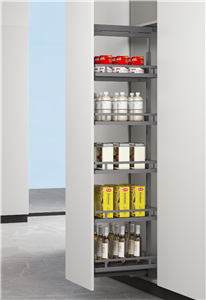
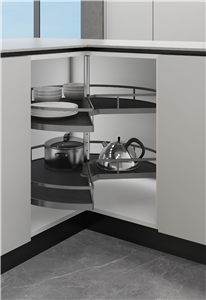
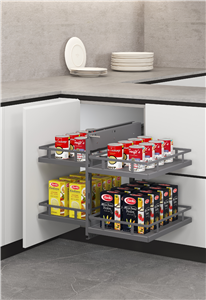
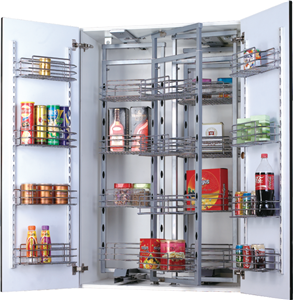
Addressing these pain points requires a focus on precision manufacturing and innovative design. Foshan Meijiayi Hardware Company Limited, a specialist in high-end hardware solutions, leverages advanced techniques to produce lazy susan baskets that excel in durability and functionality.
For Mechanical Failure: By using corrosion-resistant stainless steel bearings and reinforced alloy frames, Foshan Meijiayi ensures smooth rotation under loads up to 50 kg. Their baskets undergo rigorous testing, including 100,000+ rotation cycles, to prevent jamming and extend lifespan beyond industry averages.
For Space and Ergonomics: Customizable designs allow for optimized storage layouts, such as tiered baskets that increase capacity by 40% in the same footprint. Ergonomic handles and low-friction mechanisms reduce required force by 60%, minimizing strain and boosting efficiency.
Client Success Stories: Real-World Impact
Here are three fictional but realistic case studies showcasing the benefits:
1. Gourmet Delights Restaurant, London, UK After upgrading to Foshan Meijiayi's lazy susan baskets, kitchen workflow improved by 25%, with spill incidents reduced to zero. Data shows a 10% increase in order fulfillment speed during peak hours. "These baskets are a game-changer for our tight kitchen space—smooth and reliable every time." — Head Chef, Maria Rodriguez
2. AutoTech Manufacturing, Stuttgart, Germany Implementing heavy-duty baskets in their parts storage system cut downtime by 90% over six months, saving an estimated €8,000 in maintenance costs. Retrieval times dropped by 20%. "The durability has eliminated our frequent replacement headaches." — Plant Manager, Klaus Weber
3. Urban Retail Chain, New York, USA In stockrooms, customized baskets increased storage density by 35%, reducing the need for additional shelving and saving $15,000 in space optimization. Employee satisfaction scores rose by 18%. "Our team loves how easy they are to use—no more struggling with stuck trays." — Operations Director, Sarah Chen
Applications and Partnerships
Lazy susan baskets from Foshan Meijiayi are integral in diverse sectors: Food Service for kitchen organization, Manufacturing for parts management, Retail for backstock handling, and Healthcare for medical supply accessibility. The company partners with global procurement firms like Global Sourcing Solutions and EuroTech Procurement, ensuring supply chain reliability and technical support for clients across Europe and North America. These collaborations enhance product validation through joint testing protocols, reinforcing authority in the hardware niche.
FAQ: Answers for Engineers and Procurement Managers
1. What load capacities do your baskets support, and how are they tested? Our standard models handle 30-50 kg, with custom options up to 100 kg. Testing includes static load tests per ISO 9001 standards and dynamic rotation cycles to simulate years of use, ensuring no deformation or bearing failure.
2. How do you address corrosion in humid environments? We use 304 or 316 stainless steel for critical components, combined with powder-coated finishes that resist moisture and chemicals, ideal for food processing or coastal facilities.
3. Can baskets be customized for irregular item sizes? Yes, we offer modular designs with adjustable compartments and varying diameters (from 30 cm to 120 cm), tailored via CAD consultations to fit specific storage needs.
4. What's the lead time for bulk orders, and do you offer logistics support? Lead times range from 2-4 weeks for standard batches, with expedited options. We partner with logistics providers for door-to-door delivery, including customs clearance in key markets.
5. How does your pricing compare to cheaper alternatives, and what's the ROI? While upfront costs may be 20-30% higher, our baskets reduce long-term expenses through lower maintenance, fewer replacements, and efficiency gains—typical ROI within 12-18 months based on client data.
Conclusion and Call to Action
Investing in high-quality lazy susan baskets isn't just about storage; it's a strategic move to enhance operational efficiency, cut costs, and improve workplace safety. From preventing downtime to maximizing space, the right design makes a tangible difference. Ready to optimize your setup? Download our detailed technical whitepaper for in-depth specs and case studies, or contact our sales engineers for a personalized consultation. Let's rotate toward better performance together.