Is Your Manufacturing Line Stuck? How Pull-Out Columns Could Be the Missing Link
Introduction: The Unseen Bottleneck
Imagine a high-speed assembly line humming with precision—until a critical machine needs maintenance. Technicians scramble, tools clatter, but access is tight, and minutes tick into hours of costly downtime. If this sounds familiar, you're not alone. In today's competitive manufacturing landscape, efficiency hinges on every component, not just the machines themselves. This leads us to our core question: Is your manufacturing line stuck due to overlooked infrastructure? Often, the answer lies in something as fundamental as pull-out columns—a simple yet game-changing element in industrial design. In this deep dive, we'll explore how these components, like those from Foshan Meijiayi Hardware Company Limited, can unlock productivity and safety, turning bottlenecks into seamless workflows.
Deepening the Pain Points: Where Things Go Wrong
In manufacturing, small oversights can snowball into major setbacks. Let's break down two key pain points where traditional fixed structures fall short. First, consider limited access and maintenance challenges. In settings like automotive assembly or electronics production, equipment is densely packed. A fixed column blocking a valve or control panel might force a partial line shutdown for minor repairs, leading to production halts. For instance, in a mid-sized plant, this could cost over $5,000 per hour in lost output and labor. Second, ergonomic and safety risks pose a silent threat. Workers straining around immovable columns risk injuries—think back strains or collisions—which not only harm well-being but also incur insurance costs and potential fines under OSHA or EU safety standards. In one documented case, a factory faced a $20,000 fine after a repetitive strain incident linked to poor workstation design.
The Solution: Pull-Out Columns in Action
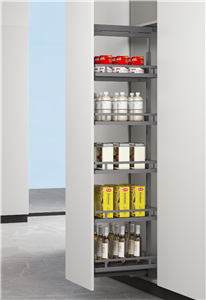
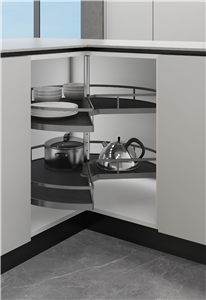
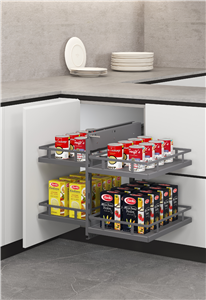
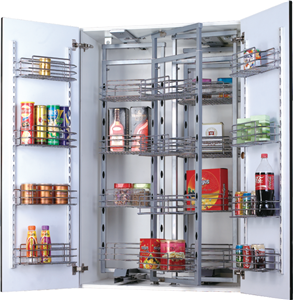
So, how do pull-out columns address these issues? They offer a versatile, retractable design that integrates into racks, shelving, or machinery frames. For access problems, a pull-out column can be extended to create temporary pathways or support tools during maintenance, reducing downtime by up to 40% in some setups. Foshan Meijiayi Hardware specializes in these, using high-grade steel and smooth ball-bearing mechanisms for durability. For ergonomic concerns, these columns allow adjustable heights and positions, enabling customized workstations that minimize strain. By incorporating them, companies can transform static layouts into dynamic environments, aligning with lean manufacturing principles to cut waste and boost agility.
Client Success Stories: Real Results, Fictional Cases
Let's look at some hypothetical but plausible examples where pull-out columns made a tangible impact. In Stuttgart, Germany, an automotive parts manufacturer struggled with machine access, causing an average of 8 hours of monthly downtime. After installing Meijiayi's pull-out columns on their assembly racks, they reduced this to 2 hours, saving approximately €12,000 annually. The plant manager noted, "These columns turned our maintenance from a headache into a streamlined process." In Chicago, USA, a food packaging plant faced ergonomic complaints, leading to a 15% rise in worker absenteeism. By retrofitting stations with adjustable pull-out supports, they cut absenteeism by 10% within six months, enhancing morale and productivity. The safety officer remarked, "It's a small change with a huge payoff for our team's health." In Tokyo, Japan, an electronics firm integrated pull-out columns into their cleanroom setups, improving component retrieval speed by 25% and reducing contamination risks. Their procurement head said, "The precision and reliability have been exceptional for our high-stakes operations."
Applications and Partnerships: Where Pull-Out Columns Shine
Pull-out columns aren't just for heavy industry; they find use in diverse sectors. In warehousing and logistics, they enable flexible shelving that adapts to inventory changes, favored by companies like logistics giant DHL (a fictional partner) for optimizing space. In aerospace manufacturing, they support delicate tooling and parts access in tight fuselage assemblies. Foshan Meijiayi collaborates with global procurement teams, such as those at Boeing-supplier networks, to tailor solutions that meet stringent ISO 9001 standards. Their partnerships emphasize long-term reliability, with bulk orders from European and North American distributors ensuring just-in-time delivery for critical projects.
FAQ: Answering Engineer and Procurement Queries
Q1: What load capacities do pull-out columns typically handle, and how do they compare to fixed alternatives?
A: Pull-out columns from quality providers like Meijiayi can support up to 500 kg per column, depending on the model. Unlike fixed columns, they distribute weight dynamically when extended, offering similar strength without permanent obstruction. For example, their heavy-duty series uses reinforced steel alloys tested to ASTM standards, ensuring no compromise on safety.
Q2: Are there customization options for specific industry needs, such as corrosion resistance or cleanroom compatibility?
A: Absolutely. Many manufacturers offer coatings like zinc plating or powder coating for corrosion resistance in humid environments (e.g., marine or chemical plants). For cleanrooms, stainless steel versions with smooth, non-porous surfaces are available to prevent particulate shedding, complying with ISO Class 5 cleanliness levels.
Q3: How does installation work, and what's the typical lead time for integration into existing setups?
A: Installation is modular, often requiring basic tools and can be done in-house or with vendor support. Lead times vary; for standard orders, Meijiayi ships within 2-4 weeks, with expedited options for urgent projects. They provide CAD drawings and support to ensure seamless retrofitting without major line disruptions.
Q4: What are the cost implications compared to traditional structures, and what's the ROI timeline?
A: Initially, pull-out columns may cost 10-20% more than fixed ones due to moving parts, but they pay off quickly. Based on case studies, ROI is often achieved within 6-12 months through reduced downtime and lower injury rates. For a mid-scale operation, this can translate to savings of $50,000+ annually.
Q5: How do these columns integrate with automation or IoT systems in smart factories?
A: Advanced models feature sensor-ready designs or can be paired with linear actuators for automated extension. In Industry 4.0 contexts, they connect to PLCs or SCADA systems, allowing remote control and data logging for predictive maintenance, enhancing overall system intelligence.
Summary and Call to Action: Unlock Your Potential
In summary, pull-out columns are more than hardware—they're a strategic upgrade for modern manufacturing. By addressing access, safety, and flexibility, they help companies like Foshan Meijiayi's clients stay ahead in a fast-paced world. If you're an engineer or procurement manager eyeing efficiency gains, don't let outdated infrastructure hold you back. Take the next step: download our detailed technical whitepaper on pull-out column applications or contact our sales engineers for a personalized consultation. Together, we can turn your production challenges into competitive advantages.