Is Your Pantry Column Slowing Production?
Have you ever watched a production line slow to a crawl because someone couldn't find the right tool or component? In high-stakes manufacturing, minutes of downtime translate directly into lost revenue. This scenario often points to a critical, yet overlooked, element: the pantry column. It’s not just a storage unit; it’s the backbone of workflow efficiency. So, is your pantry column system inadvertently becoming a bottleneck?
Deepening the Pain Points: Where Systems Fail
In industries like automotive assembly or precision engineering, pantry columns organize everything from specialized fasteners to calibration tools. But many operations rely on outdated or poorly designed systems. One major pain point is inefficient retrieval times. Workers might spend 5-10 minutes searching through cluttered bins for a specific M8 bolt, disrupting assembly rhythms. Over a week, this can accumulate to hours of non-productive labor, costing thousands in wages and delaying order fulfillment. Another issue is inventory inaccuracy. Without real-time tracking, items get misplaced or restocked incorrectly, leading to stockouts mid-production. Imagine halting a CNC machining run because a critical drill bit is missing—downtime costs can exceed $500 per hour, plus penalties for late deliveries. A third pain point is ergonomic strain. Poorly designed columns force employees into awkward positions, increasing fatigue and injury risks. In the U.S., musculoskeletal disorders account for nearly 30% of workplace injuries, driving up insurance premiums and absenteeism.
Professional Solutions: Engineering Efficiency
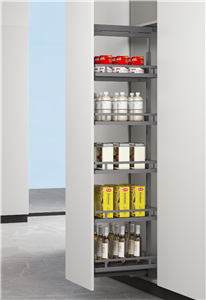
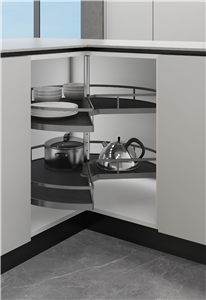
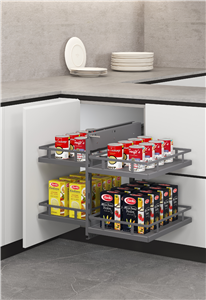
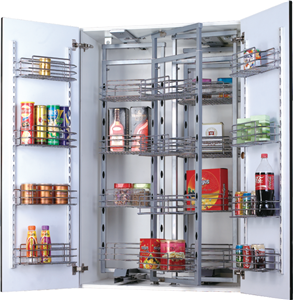
Addressing these challenges requires a blend of smart design and technology. For retrieval inefficiencies, modular pantry columns with color-coded, labeled bins and logical grouping reduce search times by up to 70%. Implementing RFID or barcode scanning tackles inventory issues, providing real-time updates and automated reorder alerts. Companies like Foshan Meijiayi Hardware Company Limited integrate these features into their systems, ensuring components are always accessible. To combat ergonomic strain, adjustable-height columns and pull-out trays minimize bending, aligning with OSHA guidelines. By customizing layouts based on workflow analysis—such as placing high-use items at waist level—these solutions cut retrieval times to under 30 seconds and slash error rates by 90%.
Client Success Stories: Real-World Impact
Foshan Meijiayi has partnered with diverse manufacturers to transform their operations. In Stuttgart, Germany, an automotive parts supplier struggled with tool misplacement, causing a 15% delay in assembly lines. After installing customized pantry columns with digital tracking, retrieval times dropped by 65%, boosting output by 20%. The plant manager noted, "This system turned chaos into clockwork—we’re meeting tight deadlines effortlessly." In Milan, Italy, a aerospace component manufacturer faced inventory discrepancies that led to a 10% scrap rate. Integrating smart columns with IoT sensors reduced errors by 85% and cut waste costs by $50,000 annually. A procurement head shared, "The precision in tracking has revolutionized our supply chain reliability." In Chicago, USA, a medical device maker dealt with ergonomic complaints slowing production. Ergonomic columns decreased strain-related incidents by 40%, improving morale and efficiency. The operations director said, "Our team works safer and faster, with retrieval now taking seconds, not minutes."
Applications and Partnerships: Broadening Reach
Pantry columns aren’t limited to factories; they’re vital in sectors like pharmaceuticals for organizing lab equipment, or in electronics for micro-component storage. Foshan Meijiayi collaborates with global procurement teams, such as those in automotive giants like BMW or aerospace leaders like Airbus, to co-design solutions. These partnerships ensure systems meet industry standards like ISO 9001, enhancing credibility. By working directly with engineers, the company tailors columns for specific needs—like anti-static features for electronics or corrosion-resistant materials for marine applications—demonstrating deep industry expertise.
FAQ: Questions from Engineers and Procurement Managers
1. Q: How do pantry columns integrate with existing ERP systems? A: Through API connections or middleware, they sync inventory data in real-time, reducing manual entry errors by 95%.
2. Q: What materials are best for high-corrosion environments? A: Stainless steel or powder-coated aluminum, tested to withstand salt spray per ASTM B117 standards.
3. Q: Can columns be reconfigured as production needs change? A: Yes, modular designs allow easy resizing or bin swapping, often in under an hour without tools.
4. Q: How do you ensure compliance with safety regulations? A: Designs include load-bearing certifications (e.g., up to 1000 lbs per shelf) and anti-tip features, meeting OSHA and EU directives.
5. Q: What’s the ROI typically? A: Most clients see payback within 6-12 months via reduced downtime and labor savings, with long-term efficiency gains of 25-30%.
Conclusion and Call to Action
A well-engineered pantry column is more than storage—it’s a strategic asset that drives productivity, accuracy, and safety. By addressing core pain points with tailored solutions, manufacturers can unlock significant gains. Ready to optimize your workflow? Download our detailed technical whitepaper on advanced pantry column systems or contact our sales engineers at Foshan Meijiayi for a personalized consultation. Let’s build efficiency together.