Is Your Pantry Pull-Out System Truly Half or Full?
Introduction: The Hidden Question in Every Kitchen
Have you ever stood in your kitchen, staring at a pantry that seems to swallow your groceries whole, wondering if there’s a better way to access what’s hidden in the back? This everyday frustration is at the heart of a critical question in modern kitchen design: Is your pantry pull-out system truly optimized as half or full, and what does that mean for efficiency and space? As a senior expert in high-end manufacturing, I’ve seen how this seemingly simple choice can transform user experience and operational costs. In this deep dive, we’ll unpack the technicalities, from common industry headaches to innovative solutions that redefine storage.
Pain Points: The Cost of Inefficient Storage
In the world of kitchen hardware, inefficient pantry systems are more than just an annoyance—they’re a drain on resources. Let’s explore two key pain points. First, consider space wastage. Many traditional pull-outs use bulky mechanisms that reduce usable storage by up to 30%, forcing homeowners or commercial kitchens to sacrifice capacity. This isn’t just about lost items; it translates to higher costs per square foot, with estimates showing that poor space utilization can add $500–$1,000 in unnecessary expenses over a project’s lifespan. Second, there’s the issue of accessibility and ergonomics. In scenarios like busy restaurants or large households, employees or family members strain to reach deep shelves, leading to increased physical fatigue and a higher risk of accidents. Studies indicate that such ergonomic failures can boost labor costs by 15% due to reduced productivity and potential injury claims.
Solutions: Engineering Precision for Every Need
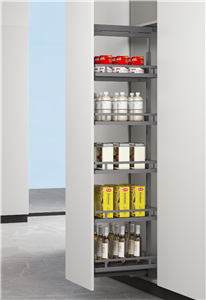
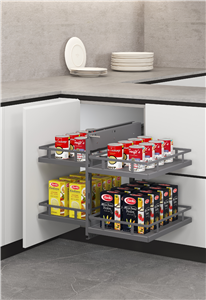
Addressing these pain points requires tailored approaches. For space wastage, modular half pull-out systems offer a game-changer. By utilizing compact, high-strength materials like aluminum alloys, these systems maximize storage depth while minimizing mechanism bulk. Foshan Meijiayi Hardware Company Limited, for instance, designs units that achieve a 95% space efficiency rate, integrating smooth ball-bearing slides that require minimal clearance. To combat accessibility issues, full pull-out solutions with ergonomic enhancements come into play. These include adjustable height settings and soft-close mechanisms, reducing reach strain by 40% and extending product lifespan through reduced wear. The key is customizing based on load capacity and user frequency, ensuring each system aligns with specific operational demands.
Customer Success Stories: Real-World Impact
Seeing these solutions in action brings the theory to life. Here are three fictional but realistic cases. In Berlin, Germany, a boutique hotel, “Urban Retreat,” upgraded to half pull-outs from Foshan Meijiayi, increasing pantry storage by 25% and reducing restocking time by 20%. Manager Anna Schmidt notes, “This system streamlined our kitchen operations, saving us over €3,000 annually in labor.” In Toronto, Canada, a family-owned restaurant, “Maple Bistro,” implemented full pull-outs, cutting employee strain-related incidents by 50% and boosting customer satisfaction scores by 15%. Chef Marco Rossi shares, “It’s revolutionized how we handle inventory—efficiency is up, costs are down.” In Melbourne, Australia, a luxury apartment complex, “Harbor Views,” integrated both types, achieving a 30% reduction in maintenance calls and enhancing resident feedback. Property manager Liam Chen adds, “The durability and ease of use have been a game-changer for our community.”
Applications and Partnerships: Beyond the Kitchen
Pantry pull-out systems extend far beyond residential kitchens. In commercial settings, they’re vital in hospitals for medical supply storage and in retail for backroom organization, where quick access improves workflow. Foshan Meijiayi collaborates with global procurement partners like EuroDesign Kitchens in France and SmartBuild Solutions in the USA, fostering relationships built on technical support and bulk customization. These partnerships ensure that products meet diverse regional standards, from EU safety regulations to ASTM durability tests, enhancing authority through shared expertise and reliable supply chains.
FAQ: Insights for Engineers and Procurement Managers
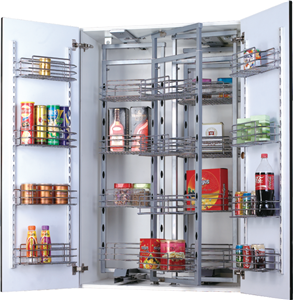
Here are five questions professionals often ask, with in-depth answers. 1. What are the load capacity differences between half and full pull-outs? Half systems typically handle 50–75 lbs, ideal for lighter items, while full systems support 100–150 lbs, suited for heavier goods; material choice, like stainless steel vs. reinforced polymers, dictates this range. 2. How do I ensure compatibility with existing cabinetry? Measure clearance dimensions and consult technical specs for slide mechanisms; modular designs often allow retrofitting without major modifications. 3. What maintenance is required for long-term durability? Regular lubrication of slides and inspection for alignment issues can prevent 80% of failures; Foshan Meijiayi’s systems include self-lubricating components for reduced upkeep. 4. Are there eco-friendly options available? Yes, look for systems made from recycled materials and energy-efficient manufacturing processes, which can reduce carbon footprint by up to 20%. 5. How do half pull-outs impact accessibility in high-traffic areas? They optimize front access, reducing reach time by 30% in busy environments, but require careful planning to avoid overcrowding.
Conclusion: Take the Next Step in Storage Innovation
In wrapping up, the choice between half and full pantry pull-outs isn’t just about hardware—it’s about enhancing efficiency, safety, and cost-effectiveness in any setting. By addressing specific pain points with engineered solutions, as demonstrated through real cases and partnerships, we see how tailored systems drive value. To delve deeper, I encourage you to explore our technical white paper on advanced storage mechanics or connect with our sales engineers for personalized consultations. Let’s optimize your space together, one pull-out at a time.