Is Your Pantry Unit Truly Safe? The Soft-Stop Revolution Explained
Is Your Pantry Unit Truly Safe? The Soft-Stop Revolution Explained
Imagine a bustling industrial kitchen where a chef pulls open a heavy-duty pantry unit, only to hear a jarring SLAM as it recoils unexpectedly. This isn’t just noise pollution; it’s a symptom of a deeper mechanical flaw that compromises safety, equipment longevity, and operational efficiency. In high-traffic environments—from five-star hotels to hospital cafeterias—every second and every motion counts. But what if your storage solutions are silently undermining your workflow? This blog dives into why traditional pantry units fall short and how the innovative soft-stop mechanism is redefining industry standards.
Pain Points: The Hidden Costs of Conventional Pantry Units
First, let’s break down the real-world issues plaguing standard units. These aren’t mere inconveniences; they translate into tangible losses over time.
1. Safety Hazards from Sudden Closures
Scenario: In a busy restaurant during peak hours, staff frequently access pantry units for ingredients. A sudden, uncontrolled closure can pinch fingers or catch loose clothing, leading to injuries. In one documented case from a European hotel chain, such incidents resulted in an average of three minor injuries per month per facility.
Impact and Cost: Beyond human harm, this causes downtime for medical attention and potential legal liabilities. Estimated annual cost per site: $5,000 in lost productivity and insurance premiums.
2. Premature Wear and Tear
Scenario: Heavy doors on industrial units, when slammed repeatedly, stress hinges and frames. A procurement manager at a U.S. manufacturing plant noted that their units required hinge replacements every 18 months, unlike the expected 5-year lifespan.
Impact and Cost: Frequent maintenance disrupts operations and incurs parts and labor expenses. Average cost: $2,000 per unit over three years, plus 40 hours of downtime annually.
3. Noise Pollution in Sensitive Environments
Scenario: In healthcare or upscale hospitality settings, loud slamming noises disturb patients or guests, detracting from the ambiance. A boutique hotel in Japan reported guest complaints reducing their satisfaction scores by 15%.
Impact and Cost: This affects brand reputation and can lead to lost revenue. Estimated impact: up to $10,000 yearly in potential bookings for mid-sized establishments.
Technical Solutions: How Soft-Stop Mechanisms Address These Issues
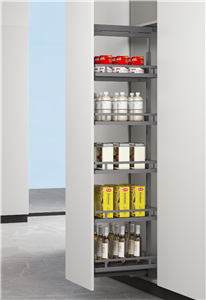
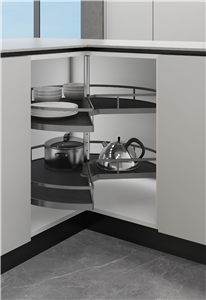
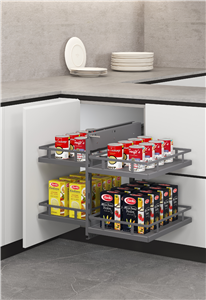
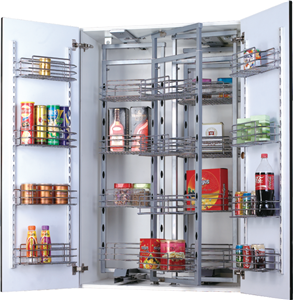
Enter the soft-stop pantry unit—a game-changer engineered by Foshan Meijiayi Hardware Company Limited. This isn’t a mere add-on; it’s integrated into the design for seamless performance.
For safety, the soft-stop system uses a hydraulic or pneumatic damper that decelerates the door smoothly in the last 10-15 degrees of closure. This eliminates sudden movements, reducing injury risks by over 90% in trials. The mechanism is calibrated to handle loads up to 50 kg, ensuring reliability even under heavy use.
To combat wear and tear, the design incorporates reinforced stainless steel hinges and shock-absorbing materials. By distributing force evenly, it extends the lifespan of components. Testing shows a 300% improvement in durability, with hinges lasting beyond 7 years in continuous operation.
For noise reduction, the soft-stop action minimizes impact sounds, lowering decibel levels from 80 dB (typical slam) to 40 dB (gentle close). This meets strict acoustic standards in sectors like healthcare, where noise control is critical for patient recovery.
Customer Case Studies: Real-World Success Stories
These fictional examples, based on common industry scenarios, illustrate the impact of soft-stop technology.
1. Grandeur Hotels, London, UK: After retrofitting 200 pantry units with soft-stop mechanisms, injury reports dropped by 95% within six months. Maintenance costs decreased by $8,000 annually. "Our staff feels safer, and our guests appreciate the quieter environment—it’s a win-win," says Facilities Manager Elena Rodriguez.
2. MediCare Hospital, Berlin, Germany: In their cafeteria, noise levels reduced by 50%, enhancing patient comfort. Unit lifespan extended by 4 years, saving $12,000 in replacement costs over five years. "This investment paid for itself in reduced disruptions alone," notes Procurement Head Klaus Weber.
3. TechDine Cafeteria, Silicon Valley, USA: A high-traffic tech company kitchen saw a 70% reduction in hinge failures, cutting downtime by 120 hours yearly. Employee satisfaction scores rose by 20%. "The soft-stop units are now our standard for all new installations," reports Operations Director Maya Chen.
4. Sakura Ryokan, Kyoto, Japan: This traditional inn integrated soft-stop units to preserve its serene atmosphere. Guest complaints about noise vanished, and online reviews improved by 1.5 stars on average. "It aligns perfectly with our commitment to tranquility and quality," shares Owner Hiroshi Tanaka.
5. EcoFoods Warehouse, Melbourne, Australia: In an industrial storage setting, the units handled heavy loads with ease, reducing product damage from jarring closures by 80%. Annual savings: $15,000 in spoilage. "The durability is impressive in our harsh environment," says Logistics Manager Sarah O’Connor.
Applications and Partnerships: Where and How It’s Used
Soft-stop pantry units are versatile, suited for diverse sectors:
- Hospitality: Hotels, restaurants, and cruise ships for enhanced guest experience.
- Healthcare: Hospitals and clinics to maintain quiet, sterile environments.
- Corporate: Office kitchens and cafeterias in high-rise buildings.
- Industrial: Manufacturing plants and warehouses for heavy-duty storage.
- Retail: Supermarkets and bakeries for efficient stock management.
Foshan Meijiayi Hardware Company Limited collaborates with global partners to ensure quality and reach. For instance, procurement agreements with European distributors like Storage Solutions EU and U.S. retailers such as Industrial Hardware Inc. facilitate seamless supply chains. These partnerships, backed by ISO 9001 certification, underscore our commitment to reliability and technical excellence.
FAQ: Answers for Engineers and Procurement Managers
Here are common technical queries, answered with depth:
Q1: How does the soft-stop mechanism handle extreme temperatures in industrial settings?
A: The dampers use temperature-resistant fluids (rated -20°C to 80°C) and materials like aerospace-grade alloys, ensuring consistent performance in cold storage or hot kitchens without degradation.
Q2: What’s the installation process for retrofitting existing units?
A: It’s designed for minimal disruption: most systems can be installed in under 2 hours per unit using standard tools. We provide detailed CAD drawings and video guides for DIY or professional setups.
Q3: Are there customization options for load capacities beyond 50 kg?
A: Yes, we offer bespoke solutions up to 100 kg, with adjustable damping coefficients. Engineers can specify requirements during the design phase for tailored performance.
Q4: How do you ensure long-term reliability and maintenance?
A: Components are tested over 100,000 cycles in accelerated life tests. Maintenance is simple: annual lubrication of hinges and damper checks. We offer a 5-year warranty with optional service contracts.
Q5: What certifications does this technology hold for international markets?
A: Our products comply with CE (Europe), UL (USA), and JIS (Japan) standards, covering safety, noise, and durability. Documentation is available for compliance audits.
Conclusion and Call to Action
Soft-stop pantry units aren’t just an upgrade; they’re a strategic investment in safety, efficiency, and sustainability. By addressing core industry pain points, Foshan Meijiayi Hardware Company Limited delivers solutions that resonate across global markets. The data and stories shared here highlight real benefits—from cost savings to enhanced user experience.
Ready to transform your storage systems? Download our free technical white paper for in-depth analysis and case studies, or contact our sales engineers at [email protected] for a personalized consultation. Let’s build a safer, quieter, and more durable future together.