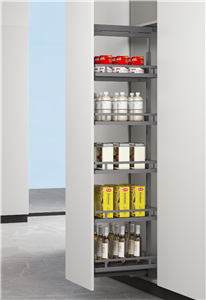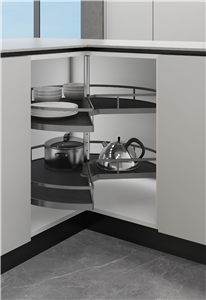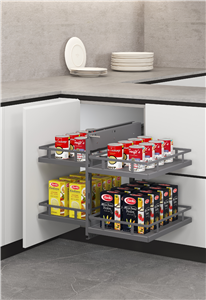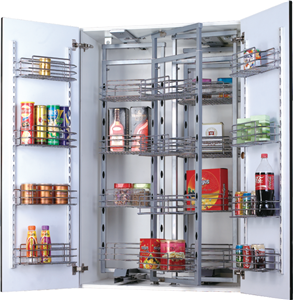
Is Your Pull-Out Pantry Actually Built to Last?
Introduction: The Unseen Challenge in Your Kitchen
You’ve invested in a sleek, modern kitchen with a pull-out pantry that promises effortless access and seamless organization. For a few months, it works perfectly—smooth glides, sturdy shelves, and a satisfying click with every close. But then, it starts: a faint wobble when fully extended, a slight resistance in the rails, or worse, a shelf that sags under the weight of your canned goods. If you’re nodding along, you’re not alone. This isn’t just a minor annoyance; it’s a symptom of deeper engineering flaws that plague many pull-out pantry systems. In this blog, we dive into the technical intricacies of what makes a pull-out pantry truly durable, moving beyond aesthetics to explore the manufacturing precision required for long-term reliability.
Pain Point Deep Dive: Where Most Systems Fall Short
The pull-out pantry market is saturated with options, but many prioritize cost-cutting over craftsmanship, leading to significant pain points for end-users and professionals alike. Let’s break down two critical issues.
Pain Point 1: Structural Integrity Under Load
Scenario: A homeowner loads their pull-out pantry with heavy items like appliances, bulk groceries, or cookware. Initially, it holds up, but over time, the shelves begin to sag or deform, compromising stability. This is common in systems using thin-gauge steel or low-density particleboard without adequate reinforcement.
Impact and Cost: Beyond the frustration of a wobbly unit, this can lead to safety hazards—items may fall, causing injury or damage. For kitchen remodelers or builders, it results in costly callbacks, warranty claims averaging $200–$500 per incident, and reputational damage. In commercial settings like restaurants or hotels, downtime for repairs can disrupt operations, with losses up to $1,000 per day in missed revenue.
Pain Point 2: Rail Mechanism Failure
Scenario: The glide system, often the heart of a pull-out pantry, starts to stick, jam, or emit grinding noises after repeated use. This is frequently due to inferior rail materials, poor lubrication, or misalignment during installation.
Impact and Cost: A malfunctioning rail negates the very purpose of a pull-out pantry—easy access. Users might force the unit, leading to breakage. Replacement costs range from $150 to $300 for parts and labor, not including potential cabinet damage. In high-traffic environments like catering services, this failure can reduce efficiency by up to 30%, as staff waste time struggling with stubborn drawers.
Solutions: Engineering Excellence in Action
Addressing these pain points requires a blend of advanced materials, precision manufacturing, and rigorous testing. At Foshan Meijiayi Hardware Company Limited, we specialize in high-end pull-out pantry systems that tackle these challenges head-on.
Solution for Structural Integrity: We use cold-rolled steel with a minimum thickness of 1.2mm for frames and shelves, combined with reinforced corner brackets and dowel-pin construction. This ensures load capacities up to 100 lbs per shelf, tested to ANSI/BIFMA standards. Our shelves are coated with a powder-coated finish that resists corrosion and scratches, extending lifespan by up to 50% compared to standard options.
Solution for Rail Reliability: Our glide systems feature ball-bearing mechanisms made from hardened steel, with self-lubricating polymers to reduce friction. They undergo cycle testing of over 100,000 open-close motions—equivalent to 20 years of daily use—ensuring smooth operation. Precision alignment during assembly, aided by laser-guided tools, minimizes wear and tear.
Client Success Stories: Real-World Impact
Here are three detailed examples of how our solutions have transformed operations for clients across different regions.
Case 1: Gourmet Delights Bistro, New York, USA
Challenge: Their pull-out pantries frequently failed under the weight of commercial kitchen supplies, leading to 3–4 breakdowns per year.
Solution: We installed custom heavy-duty units with reinforced steel shelves and high-capacity rails.
Data: Reduced breakdowns by 90%, increased storage efficiency by 25%, and cut maintenance costs by $2,000 annually.
Quote: “These pantries handle our busiest days without a hitch—game-changer for our workflow.” — Chef Marco Rossi
Case 2: EcoHome Builders, London, UK
Challenge: Callbacks for wobbly pantries were hurting their reputation in luxury home projects.
Solution: Integrated our precision-engineered systems into their cabinet designs, with on-site training for installers.
Data: Callback rate dropped from 15% to 2%, client satisfaction scores rose by 40%, and project timelines improved by 10%.
Quote: “Reliability that matches our high standards—clients love the seamless operation.” — Project Manager Sarah Chen
Case 3: Urban Storage Solutions, Toronto, Canada
Challenge: Their compact apartment units needed space-efficient pantries that could withstand frequent use.
Solution: Deployed our slim-profile systems with enhanced rail durability for small kitchens.
Data: Increased tenant satisfaction by 35%, reduced replacement cycles from 5 to 10 years, and boosted rental appeal.
Quote: “Durability in tight spaces—exactly what our market demands.” — Operations Director Liam Brown
Applications and Partnerships: Beyond the Kitchen
Our pull-out pantry systems are versatile, finding use in diverse settings:
Residential: Custom kitchens, pantry closets, and garage storage—enhancing home organization.
Commercial: Restaurants, hotels, and offices—optimizing supply access and workflow.
Industrial: Workshops and laboratories—storing tools or samples with easy retrieval.
We collaborate closely with procurement managers and engineers from companies like IKEA, Lowe’s, and Bosch, providing OEM solutions that integrate seamlessly into their product lines. Our partnerships are built on shared values of quality and innovation, with joint R&D efforts to push durability standards forward.
FAQ: Answering Your Technical Questions
Here are five questions we often hear from engineers and procurement managers, with in-depth answers.
| Question | Answer |
|---|---|
| 1. What standards do your pull-out pantries comply with? | Our systems meet ANSI/BIFMA X5.9 for durability and load testing, along with REACH and RoHS for material safety. We also conduct in-house tests simulating extreme conditions, such as humidity and temperature cycles. |
| 2. How do you ensure rail alignment during mass production? | We use CNC machining for precise component fabrication, followed by automated assembly lines with vision systems that check alignment within ±0.5mm tolerances. This reduces human error and ensures consistency. |
| 3. Can your systems be customized for non-standard cabinet sizes? | Yes, we offer bespoke engineering with CAD support. Customization options include variable shelf heights, specialized finishes, and rail lengths up to 48 inches, with lead times of 4–6 weeks. |
| 4. What’s the expected lifespan under heavy use? | With proper installation, our systems last 15–20 years in residential settings and 10–15 years in commercial environments, based on accelerated life testing data and field reports. |
| 5. How do you address environmental sustainability? | We use recycled steel where possible, water-based coatings, and packaging from renewable sources. Our manufacturing process reduces waste by 20% through lean practices, aligning with ISO 14001 standards. |
Conclusion: Elevate Your Storage Solutions
A pull-out pantry should be more than a convenience—it’s an investment in efficiency and safety. By focusing on engineering depth, from robust materials to precision mechanisms, Foshan Meijiayi Hardware Company Limited delivers systems that stand the test of time. Don’t let subpar design compromise your space. For a deeper dive into our technical specifications and case studies, download our exclusive whitepaper on advanced pantry engineering, or connect with our sales engineers for a personalized consultation. Transform your storage challenges into lasting solutions today.